
What cross-chain restaking actually is
Cross-chain restaking is the practice of taking an asset that is already staked on a blockchain and pledging it to secure additional services across different networks. It builds on liquid staking by adding a layer of security delegation. Instead of sitting idle as a receipt token, your staked assets actively validate external workloads on other chains.
Think of standard liquid staking as parking your car in a garage. You keep the title (your LST), but the car isn't moving. Cross-chain restaking is like renting that same car out to different delivery services simultaneously. You still own the vehicle, but it is now generating extra value by serving multiple masters at once.
In this model, your staked ETH (like stETH) becomes the collateral. It is not just securing the Ethereum mainnet anymore; it is also verifying transactions for App-Specific Validators (AVSs) on other chains. This creates a shared security pool. New protocols can tap into this massive, pre-existing security without building their own validator sets from scratch.
For the user, this means your capital has higher utility. You earn rewards from Ethereum consensus while simultaneously earning yield from the external services you help secure. However, this convenience comes with a trade-off. You are now responsible for the performance of every chain you support. If you fail to validate correctly on any of those networks, your entire staked position faces slashing.
Choose your restaking protocol
Selecting the right protocol for cross-chain restaking depends on which networks you already use and how much risk you are willing to take. The landscape is shifting from simple Ethereum staking to multi-chain security markets. You need a protocol that supports your active chains while offering transparent yield sources.
Compare cross-chain protocols
Different protocols handle cross-chain security in distinct ways. Some rely on native integrations for seamless liquidity, while others partner with bridge infrastructure to expand reach. The table below compares three prominent options based on their supported chains and yield mechanisms.
| Protocol | Supported Chains | Yield Source | Cross-Chain Tech |
|---|---|---|---|
| EigenLayer | Ethereum, L2s | AVS Rewards | EigenCloud, Flow Vaults |
| Renzo | Ethereum, Arbitrum, Base | Native Restaking | Hyperlane, Chainlink |
| Kernel | BNB Chain, Ethereum | BNB Restaking | Brevis Bridge |
Evaluate your specific needs
If you are already active on Layer 2s like Arbitrum or Base, Renzo’s native restaking integration offers a streamlined experience. Their use of Hyperlane and Chainlink ensures that liquidity moves smoothly between chains without complex manual bridging steps.
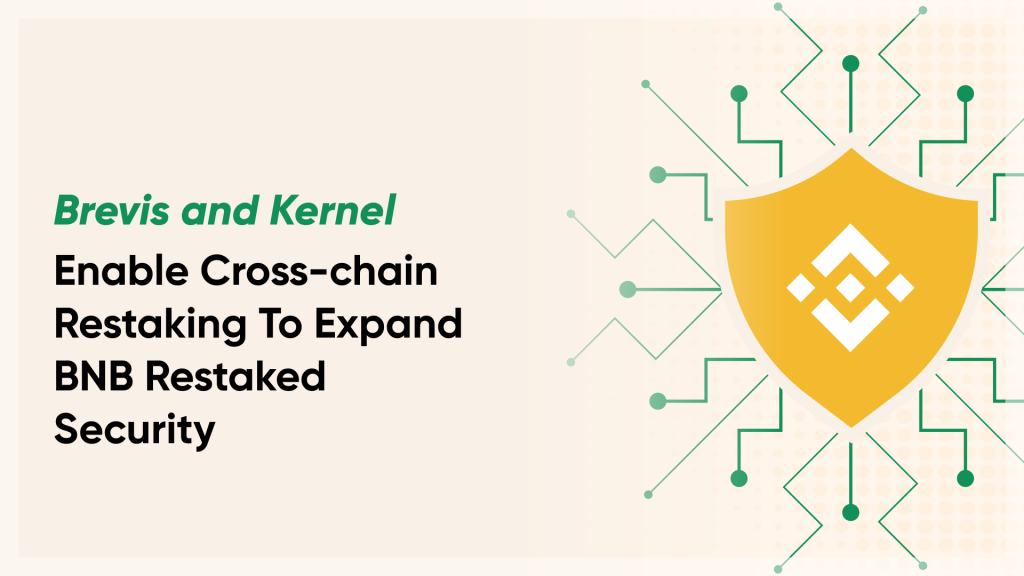
For those focused on BNB Chain, Kernel offers a direct path to restaking BNB assets. Their partnership with Brevis allows for trustless cross-chain transfers, expanding the security market beyond Ethereum’s immediate ecosystem. Meanwhile, EigenLayer remains the foundational layer for many AVSs, with projects like Renzo’s Flow Vaults unlocking multi-asset restaking capabilities across its cloud infrastructure.

Always verify the specific slashing conditions and smart contract risks associated with each protocol before committing assets. Cross-chain restaking amplifies yield but also exposes your capital to multiple network vulnerabilities.
Bridge your liquid staking token
To participate in cross-chain restaking, you must move your liquid staking token (LST) from the source chain—typically Ethereum—to the target chain where the restaking service operates. This transfer requires a bridge that can lock or burn tokens on the origin and mint or release them on the destination.
The goal is to use a trustless bridge. These protocols rely on smart contracts and cryptographic proofs rather than centralized validators to secure the transfer. This minimizes the risk of custodial failure, which is critical when handling staked assets that earn yield.
Navigate to the official interface of the cross-chain restaking protocol you intend to use. Ensure you are on the correct domain to avoid phishing sites. Connect your Web3 wallet (such as MetaMask or Rabby) to the platform. Most protocols support multiple source chains, so verify your wallet is connected to the network holding your LST, such as Ethereum Mainnet.
In the bridge interface, locate the chain selector dropdowns. Set the "From" chain to your source network (e.g., Ethereum) and the "To" chain to the target network hosting the restaking service (e.g., Arbitrum, Optimism, or a specialized restaking chain like Mode or Superposition). The interface should automatically detect your connected wallet's balance of LSTs on the source chain.

Before initiating the bridge, you must approve the bridge contract to spend your LST. Click the "Approve" button next to your token balance. A wallet transaction will pop up; confirm the gas fee and sign the transaction. This approval is a one-time action per token type, allowing the bridge to lock your assets securely on the source chain.
Enter the amount of LST you wish to bridge. Review the estimated time of arrival (ETA) and network fees. Click "Bridge" or "Swap" to initiate the transfer. The protocol will lock your LST on the source chain and mint a wrapped version on the target chain. For trustless bridges like those using Chainlink CCTP or Hyperlane, this happens via cryptographic messaging rather than centralized custodians.
Once the bridge transaction is confirmed on the source chain, the target chain will process the message. Depending on the bridge technology, you may need to claim the tokens on the target chain or they may appear automatically in your wallet. Verify that the LST balance is visible on the target network before proceeding to the restaking interface.
The speed and cost of this process depend heavily on the bridge technology. Protocols like Renzo use Hyperlane and Chainlink for native restaking, which often results in faster finality and lower fees compared to older, centralized bridge solutions. Always check the protocol’s documentation to understand the specific bridge mechanism they employ, as this impacts the user experience during cross-chain restaking.
Delegate to an active service
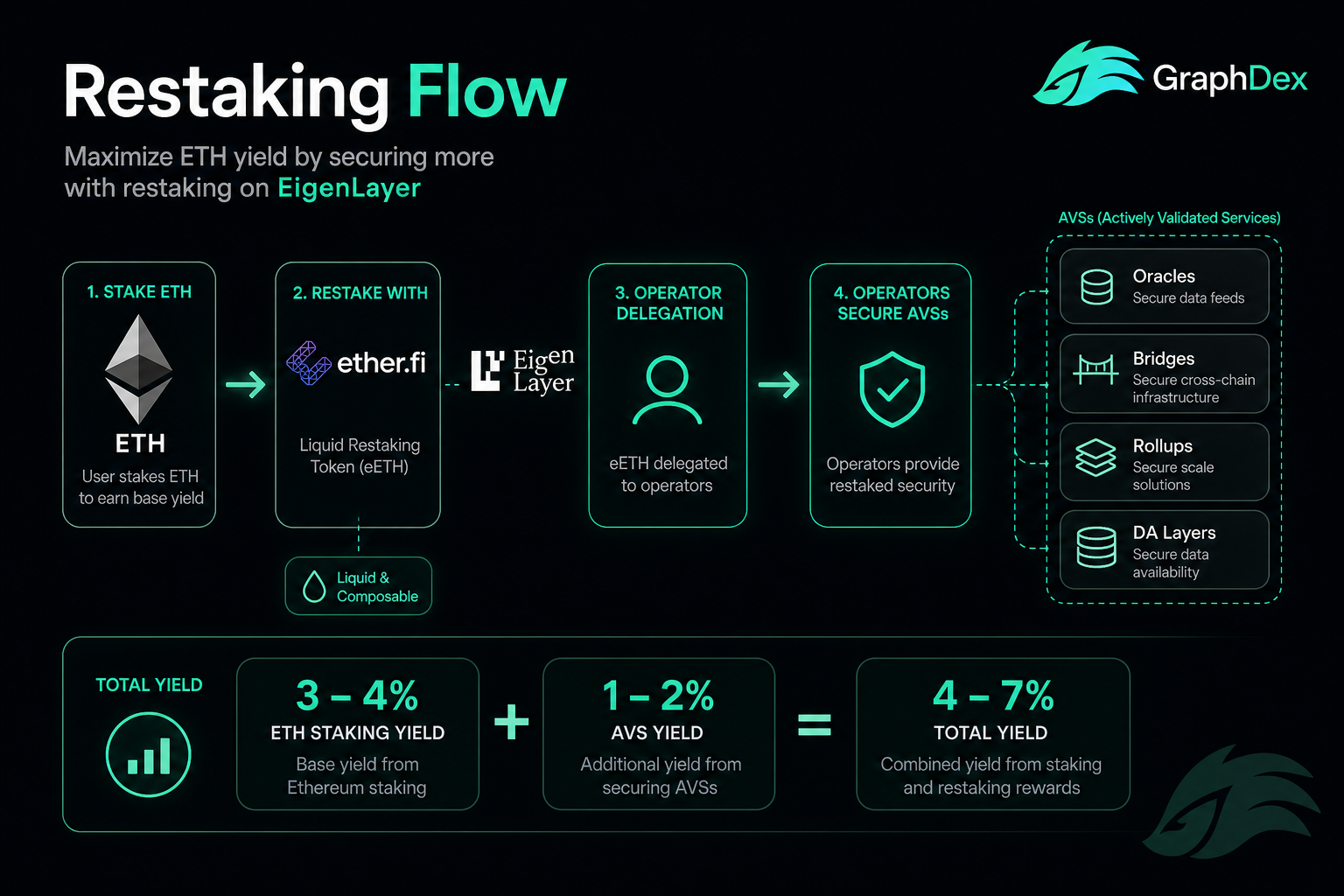
After bridging your liquid staking tokens to the target chain, the final step is to assign them to an Actively Validated Service (AVS). This action directs your capital to secure specific off-chain or parallel-chain infrastructure, such as oracle networks, decentralized storage, or cross-chain messaging protocols.
Think of your staked assets as a security deposit. By delegating to an AVS, you are essentially renting out that security to help the service run. In return, the AVS distributes yield to you. This is the core mechanism of cross-chain restaking: leveraging existing consensus power to bootstrap new services without requiring them to raise their own validator sets from scratch.
Choose reputable AVSs carefully
Not all AVSs are created equal. Because your assets are exposed to the slashing conditions of every service you support, picking a poorly designed or insecure AVS can lead to penalties. Look for services with:
- Established track records: Prefer AVSs that have been audited and are running mainnet operations.
- Clear slashing policies: Understand exactly what actions could cause you to lose your stake.
- Transparent reward structures: Ensure the yield is sustainable and not artificially inflated.
Verify delegation parameters
Before confirming the transaction, double-check the following:
- Gas costs: Ensure you have enough native gas tokens on the destination chain.
- Minimum delegation amount: Some AVSs require a minimum stake to participate.
- Lock-up periods: Check if your assets are locked for a specific duration.
Once you confirm these details, submit the delegation transaction. Your assets are now actively securing the AVS, and you will begin earning yield.
Manage Slashing and Exit Risks
Cross-chain restaking amplifies rewards, but it also multiplies your exposure to slashing. Unlike traditional staking, where a validator faces penalties on a single chain, restaked assets secure multiple Active Validator Sets (AVS). If you violate the rules of just one service, your entire restaked position across all chains can be penalized. This interconnected risk requires a disciplined monitoring strategy.
The most effective defense is treating each AVS as a distinct entity with its own rulebook. Slashing conditions vary wildly; one service might slash for latency, while another slashes for double-signing. You must audit the specific slashing criteria for every protocol you support. Do not assume that safe behavior on Ethereum automatically translates to safety on a new AVS.
To mitigate these risks, implement a tiered monitoring system. Use on-chain dashboards to track your validator’s status in real time across all supported networks. Set up immediate alerts for any deviation from expected performance metrics. This proactive approach allows you to pause operations or switch to a safe validator before a penalty event occurs.
Warning: Slashing on one chain can impact assets restaked across others. Always review the specific slashing conditions of each AVS.
Exit liquidity is another critical factor. Restaking often involves lock-up periods that differ from the base layer’s withdrawal queue. If you need to exit quickly due to a market crash or a technical failure, ensure your assets are not trapped in an illiquid state. Check the unbonding periods for both the underlying staking protocol and the AVS before committing capital.
Finally, diversify your restaking exposure. Spreading your stake across multiple, uncorrelated AVSs reduces the probability that a single protocol failure will wipe out your position. However, remember that diversification does not eliminate slashing risk; it only dilutes it. Continuous vigilance remains the only true hedge against the complexities of cross-chain security.
No comments yet. Be the first to share your thoughts!