
How cross-chain restaking works
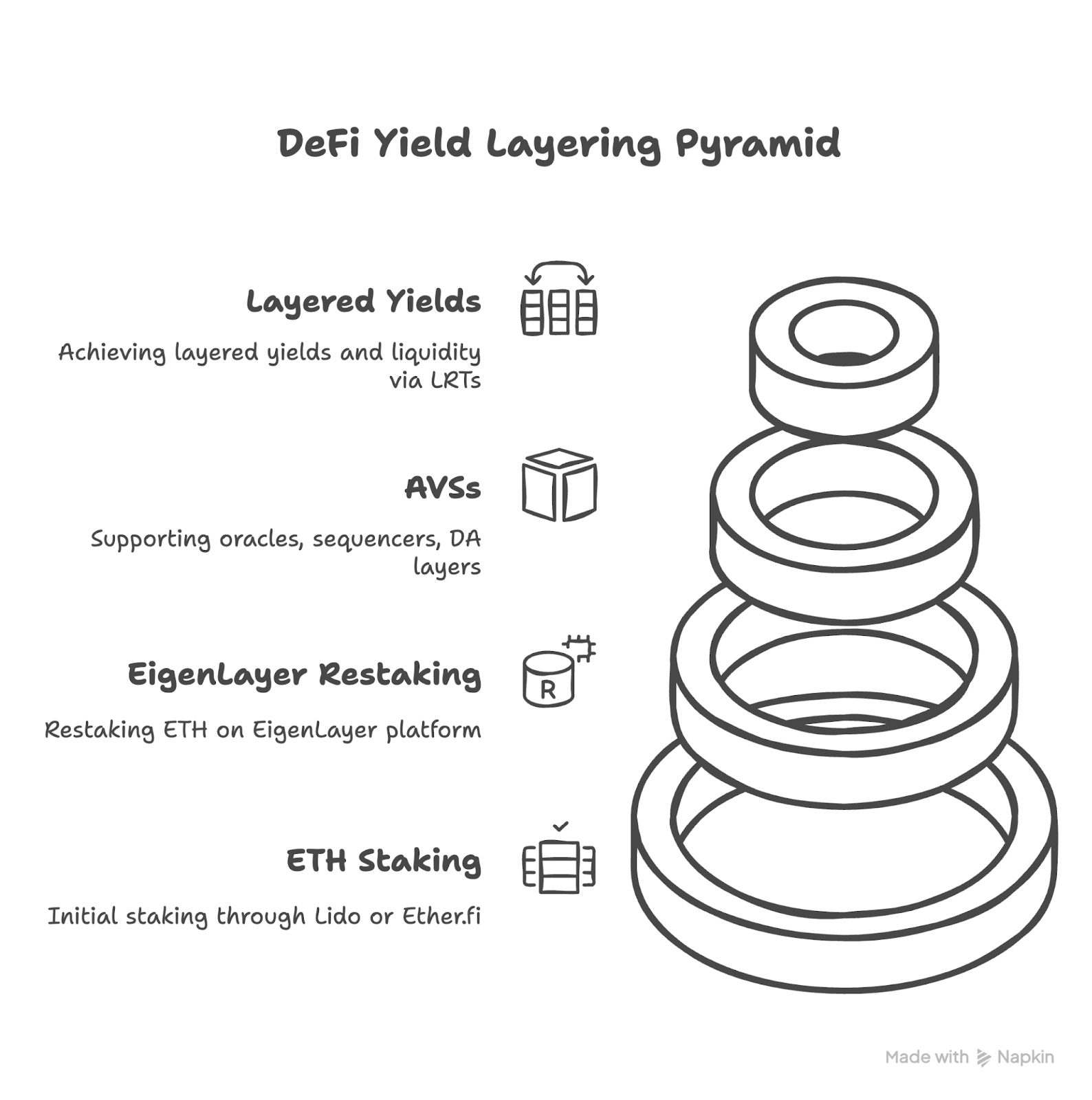
Cross-chain restaking extends the mechanics of Ethereum’s EigenLayer by allowing staked assets to secure multiple, distinct blockchains simultaneously. The process begins when a user deposits assets, such as ETH, into a restaking contract on the origin chain. Instead of locking these assets in isolation, the protocol leverages cross-chain messaging infrastructure to mint a representation of the staked position on other networks. This creates a unified security layer where a single deposit can validate transactions across Ethereum, Solana, or Layer 2 solutions, generating interoperable yields that would otherwise be inaccessible.
The technical execution relies heavily on interoperability protocols like Chainlink CCIP or native bridge solutions. When an asset is bridged, the system does not simply move the token; it records the staking status across a distributed network of nodes. These nodes verify that the underlying asset remains locked and compliant with the restaking requirements on the origin chain. If the validator on the destination chain behaves maliciously, the proof of this violation is communicated back to the origin chain, triggering slashing conditions that penalize the operator and protect the depositor. This cross-chain feedback loop is what transforms isolated staking into a cohesive, multi-chain security model.
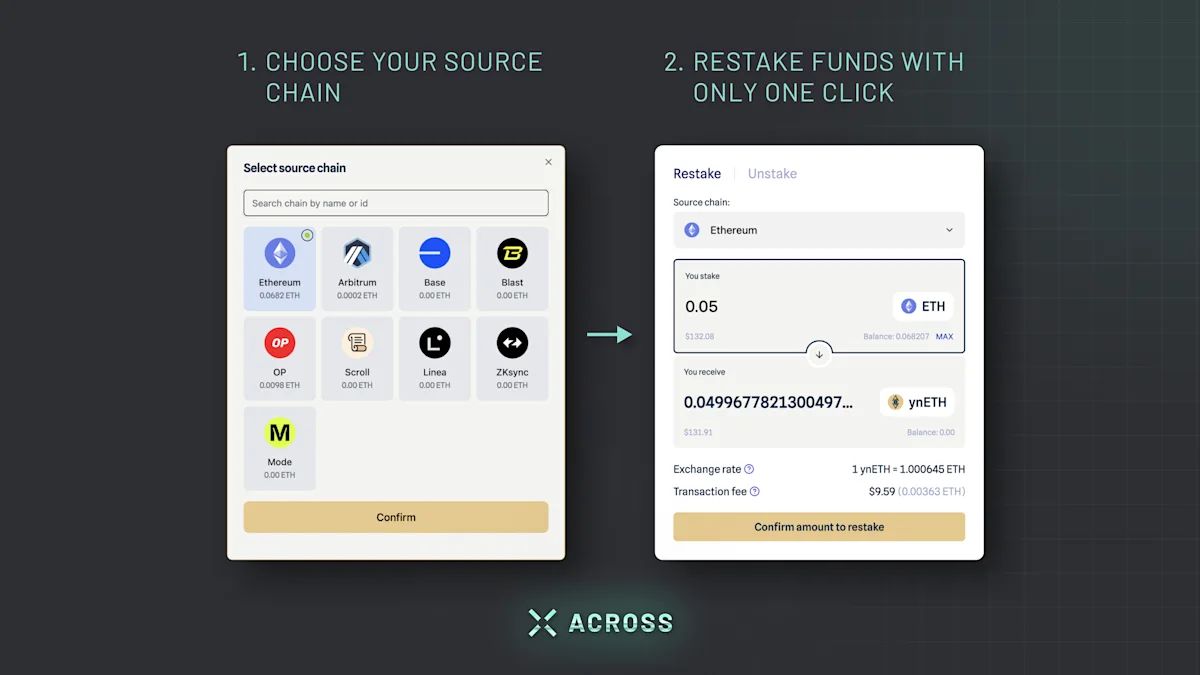
You stake ETH or other supported assets into a restaking contract on the source chain. The protocol locks these assets, assigning them to a specific operator or vault.
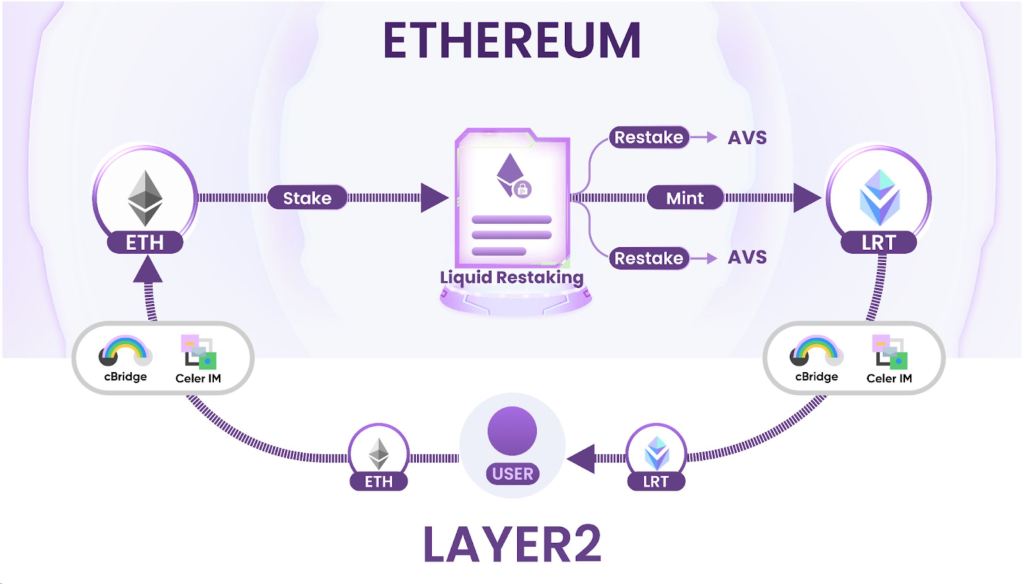
A secure messaging protocol, such as Chainlink CCIP, verifies the lock status and transmits the necessary calldata to the target blockchain. This step ensures the destination chain recognizes your staked position without requiring a custodial intermediary.
As the operator validates transactions on the secondary chain, rewards accumulate. The protocol aggregates these yields and routes them back to the origin chain, where they are distributed to you, often net of a small protocol fee.
The architecture introduces complexity, primarily around the latency and security of the messaging layer. If the cross-chain bridge or messaging protocol is compromised, the integrity of the entire restaking position is at risk. Users must evaluate the trust assumptions of the specific bridge used. While native bridges offer speed, they may rely on smaller validator sets. Protocol-owned bridges, often backed by established infrastructure like Chainlink, provide higher security guarantees but may involve longer withdrawal periods. Understanding this trade-off is essential for managing risk in cross-chain restaking 2026 environments.
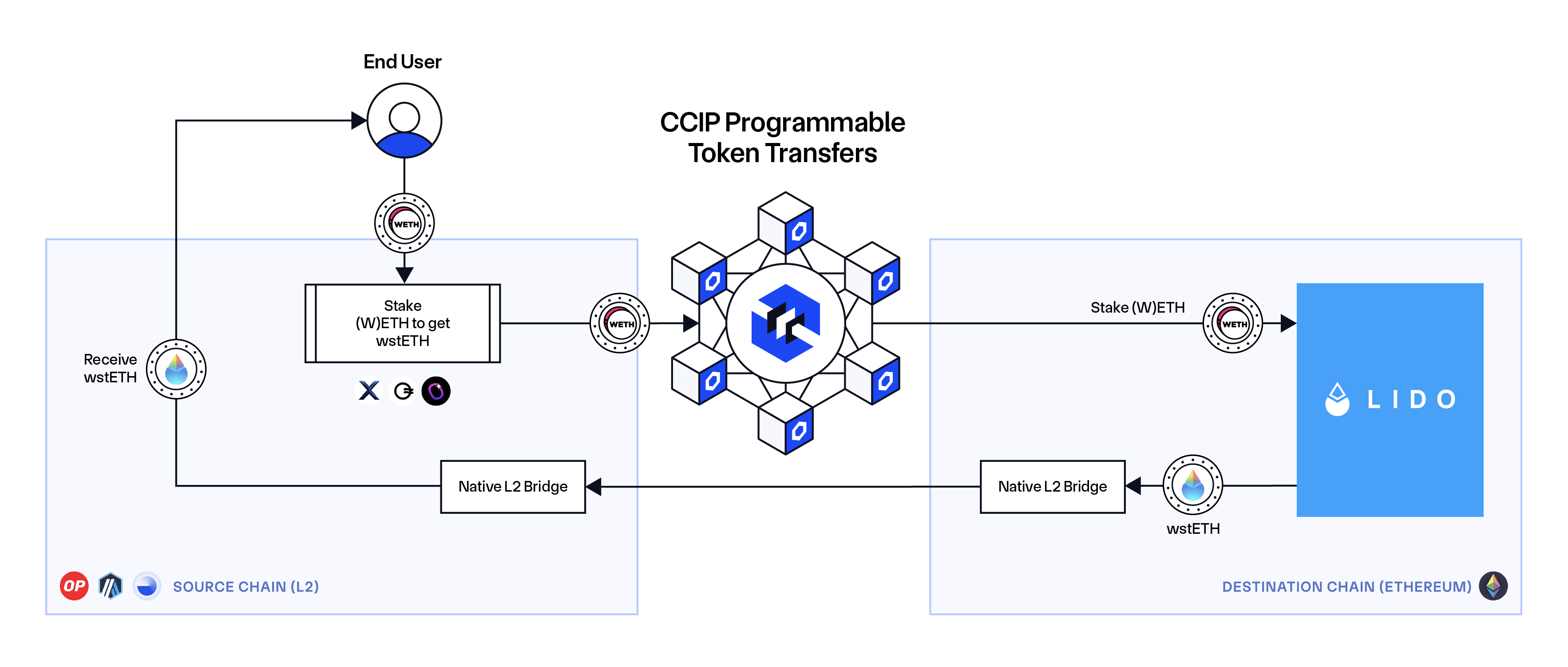
The efficiency of this mechanism depends on the liquidity depth of the bridged assets. In 2026, the most robust cross-chain restaking protocols prioritize chains with high transaction finality and established validator sets. This ensures that the rewards generated on secondary chains are stable and that the slashing conditions can be enforced in a timely manner. As the ecosystem matures, we expect to see more specialized bridges designed specifically for staking data, reducing the overhead of general-purpose token transfers and improving the net yield for participants.
Top interoperable restaking protocols
Cross-chain restaking in 2026 has shifted from experimental bridging to structured liquidity layers. Leading protocols now secure yield generation across multiple networks by acting as both liquidity aggregators and security validators. Each model balances the trade-off between capital efficiency and cross-chain trust assumptions.
The landscape is defined by three distinct approaches: AMM-native routing, solver-based settlement, and bridge-agnostic messaging. Understanding these differences is critical for evaluating the security posture of your restaked assets.
EigenLayer and the EVM Core
EigenLayer remains the foundational security layer for most cross-chain strategies. While it operates primarily on Ethereum, its restaking abstraction allows other chains to borrow Ethereum's security via light client verification or optimistic bridges. This model minimizes the need for native validators on every chain, reducing the attack surface for restakers.
Yield here is derived from the underlying Ethereum staking rewards plus additional points from restaking incentives. The risk profile is tied to Ethereum's consensus security rather than the integrity of a specific bridge. For protocols relying on EigenLayer, the primary concern is the validity of the cross-chain message passing mechanism, not the economic security of the restaking contract itself.
LayerZero and Omnichain Security
LayerZero provides the messaging infrastructure that enables many restaking protocols to operate across non-EVM chains. Its Ultra Light Node (ULN) architecture requires validators to independently verify messages, creating a decentralized trust model. This is particularly important for restaking, where misaligned incentives on a bridge could lead to false message acceptance.
Protocols using LayerZero often integrate with decentralized oracle networks to ensure price feeds and state updates are accurate across chains. This adds a layer of complexity but ensures that yield calculations and security parameters remain consistent regardless of the destination chain. The security cost is higher due to the need for multiple independent verification paths.
Symbiosis and Solver-Networked Yield
Symbiosis employs a solver-networked approach to cross-chain liquidity. Instead of relying solely on traditional bridges, it uses a network of solvers to find the most efficient routes for assets, including restaked capital. This model can offer better yields by arbitraging inefficiencies between chains while maintaining a unified liquidity pool.
The risk here is operational; the solver network must remain honest and efficient. If solvers collude or fail to provide accurate quotes, restakers may face slippage or delayed settlements. However, for users seeking maximum yield across diverse chains, this model often outperforms static bridge-based solutions.
| Protocol | Security Model | Primary Chains | Yield Source |
|---|---|---|---|
| EigenLayer | Ethereum Consensus | EVM | Staking + Incentives |
| LayerZero | Ultra Light Node | Multi-Chain | Bridge Fees + Liquidity |
| Symbiosis | Solver Network | Multi-Chain | Arbitrage + LP Fees |
| Wormhole | Guardian Network | Multi-Chain | Bridge Utilization |
The fragility of cross-chain restaking security
Cross-chain restaking amplifies yield potential by locking assets across multiple networks, but it simultaneously multiplies the attack surface. The core vulnerability lies in the verifier architecture: when a single protocol or bridge validates state transitions between chains, a compromise does not just affect one network—it cascades across the entire ecosystem. In 2026, the industry learned that trust in asset bridging is only as strong as its weakest verifier node.
The KelpDAO incident serves as the primary case study for these architectural risks. The protocol suffered a $292 million loss, exposing how confidence in cross-chain flows can evaporate when verifier failures occur. The hack did not just drain funds; it triggered a broader market freeze as doubts spread across the restaking landscape. This event highlighted that security in cross-chain restaking is not merely about smart contract audits, but about the resilience of the underlying inter-chain communication protocols.
The technical reality is that restaking mechanisms feel immediate pressure when bridging trust wavers. Unlike isolated DeFi protocols, restaking relies on continuous, real-time verification of staked assets across chains. When a bridge or verifier is compromised, the entire security assumption of the restaked capital is invalidated. This creates a liquidity trap where assets cannot be safely withdrawn or restaked, effectively freezing capital across multiple chains simultaneously.
To manage this risk, investors must prioritize protocols with decentralized verifier sets and robust fallback mechanisms. The era of trusting single-bridge solutions is over. As cross-chain restaking matures in 2026, security will be defined by the diversity and independence of the verification layers, not just the yield offered.
Steps to secure your restaking position
Cross-chain restaking in 2026 requires more than just finding a high yield; it demands a disciplined verification process. Because you are layering security protocols across multiple isolated networks, the attack surface expands with every bridge you cross. Follow this workflow to mitigate smart contract risk and ensure your assets remain under your control.
Before moving funds, audit the underlying interoperability protocol. In 2026, trustless bridges using automated verification (like Chainlink CCIP or deBridge) are preferred over centralized custodians. Check the protocol’s documentation to confirm it uses multi-signature validators or threshold signature schemes that cannot be compromised by a single actor.

Cross-chain restaking contracts are complex because they must manage assets on two chains simultaneously. Ensure the specific contract you are interacting with has passed recent audits from reputable firms like OpenZeppelin or Trail of Bits. Do not rely on internal team audits; look for public reports that detail known vulnerabilities and their mitigations.

Never move your full position in one transaction. Send a small amount of capital first to verify that the cross-chain bridge executes correctly and that the restaking rewards are credited to your wallet on the destination chain. This step catches potential slippage, gas estimation errors, or bridge downtime before you risk significant capital.
Once your position is live, use a portfolio tracker that supports cross-chain aggregation. This allows you to monitor your staked assets and accrued yields across all involved networks from a single dashboard. If a bridge halts or a validator set changes, you need immediate visibility to decide whether to withdraw or hold.
Cross-Chain Restaking 2026 FAQ
What is the main goal of cross-chain restaking?
Cross-chain restaking aims to solve blockchain isolation by allowing assets and security to move between networks. Instead of relying on centralized intermediaries, trustless bridges use automated software to verify messages and exchange assets, enabling users to deposit on one chain while participating in activities on another [[src-serp-1]].
What is the best cross-chain DEX for 2026?
For 2026, LI.FI offers the broadest route coverage across 30+ chains, while deBridge provides fast EVM-to-EVM execution under two minutes. Symbiosis supports any-token-to-any-token swaps, and 1inch remains a top choice for established EVM routing depth [[src-serp-4]].
Is Ethereum a good investment in 2026?
Experts remain bullish on Ethereum's long-term trajectory, with Standard Chartered predicting ETH could reach $40,000 by the next decade [[src-serp-1]]. More conservative estimates place it closer to $10,000, both representing significant growth from its early 2026 valuation.
How does Chainlink CCIP fit into cross-chain restaking?
Chainlink CCIP is a core interoperability protocol that enables developers to build secure applications. It allows for the transfer of tokens, messages, or both across different chains, providing the infrastructure needed for safe cross-chain restaking operations.
No comments yet. Be the first to share your thoughts!