
What cross-chain restaking means
Cross-chain restaking allows you to reuse staked assets, such as Ethereum, to secure multiple decentralized networks simultaneously. Unlike traditional single-chain restaking, which confines security to the Ethereum ecosystem, this approach leverages cross-chain messaging protocols and bridges to extend your staked capital to other layers like Solana, Arbitrum, or specialized L2s.
In single-chain restaking, your ETH secures Validator Set Services (AVSs) directly on Ethereum. You are essentially lending your security budget to new protocols while staying within the same settlement layer. Cross-chain restaking abstracts this security. It allows protocols on different blockchains to tap into the economic security of Ethereum without requiring you to bridge your assets back to the mainnet or wrap them in complex synthetic forms.
This mechanism works by locking your staked assets on the source chain and using a messaging layer to signal that security to a destination chain. Protocols like Everclear facilitate this by enabling dApps to pull security from any L2. This creates a unified security market where capital is not fragmented by chain boundaries, allowing for more efficient capital utilization across the broader crypto landscape.
Comparing top restaking protocols
Cross-chain restaking has evolved from a single-chain experiment into a fragmented ecosystem of specialized protocols. Each solution prioritizes a different balance of security, capital efficiency, and interoperability. Choosing the right protocol depends on whether you prioritize native Ethereum security, multi-asset flexibility, or cross-chain accessibility.
The following comparison breaks down the core mechanics of three leading approaches: EigenLayer (via EigenCloud), Everclear, and Allstake. This table highlights how each handles supported chains, asset types, and the underlying security model that powers yield.
| Protocol | Supported Chains | Native Assets | Security Model | Yield Source |
|---|---|---|---|---|
| EigenLayer / EigenCloud | Ethereum Mainnet + L2s (via EigenCloud) | ETH, stETH, rETH, and wrapped assets via Flow Vaults | Ethereum Slashing Penalties (EIP-4895) | AVS Performance Fees + Staking Rewards |
| Everclear | Any L2 (no bridging to L1 required) | ETH and L2-native tokens | Cross-chain BLS Signatures + L1 Finality | AVS Fees + L2 Gas Optimization |
| Allstake | All chains (meshed architecture) | Multi-chain native tokens | Chain Signatures (Decoupled Consensus) | Cross-chain AVS Fees + Network Fees |
EigenLayer remains the security anchor for most cross-chain strategies. By leveraging EigenCloud, it extends Ethereum's slashing conditions to applications on other chains. However, this often requires bridging assets or relying on wrapped representations, which can introduce complexity. The introduction of Flow Vaults by Renzo allows for more flexible, multi-asset restaking on EigenCloud, broadening the yield opportunities beyond simple ETH staking.
Everclear takes a different approach by enabling restaking directly from any L2 without bridging back to Ethereum mainnet. This reduces friction and gas costs for users on layer-two networks. Its security model relies on cross-chain BLS signatures and finality proofs, making it ideal for dApps that need low-latency interactions without sacrificing Ethereum-level security guarantees.
Allstake positions itself as the first meshed restaking protocol, aiming to bring restaking to all chains simultaneously. By decoupling consensus from execution, it uses chain signatures to enable trustless scaling. This architecture allows it to support a wider variety of native assets across different ecosystems, though it represents a newer and less battle-tested model compared to EigenLayer's established slashing infrastructure.
The Bridge Weakness in Cross-Chain Restaking
Cross-chain restaking relies on a fundamental assumption: that the messaging layer between blockchains is secure. In reality, this security is only as strong as its weakest link. When you restake assets across chains, you are not just trusting the validator set; you are also trusting the bridge infrastructure that moves proofs and assets between them.
Bridge Exploits and Messaging Failures
Most cross-chain bridges operate by locking assets on a source chain and minting wrapped equivalents on a destination chain. This process depends on a centralized or decentralized oracle network to verify transactions and relay messages. If that oracle network is compromised, the bridge’s security model collapses.
Historical data shows that bridge exploits remain the largest vector for losses in cross-chain activity. Unlike a single-chain hack, which is limited to one protocol’s treasury, a bridge exploit can drain assets from multiple ecosystems simultaneously. The complexity of verifying state across different consensus mechanisms introduces additional attack surfaces, including signature forgery and message replay attacks.
The Security Scope Trade-off
Single-chain restaking concentrates security within one ecosystem, making it easier to audit and monitor. Cross-chain restaking abstracts this security, spreading it across multiple networks but diluting the guarantee. Protocols like Babylon and Picasso attempt to mitigate this by using restaked assets to secure their own validation layers, but they cannot eliminate the underlying bridge risk.
If the bridge fails to deliver a valid proof, the destination chain cannot verify the restaking state. This means your restaked yield becomes vulnerable to double-spending or invalid state transitions. The risk is not theoretical; it is structural. Every hop in a cross-chain transaction multiplies the potential points of failure.
Mitigating the Risk
To manage these risks, investors should prioritize bridges with the longest operational history and the most transparent audit trails. Decentralized messaging protocols that use threshold signature schemes or zero-knowledge proofs offer stronger guarantees than centralized relayers. However, no solution is perfect. The trade-off for yield is always exposure to the bridge’s security posture.
Yield outlook for cross-chain restaking
The yield landscape for cross-chain restaking in 2026 is defined by the transition from isolated Ethereum staking to a multi-asset security model. Restaking has evolved from an ETH-only mechanism into a broader infrastructure layer, allowing protocols on different chains to tap into pooled security. As noted by EigenLayer, cross-chain asset restaking now enables projects to utilize assets from networks like Solana, expanding the total value locked and the potential for yield generation beyond the Ethereum mainnet [src-serp-4].
ETH remains the primary collateral for this activity, but its performance directly influences restaking APYs. When ETH price action is stable or appreciating, the underlying value of the staked assets supports higher sustainable yields without excessive risk of liquidation. Conversely, volatility in ETH can compress margins as operators adjust risk parameters. The following chart illustrates the recent price trajectory of ETH, which serves as the baseline for most cross-chain restaking yields.
Solana-based restaking introduces a different dynamic. While SOL offers lower gas fees and faster finality, its yield opportunities are often tied to the performance of Solana-native protocols that integrate with cross-chain bridges. The demand for SOL as a security asset is growing as more Ethereum-based protocols seek to secure their Solana deployments. This creates a feedback loop where cross-chain demand drives liquidity depth, which in turn stabilizes yields.
The interaction between ETH and SOL restaking creates a diversified yield environment. Investors are no longer limited to a single chain's economic activity. Instead, they can allocate capital across chains to capture the highest risk-adjusted returns. This fragmentation of liquidity means that yield opportunities are more granular and sensitive to cross-chain messaging reliability and bridge security. As the ecosystem matures, the most competitive yields will likely come from protocols that can efficiently route security across chains without introducing significant latency or risk.
How to start cross-chain restaking
Cross-chain restaking lets you secure multiple networks while earning yield, but it requires careful navigation of bridges and protocol rules. Unlike simple staking, you must manage assets across different chains and understand the specific slashing risks of each target network. Follow this workflow to participate safely.
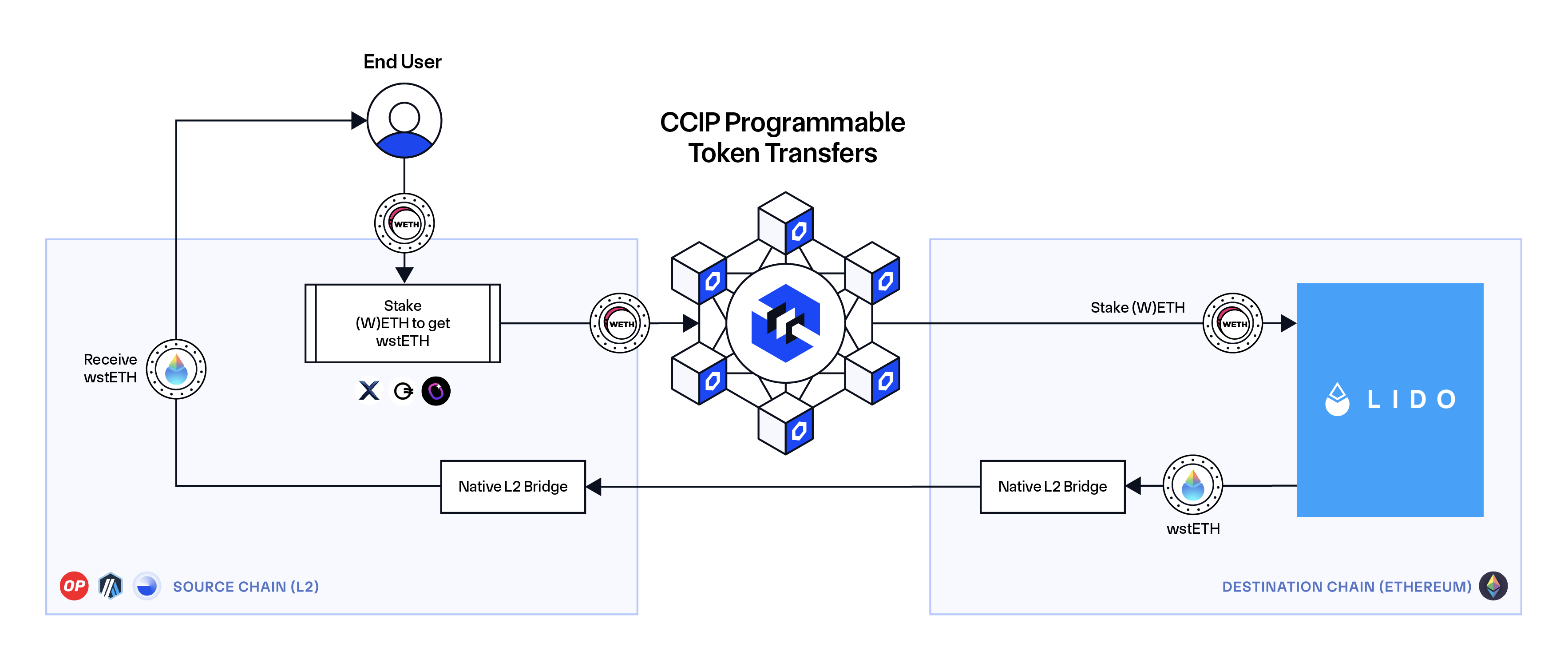
Choose a protocol that supports your target chains. Platforms like Everclear allow dApps to enable restaking from any L2 without bridging back to Ethereum mainnet. Others, such as Allstake, use chain signatures to decouple consensus and execution, enabling trustless scaling across all chains. Verify the protocol’s audit status and community traction before proceeding.
Move your staked assets to the chain where the restaking contract lives. Use a reputable bridge that matches your asset type. For example, moving SOL from Solana to Ethereum involves locking the original SOL and releasing a wrapped version on the destination chain. Always check bridge security and liquidity depth to avoid slippage or failed transactions.

Deposit your bridged assets into the restaking protocol’s smart contract. You may need to delegate to specific operators or validators on the target chains. Review the operator’s performance history and commission rates. This step locks your assets into the restaking pool, activating your yield generation and security contribution.
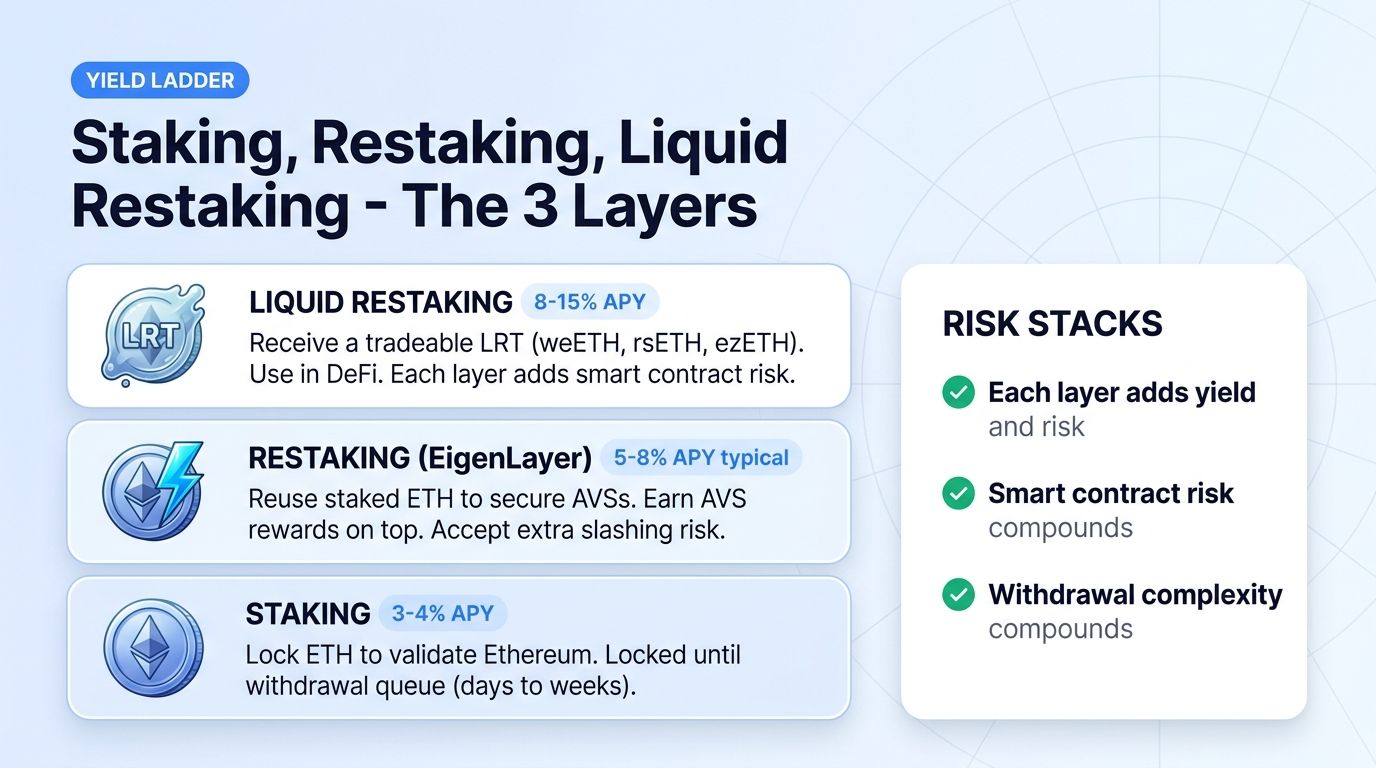
Track your position across all secured chains. Slashing events on one network can impact your entire restaking position. Use protocol dashboards or on-chain explorers to monitor validator performance and reward distributions. Adjust your delegation if an operator shows signs of downtime or malicious behavior to protect your capital.
Common questions about cross-chain restaking
Cross-chain restaking allows you to secure multiple networks simultaneously, amplifying yield but introducing unique technical risks. Understanding the mechanics helps you avoid common pitfalls.
No comments yet. Be the first to share your thoughts!