
What cross-chain restaking actually is
Cross-chain restaking combines two distinct blockchain concepts: restaking, which reuses staked assets to secure new services, and cross-chain interoperability, which allows those assets to move between different networks. Instead of locking capital on a single chain, you bridge your staked tokens to other ecosystems to earn yield from multiple sources simultaneously.
In traditional staking, your Ethereum (ETH) secures only the Ethereum network. With restaking, that same ETH can also secure Actively Validated Services (AVSs)—new protocols that need security but don't want to build their own validator sets. Cross-chain restaking takes this further by letting you apply that pooled security across different blockchains, such as using ETH staked on Ethereum to secure services on Arbitrum, Optimism, or Solana.
This creates a "pooled security" model. Think of it like a security guard who works for one building but has a contract to protect multiple properties. The guard (your staked capital) provides safety to several locations (AVSs), and you receive compensation from each. This maximizes the utility of your assets, turning a single stake into a multi-chain income stream.
Compare top cross-chain restaking protocols
Choosing the right cross-chain restaking infrastructure depends on which chains you already use and how much security overhead you want to manage. The leading protocols—EigenCloud, Allstake, and Babylon—take different approaches to bridging Ethereum security to other ecosystems.
EigenCloud leverages EigenLayer’s existing AVS infrastructure to extend Ethereum security. It allows projects like Renzo’s Flow Vaults to restake assets across multiple chains without requiring new validator sets. This model is ideal if you want to reuse existing Ethereum staking infrastructure.
Allstake focuses on meshed restaking using Chain Signatures. By decoupling consensus from execution, it enables trustless scaling across any chain. This approach is useful for developers building on non-EVM chains who need lightweight security proofs.
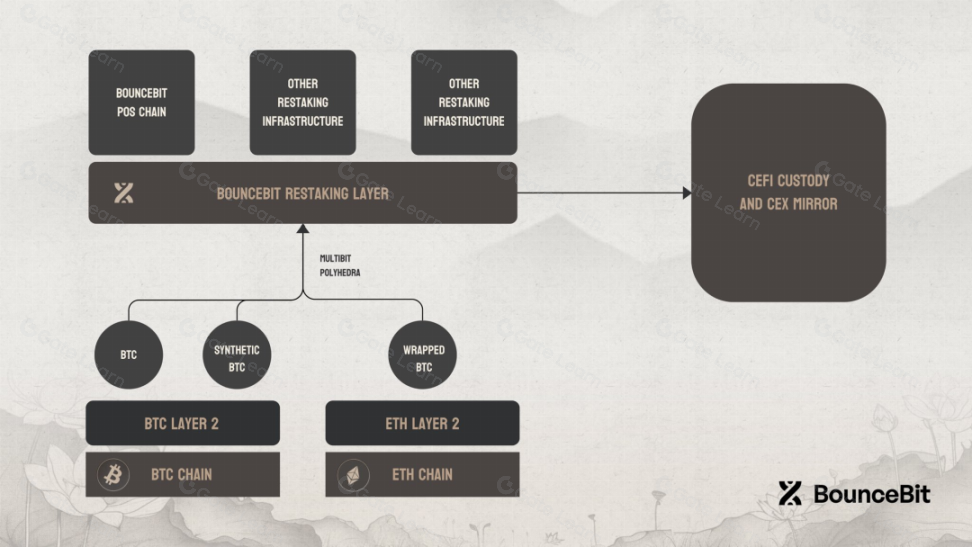
Babylon uses a restaked asset model, often Bitcoin, to secure new protocols. It abstracts security across ecosystems, allowing Bitcoin stakers to support AVSs on other chains. This is the go-to option if you hold Bitcoin and want to participate in Ethereum-aligned security.
| Protocol | Supported Chains | Security Model | Yield Mechanism |
|---|---|---|---|
| EigenCloud | Multi-EVM, Ethereum | Ethereum AVS | Shared security fees |
| Allstake | All Chains (Chain Signatures) | Decoupled Consensus | Cross-chain staking rewards |
| Babylon | Bitcoin, Multi-Chain | Bitcoin Staking | BTC restaking yield |
EigenCloud is best for Ethereum-native projects. Allstake suits multi-chain applications needing flexible security. Babylon is optimal for Bitcoin holders seeking cross-chain yield. Evaluate your existing holdings and target chains before selecting a protocol.
How to start cross-chain restaking
Cross-chain restaking lets you deploy the same capital across multiple networks to secure new protocols while earning layered rewards. The process requires moving assets between blockchains, choosing a Liquid Restaking Token (LRT) provider, and activating your stake on an AVS. Follow this sequence to set up your position safely and efficiently.
Step 1: Bridge your assets to the target network
Before you can restake, your capital must reside on the blockchain where the LRT or AVS operates. If your funds are on Ethereum Mainnet but you want to restake on a Layer 2 like Arbitrum or Base, you must use a cross-chain bridge. Bridges function by locking your assets on the source chain and minting a wrapped equivalent on the destination chain. This ensures your capital is accessible for the next phase of the workflow.
Choose a bridge with high liquidity and a strong security track record to minimize slippage and risk. Popular options include official bridges like the Arbitrum Bridge or third-party aggregators like Stargate Finance. Always verify the contract addresses and network selections to avoid sending funds to the wrong chain. Once the transaction confirms, your balance will appear in your wallet on the destination network.

Use a trusted bridge to move your ETH or stablecoins from your source chain to the target network. Ensure you have enough native gas tokens (like ETH on Arbitrum) to pay for future transaction fees. Wait for the bridge confirmation, which can take anywhere from a few seconds to several minutes depending on the protocol.
LRTs simplify the restaking process by handling the complex staking and slashing risk management on your behalf. Instead of interacting directly with EigenLayer or other restaking protocols, you deposit your bridged assets into an LRT protocol like EtherFi, Renzo, or Puffer. These platforms mint a receipt token (e.g., ezETH, ezETH) that represents your restaked position. This approach provides immediate liquidity and allows you to use your restaked assets in other DeFi activities if desired.
Research the specific AVSs each LRT supports and their historical performance. Look for protocols with audited smart contracts and transparent slashing protection mechanisms. Deposit your bridged assets into the LRT contract to receive your receipt tokens.
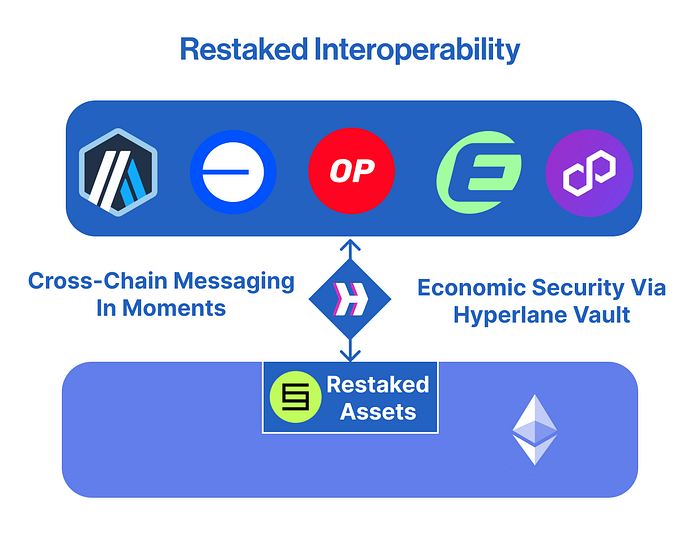
With your LRT receipt tokens in hand, you can now delegate your restaked capital to a specific AVS. An AVS is a new decentralized service that needs security but lacks its own validator set. By restaking, you lend your Ethereum security to this AVS. You might choose an AVS for a specific use case, such as data availability, oracle services, or decentralized compute.
Connect your wallet to the AVS dashboard or the LRT interface that supports direct AVS selection. Review the slashing conditions and reward structure carefully. Confirm the transaction to activate your stake. Your capital is now actively securing the AVS, and you will begin earning yield from both the base staking rewards and the AVS-specific incentives.
Restaking is not a set-and-forget strategy. You must monitor your position for changes in slashing risk, reward rates, and protocol health. Slashing events can result in the loss of a portion of your staked capital if the validator node misbehaves. Set up alerts for any significant changes in the AVS’s performance or the LRT’s underlying security metrics.
Regularly review your dashboard to track total yield and ensure your position aligns with your risk tolerance. If an AVS becomes too risky or yields drop significantly, you may need to unstake and reallocate your capital. Stay informed about protocol updates and governance proposals that could impact your restaked assets.
Cross-chain restaking expands your yield opportunities by leveraging Ethereum’s security across the broader ecosystem. By following these steps, you can participate in this emerging financial primitive while managing the associated risks. Always start with small amounts to familiarize yourself with the workflow before committing significant capital.
Weigh the risks and security choices that change the plan
Cross-chain restaking extends your yield potential, but it also expands your attack surface. You are no longer relying on a single blockchain’s security model; you are distributing your stake across multiple ecosystems, each with its own vulnerabilities. Understanding these specific risks is essential before you commit capital.
Slashing Risks
When you restake, your assets secure Actively Validated Services (AVSs). If an AVS validator behaves maliciously or fails to perform its duties, your staked assets can be "slashed"—partially or fully confiscated as a penalty. In a cross-chain environment, this risk is compounded because you must trust the security assumptions of the destination chain. If that chain’s consensus mechanism is weaker or if the AVS logic is flawed, your losses can be significant. Always verify the slashing conditions of the specific AVS you are supporting.
Bridge Vulnerabilities
Moving assets between chains requires bridges, which are historically the most exploited component in DeFi. Bridges hold large pools of liquidity, making them attractive targets for hackers. A successful bridge exploit can drain funds instantly, regardless of how secure the underlying restaking protocol is. When using cross-chain restaking, you are implicitly trusting the bridge’s code and its operators. Prefer bridges with long track records, high total value locked (TVL), and transparent audit histories.
Smart Contract Risks
Every step of the cross-chain restaking process involves smart contracts: the restaking protocol, the bridge, and the AVS itself. More contracts mean more potential points of failure. Bugs, logic errors, or unforeseen interactions between these contracts can lead to loss of funds. Ensure that the protocols you use have undergone rigorous third-party audits and have active bug bounty programs. Never assume that a protocol is safe just because it is new or offers high yields.
Checklist for safe cross-chain execution
Cross-chain restaking amplifies yield but introduces distinct risks at every bridge hop. Before locking funds, verify that the protocol’s security model holds across all involved networks.
-
Verify the bridge’s total value locked and audit history.
-
Confirm the restaking contract is verified on the destination chain.
-
Check for slippage limits on the final yield distribution.
-
Ensure you have native gas tokens for every chain in the path.
-
Test with a minimal amount before committing significant capital.
The complexity of multi-chain messaging means a single broken link can trap assets. Treat this process as a security audit of your own workflow.

Common questions about cross-chain restaking
Cross-chain restaking allows you to reuse staked assets to secure additional protocols across different networks. This approach combines the security of staking with the yield opportunities of multi-chain DeFi.
No comments yet. Be the first to share your thoughts!