
How cross-chain restaking works in 2026
Cross-chain restaking combines liquid restaking tokens (LRTs) with cross-chain liquidity protocols to extend security services and yield across multiple blockchains. This architecture allows validators to secure networks beyond their native chain, effectively multiplying the utility of their staked assets. Instead of capital sitting idle on a single ledger, it participates in a broader ecosystem of decentralized services.
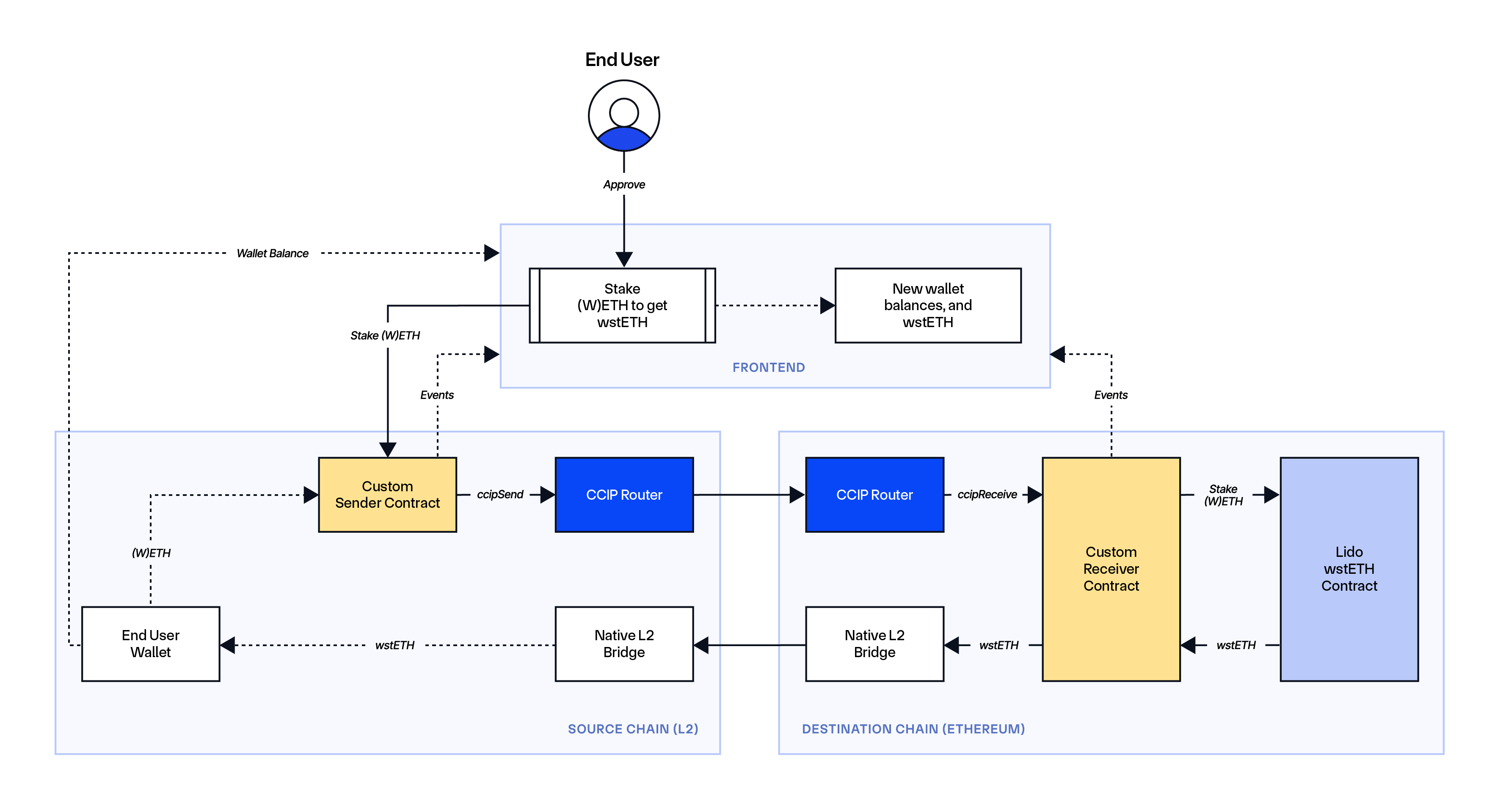
The mechanism relies on interoperability protocols that bridge assets between disparate networks. When a user restakes assets like ETH, they typically receive an LRT representing their position. Cross-chain protocols then lock this LRT on the source chain and mint a wrapped representation on the destination chain. This wrapped token can then be used to secure a second network, such as a Layer 2 or an independent app-chain, without requiring the user to unstake and restake manually.
The primary distinction from single-chain restaking is the expanded attack surface and yield potential. Single-chain restaking, such as Babylon’s approach, avoids cross-chain bridge exposure entirely by keeping assets within a single security domain. While this reduces risk, it limits the scope of secured networks. Cross-chain restaking accepts higher complexity to unlock yield from multiple sources, making it a high-stakes strategy for sophisticated validators.
Security audits of these interoperability layers are critical. Protocols like Chainlink CCIP or dedicated bridge solutions must be rigorously vetted. The cost of a bridge failure often outweighs the additional yield gained from cross-chain participation, a tradeoff that defines the current landscape of 2026 restaking strategies.
Leading Interoperability Protocols for Restaking
Cross-chain restaking relies on infrastructure that can move assets and messages between disjointed networks without compromising security. In 2026, the market has consolidated around a few primary providers that offer distinct trade-offs between decentralization, speed, and capital efficiency. Evaluating these protocols requires looking beyond total value locked (TVL) to examine their underlying security models and historical exploit records.
The following comparison outlines the current leaders in cross-chain liquidity and messaging. These protocols serve as the backbone for restaking derivatives, allowing validators to secure multiple networks simultaneously.
| Protocol | Security Model | Supported Chains | TVL (Est. 2026) | Risk Profile |
|---|---|---|---|---|
| Chainlink CCIP | EVM + Off-chain Oracle Network | 70+ (incl. Swift integration) | 18B+ | Low (Proven track record) |
| Wormhole | Guardian Network (Multisig) | 30+ | 4.5B | Medium (Past exploits mitigated) |
| Stargate | LayerZero (Omnichain) | 40+ | 2.1B | Medium (Smart contract risk) |
| Across | Optimistic Verification | 10+ (L2 focused) | 800M | Low (Capital efficiency) |
Chainlink CCIP has emerged as the dominant standard for high-value settlements, processing over $18 billion in cross-chain volume in Q1 2026 alone. Its integration with traditional finance infrastructure, including Swift, provides a layer of institutional credibility that pure crypto-native bridges lack. The protocol’s reliance on a decentralized oracle network rather than a single multisig or optimistic verifier reduces the attack surface for large-scale exploits.
Wormhole and Stargate remain significant players but operate under different security assumptions. Wormhole’s guardian network, while decentralized, has historically been vulnerable to collusion among guardians, as seen in the 2022 breach. Stargate’s LayerZero architecture offers flexibility but introduces smart contract complexity that can be exploited if misconfigured. Across provides a more conservative, optimistic model suited for smaller, frequent transfers between Layer 2s, prioritizing capital efficiency over broad chain compatibility.
When selecting a bridge for restaking, the choice should align with the specific risk tolerance of the yield strategy. High-yield restaking positions often require the robustness of CCIP, while lower-stakes arbitrage opportunities may favor the speed of Stargate or Across. Always verify the current TVL and chain support, as these metrics shift rapidly with market conditions.
Yield premiums and liquid restaking token performance
Cross-chain restaking promises higher returns than native staking, but the premium comes with bridge risk. To understand the trade-off, we need to look at how Liquid Restaking Tokens (LRTs) price that risk into their yield.
The yield gap
Native staking on Ethereum currently yields approximately 3-4% APR. Cross-chain restaking protocols layer additional rewards from other networks and restaking incentives on top of this base. This creates a yield spread that can exceed 5-8% APR depending on the specific chain and protocol. However, this spread is not guaranteed. It fluctuates based on the cost of bridging assets and the demand for liquidity on the target chain.
LRT valuation and decay
Liquid Restaking Tokens like rETH or cbETH represent a claim on staked assets plus accrued rewards. Their performance is tied to the underlying staking yield minus protocol fees. When cross-chain bridges are secure and efficient, LRTs trade at a premium to their net asset value (NAV). If bridge risks rise, or if the yield premium shrinks, the LRT price can decay relative to the underlying asset. This decay is the hidden cost of chasing higher yields across chains.
Market context
The base yield environment is set by Ethereum’s staking rate. A drop in ETH price or staking yield compresses the potential returns for all restaking strategies. We track ETH/USD to monitor this baseline volatility.
Live LRT pricing
To see the current market price of a major LRT, which reflects real-time yield expectations and bridge health, use the widget below.
Bridge vulnerabilities and exploit history
Cross-chain bridges are the primary attack surface for restaking strategies. By moving assets between disparate networks, you expose capital to smart contract bugs, oracle manipulation, and validator collusion. While yield farming offers returns, bridge failures can erase that yield and principal in seconds.
The risk is not theoretical. In May 2026, Thorchain paused all trading after an attacker drained approximately $10.8 million across Bitcoin and other supported chains [[src-serp-7]]. The exploit targeted the liquidity pool mechanics, causing the native RUNE token to drop 12% as confidence eroded. This incident underscores that even well-audited protocols remain vulnerable to sophisticated cross-chain attacks.
These events highlight a critical reality: security is not a feature but a prerequisite. When selecting bridge infrastructure for restaking, prioritize protocols with proven track records, decentralized validator sets, and transparent incident response plans. Never assume that a bridge's existence guarantees its safety.
Mitigating risks in cross-chain strategies
Cross-chain restaking amplifies yield potential, but it also layers protocol risk across multiple chains. A failure in one bridge or validator set can compromise assets locked in restaking contracts on the destination chain. To reduce exposure, users must prioritize infrastructure that relies on established consensus mechanisms rather than experimental message passing.
The Cross-Chain Interoperability Protocol (CCIP) by Chainlink represents a significant step toward secure cross-chain communication. By using a decentralized oracle network to verify and relay messages, CCIP reduces the attack surface compared to traditional lock-and-mint bridges. Integrating with protocols that support CCIP ensures that asset transfers are backed by a robust verification layer, lowering the probability of bridge exploits.
When selecting a bridge, verify the underlying security model. Canonical bridges, which connect a Layer 1 directly to its Layer 2 scaling solution, offer the highest security guarantee because they are controlled by the same validator set. If using third-party bridges, check for multi-signature governance, time-locks, and insurance funds. Avoid bridges with low total value locked (TVL) or those lacking transparent audit reports, as these are primary targets for malicious actors.
Finally, diversify your exposure across different bridge providers and restaking protocols. No single system is immune to smart contract vulnerabilities. By spreading capital across multiple secure pathways, you limit the impact of any single point of failure. Always review the latest audit findings and incident reports before deploying significant capital into cross-chain restaking strategies.
Frequently asked questions about cross-chain restaking
What is the cheapest bridge for cross-chain transfers? Across Protocol currently offers the most competitive rates for bridging assets between Layer 2 networks like Arbitrum, Optimism, and Boba. By leveraging an optimistic oracle model rather than waiting for standard finality times, Across reduces gas costs and latency, making it a preferred choice for cost-sensitive restaking strategies.
Is Chainlink cross-chain capable? Yes. Chainlink operates the Cross-Chain Interoperability Protocol (CCIP), an open-source standard designed for secure cross-chain messaging and token transfers. CCIP allows smart contracts to communicate across different blockchains, providing the infrastructure needed for trustless cross-chain restaking without relying on centralized intermediaries.
When did Ethereum transition from proof of work to proof of stake? Ethereum completed its transition from Proof of Work (PoW) to Proof of Stake (PoS) on September 15, 2022, during an event known as "The Merge." This shift eliminated the need for energy-intensive mining, reducing the network's energy consumption by approximately 99.95% and laying the groundwork for modern restaking mechanisms that rely on staked ETH.
No comments yet. Be the first to share your thoughts!