
What cross-chain restaking means
Cross-chain restaking allows you to deposit staked assets on one blockchain, receive Liquid Restaking Tokens (LRTs) as receipts, and use those tokens to secure services on a different chain. This mechanism unlocks yield and security utility across multiple networks without requiring you to unstake and restake manually on each destination.
The process relies on interoperability protocols to lock your original stake on the source chain and mint a corresponding LRT on the target chain. For example, you might stake ETH on Ethereum, receive an LRT, and then bridge that LRT to a Layer 2 or an entirely different ecosystem like Solana or Cosmos to provide security for new protocols.
While this expands the utility of your capital, it introduces significant complexity and risk. The most critical vulnerability lies in the bridge infrastructure itself. Bridges are frequent targets for exploits because they must manage cross-chain state and asset custody. The 2026 KelpDAO hack, which resulted in a $292 million loss, highlights how confidence in asset bridging can evaporate instantly when trust is broken.
To execute this safely, you must prioritize protocols with rigorous security audits and proven track records. Avoid relying on generic bridging solutions for high-value positions. Instead, use official documentation from reputable security firms to verify the smart contract integrity of both the restaking layer and the bridge mechanism. Your capital is only as secure as the weakest link in the cross-chain path.
Choose your restaking protocol and LRT
Selecting the right Liquid Restaking Token is the foundation of a safe cross-chain restaking strategy. You need a protocol that offers native support for your target destination chain, minimizing reliance on risky third-party bridges. The goal is to find an LRT like rsETH or ezETH that maintains liquidity and security across multiple networks.
Before committing funds, verify the protocol's audit history. The KelpDAO incident serves as a stark reminder that smart contract vulnerabilities can lead to total loss. Always prioritize protocols backed by reputable security firms and official documentation. Check if the LRT is supported natively by the bridge you intend to use, or if it requires a wrapped version that introduces additional counterparty risk.
Use the comparison below to evaluate top LRTs based on supported chains, yield potential, and audit status. This side-by-side view helps you identify which asset aligns with your specific cross-chain destination and risk tolerance.
| Protocol | Primary LRT | Native Cross-Chain Support | Security Audit |
|---|---|---|---|
| EigenLayer | rsETH | Ethereum, Arbitrum, Optimism | Trail of Bits, OpenZeppelin |
| EtherFi | ezETH | Ethereum, Base, Arbitrum | Zellic, Spearbit |
| KelpDAO | rsETH | Ethereum, Polygon | PeckShield (Note: Incident History) |
| Renzo | ezETH | Ethereum, Arbitrum | Quantstamp, Halborn |

Once you have selected an LRT, verify its liquidity depth on the destination chain. Low liquidity can lead to significant slippage when you eventually unstake or swap your assets. Ensure the bridge you use has a proven track record of handling large volumes securely. Avoid experimental bridges with limited audit coverage, even if they offer higher yields.
Select a secure bridge or messaging layer
The bridge is the weak link in cross-chain restaking. A single compromised validator or flawed smart contract can drain the entire pool. You are not just moving tokens; you are routing them through an intermediary layer that must verify the transaction on the source chain before minting or releasing assets on the destination chain.
When choosing your interoperability layer, prioritize protocols with rigorous security audits and decentralized verification models. Chainlink CCIP is often the gold standard for security because it uses a decentralized network of off-chain nodes to verify message authenticity, reducing the risk of a single point of failure. LayerZero and Wormhole offer broad support but require careful scrutiny of their specific verifier setups and staking mechanisms.
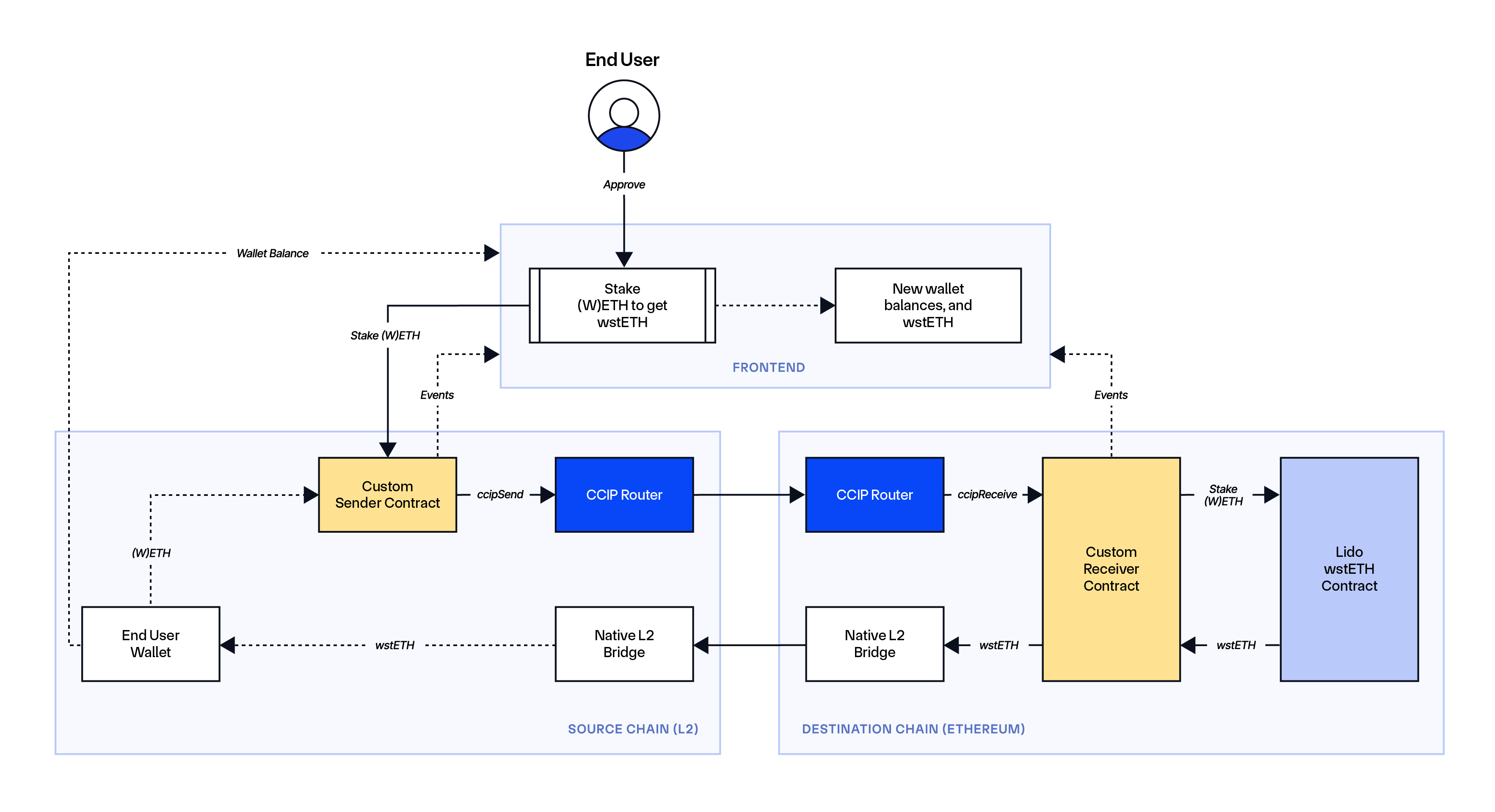
Before initiating any transfer, examine the bridge’s verifier setup. Look for decentralized networks of independent nodes rather than a small, centralized multi-sig team. Check if the protocol has undergone third-party security audits from reputable firms like OpenZeppelin or Trail of Bits. The KelpDAO loss underscores the danger of trusting a single authority; choose bridges that distribute trust across many independent actors.

Interoperability layers vary significantly in how they handle liquidity and fees. Some bridges use liquidity pools for instant swaps, while others rely on messaging layers that require wait times for finality. Evaluate the total cost of your move, including gas fees on both the source and destination chains. Protocols like deBridge or LI.FI often provide the best route coverage, but you must verify that the speed aligns with your restaking strategy to avoid missing yield opportunities.
Ensure the bridge supports your specific LRT or underlying asset natively. Avoid bridges that require you to wrap assets into complex synthetic tokens unless absolutely necessary, as this introduces additional smart contract risk. If you are moving USDC, for example, check if Circle’s Cross-Chain Transfer Protocol (CCTP) is available on your target chain, as it allows for native transfers without third-party bridges, significantly reducing counterparty risk.
Execute the cross-chain transfer
Initiating a cross-chain transfer requires precision. Bridges are the most attacked vector in DeFi, and a single wrong setting can result in irreversible loss. Follow this sequence to move your LRT assets safely.
Use a trusted aggregator like LI.FI or deBridge rather than a single bridge protocol. Aggregators route your transaction through the most secure and liquid path available. This reduces the risk of getting stuck on a compromised bridge. Ensure your wallet is connected to the source chain where your assets currently reside.
Input the exact token contract address for your LRT on the source chain. Then, select the destination network where you want to receive the asset. Verify that the destination chain supports the same LRT standard. Mismatched standards can lead to wrapped versions that are not compatible with your restaking strategy.

Before the transfer executes, you must approve the aggregator to spend your LRT tokens. This is a standard on-chain interaction. Review the approval amount carefully; set it to the exact amount you intend to transfer rather than an unlimited allowance to minimize exposure if the aggregator contract is compromised.
Review the gas fees and estimated arrival time. Confirm the transaction in your wallet. After confirmation, monitor the status on a block explorer. If the transaction stalls, do not panic; cross-chain transfers can take time depending on the security finality of the destination chain.
Always verify the bridge's audit status before proceeding. The KelpDAO case study highlights how even audited protocols can face vulnerabilities if not monitored closely. Stick to official documentation and reputable security firm reports to ensure your assets remain safe during the transfer.
Verify security and monitor positions
Once the bridge transaction confirms, your job isn't done. You must verify that the Liquid Restaking Token balance is actually present on the destination chain. Check the explorer for the specific contract address to ensure the tokens landed correctly. A failed bridge often results in stuck assets or, worse, a mismatch in token standards that leaves you with unrecognizable data on the new chain.
The real danger in cross-chain restaking is slashing risk. If the validator you delegated to on the source chain gets slashed, the loss propagates through the LRT wrapper. You need to monitor the health of the underlying validator set. Set up alerts using tools like Blocksec or the protocol’s native dashboard to track any emergency exits or slashing events. Ignoring these signals can turn a small dip in yield into a total loss of principal.
Security audits are your only shield against bridge exploits. The KelpDAO incident in 2024 showed how quickly cross-chain vulnerabilities can drain liquidity if monitors aren't active. Always prioritize protocols that have undergone multiple audits from reputable firms like OpenZeppelin or Trail of Bits. Avoid bridges with no public audit history, no matter how high the APY looks.
-
Verify LRT balance on destination chain explorer
-
Confirm contract address matches official documentation
-
Set up slashing alerts for underlying validators
-
Check bridge for recent security audit reports
No comments yet. Be the first to share your thoughts!