
What cross-chain restaking actually does
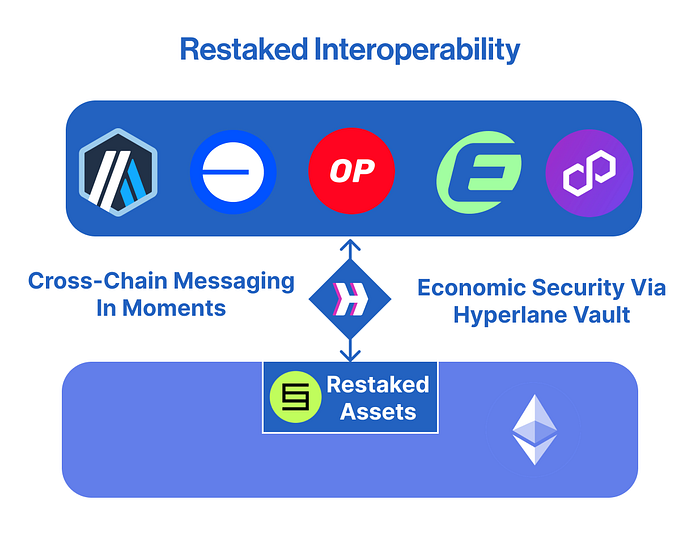
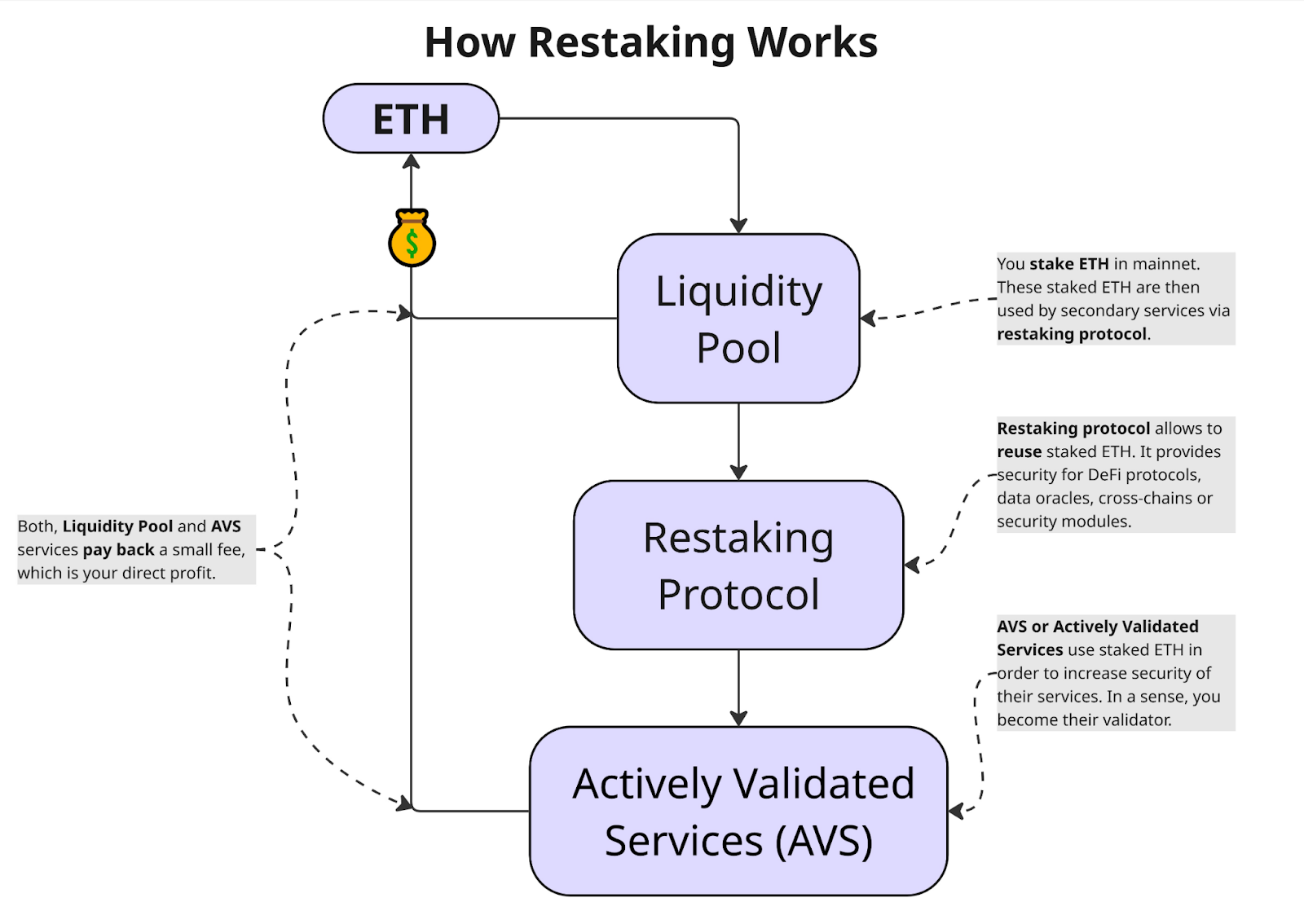
Cross-chain restaking allows you to reuse staked assets to secure other networks without bridging liquidity back to Ethereum mainnet. This mechanism captures yield from multiple sources by leveraging existing staked positions, such as ETH, to provide cryptographic security for decentralized applications across different blockchains like L2s and Solana.
Standard bridging moves assets from one chain to another, effectively transferring ownership. Restaking, by contrast, keeps the asset on its primary chain while extending its security services elsewhere. This distinction is critical for maintaining capital efficiency and reducing exposure to bridge-related vulnerabilities.
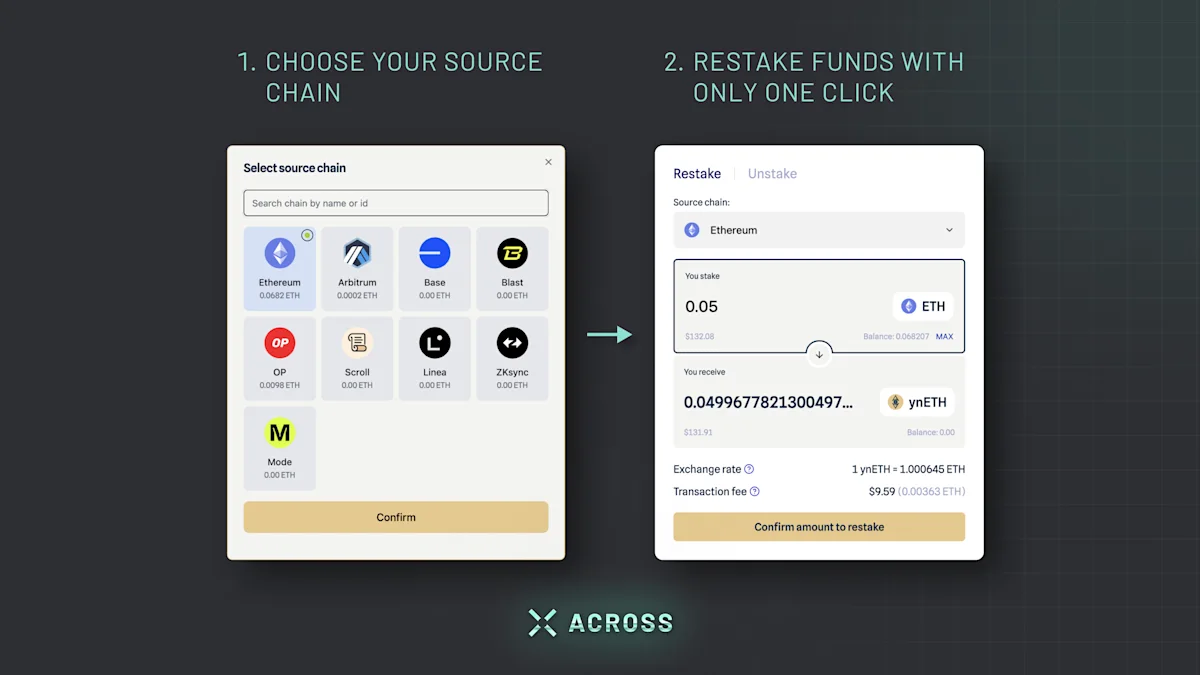
Protocols like Chainlink’s CCIP facilitate these connections, enabling users to stake ETH directly from other networks and receive (re)staked tokens. This approach minimizes the need for complex wrapping or unwrapping processes, streamlining the user experience while maintaining the integrity of the original staking position.
Leading protocols for interoperable staking
Cross-chain restaking infrastructure is no longer a monolith. Protocols have diverged into distinct technical approaches, primarily leveraging Chainlink CCIP, NEAR Chain Signatures, or Wormhole to bridge liquidity and security across Layer 2s and Solana. Understanding these architectural differences is essential for selecting the right yield source.
Chainlink’s Cross-Chain Interoperability Protocol (CCIP) serves as the backbone for several major initiatives, including EigenCloud. By enabling direct staking from other networks without bridging back to Ethereum mainnet, CCIP reduces friction for users seeking restaking yields. This approach is currently powering the most widely adopted cross-chain restaking solutions, including those integrated with Renzo’s Flow Vaults for multi-asset support.
NEAR’s Allstake protocol takes a different path by utilizing Chain Signatures. This method decouples consensus from execution, allowing for trustless scaling across any chain. Similarly, Nuffle Labs has partnered with Wormhole to create a universal restaking platform. While Wormhole is primarily known for asset bridging, its integration with Nuffle specifically targets the restaking narrative, offering an alternative to the Chainlink-dominated landscape.
| Protocol | Interoperability Layer | Key Chains | Asset Support |
|---|---|---|---|
| EigenCloud (CCIP) | Chainlink CCIP | Ethereum L2s | ETH, Multi-asset via Flow Vaults |
| Allstake | NEAR Chain Signatures | All chains | Multi-asset |
| Nuffle Labs | Wormhole | Multi-chain | Multi-asset |
The choice of protocol often dictates the available asset base and the security model. CCIP-based solutions currently offer the deepest liquidity due to EigenLayer’s dominance, while Chain Signatures and Wormhole integrations are expanding the universe of restakable assets beyond Ethereum’s immediate ecosystem.
Where yield comes from
Cross-chain restaking aggregates three distinct revenue streams into a single position. Understanding how these layers stack is essential for assessing the true risk-adjusted return. The yield is not generated by a single mechanism but by the compounding of base staking, protocol incentives, and network fee revenue.
Base staking rewards
The foundation of any restaking position is the underlying consensus security. When you stake ETH on Ethereum or SOL on Solana, you earn a baseline yield for validating transactions and securing the network. This reward is deterministic and tied directly to the protocol’s emission schedule. In a cross-chain strategy, this base yield travels with the asset, providing a floor for performance even if secondary incentives dry up.
Restaking points and airdrops
Beyond the base layer, restaking protocols offer variable incentives. These often take the form of governance tokens, points, or airdrop eligibility. Protocols like EigenLayer or Solana-based restaking primitives distribute rewards to compensate validators for providing additional security services to active middleware or oracle networks. These incentives are speculative and can fluctuate wildly based on protocol maturity and token emission rates. They represent the "alpha" layer of the yield, distinct from the steady compound of the base chain.
L2 transaction fee revenue
The third component is revenue generated from Layer 2 activity. As restaked assets secure L2 rollups or sidechains, validators earn a portion of the transaction fees processed on those networks. This creates a direct correlation between network usage and validator income. High-traffic L2s can significantly boost the overall APY, turning static staking into a dynamic revenue stream that scales with user adoption.
Security risks in multi-chain environments
Cross-chain restaking introduces a layered risk profile that extends beyond standard smart contract vulnerabilities. By reusing staked assets like Ethereum or Bitcoin to secure additional networks, protocols create complex dependency chains where a failure in one link can cascade across the entire ecosystem. The primary danger lies in the interoperability layers themselves, which must translate and verify state changes between fundamentally different consensus mechanisms.
Bridge exploits remain the most frequent attack vector. When assets move between Ethereum Layer 2s and Solana, they typically pass through custodial or light-client bridges. These intermediaries often hold significant value relative to their security audits, making them attractive targets. A compromise in a bridge contract does not just affect the bridged assets; it can freeze the underlying restaking collateral, halting yield generation and exposing users to liquidity traps.
Smart contract vulnerabilities in interoperability protocols are compounded by the complexity of cross-chain messaging. Unlike single-chain applications, these systems must handle asynchronous message passing, where a transaction on one chain might fail to execute on another due to latency or gas price mismatches. This creates gaps where state inconsistencies can be exploited, potentially allowing double-spending or unauthorized withdrawal of restaked assets.
Slashing conditions present a unique challenge in multi-chain environments. In traditional proof-of-stake systems, slashing occurs when a validator misbehaves on the base layer. In cross-chain restaking, validators may be slashed for actions on a secondary chain or an interoperability layer. Determining liability and executing penalties across different blockchains requires trusted oracles or complex cryptographic proofs. If the slashing mechanism is flawed, malicious actors can exploit the system by validating incorrectly on one chain while remaining safe on another, undermining the security model entirely.
Choosing a strategy for 2026
Cross-chain restaking in 2026 is less about finding the highest APY and more about navigating the trust assumptions of the interoperability layer. Your strategy must align with your risk tolerance, as the security of your yield depends on the bridge, not just the validator.

Start by defining your maximum acceptable loss. If you are capital-preserving, stick to native Ethereum restaking via established gateways like EigenCloud or Everclear. If you seek higher yields, accept the smart contract and bridge risks inherent in L2 or Solana integrations.
The bridge is the weakest link. Verify if the protocol uses a trusted multisig, a zero-knowledge proof system, or a decentralized oracle network like Chainlink CCIP. Protocols decoupling consensus and execution, such as Allstake, offer different security models than those relying on centralized relayers.
Understand the penalty for malicious behavior. Some cross-chain setups allow slashing only on the source chain, leaving the destination chain exposed. Ensure the protocol’s economic security model covers the full cross-chain lifecycle to prevent double-spending or validator fraud.
For conservative exposure, use Ethereum L2s with native restaking support. For aggressive yield, explore Solana or other high-throughput chains via meshed protocols. Always verify that the liquid restaking token (LRT) you receive is compatible with your desired DeFi strategies.
| Layer | Security Model | Risk Level | Best For |
|---|---|---|---|
| Ethereum Mainnet | Native Slashing | Low | Capital Preservation |
| L2 (Arbitrum, Base) | Optimistic/ZK Proofs | Medium | Balanced Yield |
| Solana/Other L1s | Cross-Chain Oracles | High | Max Yield |
No comments yet. Be the first to share your thoughts!