Understand cross-chain restaking mechanics
Cross-chain restaking extends EigenLayer-style security beyond a single blockchain. It allows a validator's stake on one network to secure applications on another. This process relies on cryptographic proofs or oracles to bridge the consensus state between chains.
When you restake ETH, you lock it to provide security to a specific protocol. In a cross-chain setup, that same security proof must be verified on a destination chain. Without this verification, the security guarantee is broken. The relay mechanism ensures that the restaking result on the source chain is accurately reflected on the target chain.
The two main methods for this relay are Zero-Knowledge (ZK) proofs and oracles. ZK proofs generate a cryptographic certificate that proves the state of the source chain. This method is trustless because the destination chain can verify the math without relying on a third party. Oracles, on the other hand, are external agents that monitor the source chain and report the state to the destination. While often cheaper, they introduce a trust assumption.
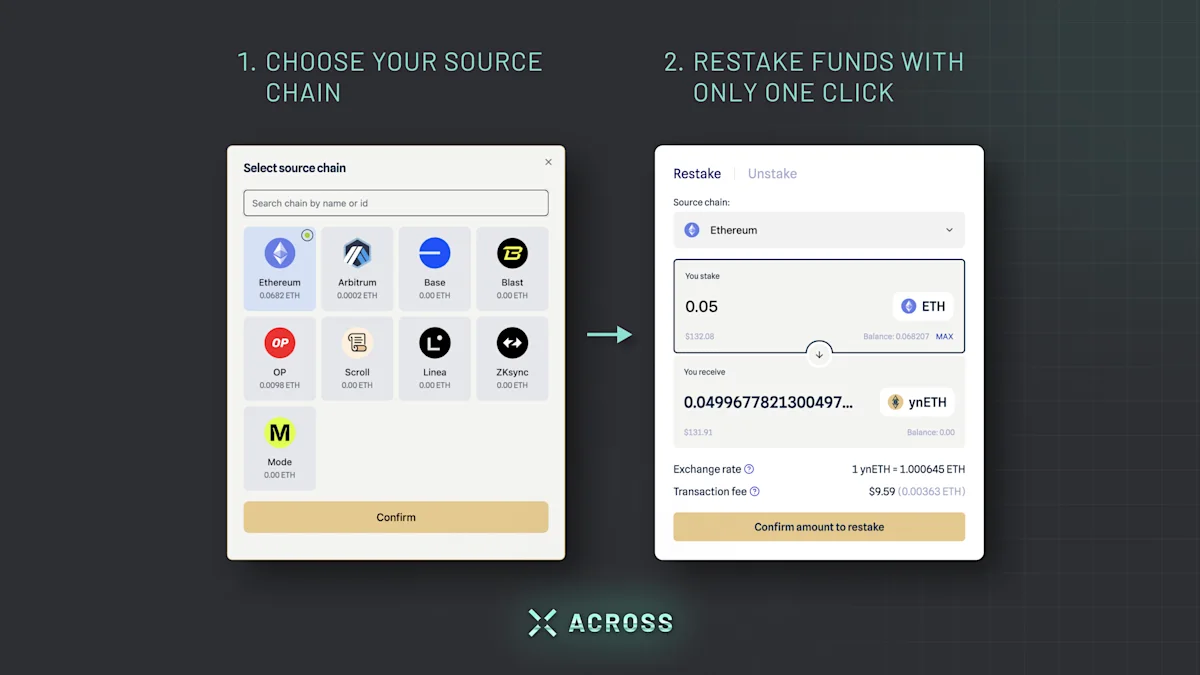
Deposit ETH or an LST into a restaking contract on the primary network (e.g., Ethereum).
The protocol uses ZK proofs or an oracle network to create a verified record of your restaking status.
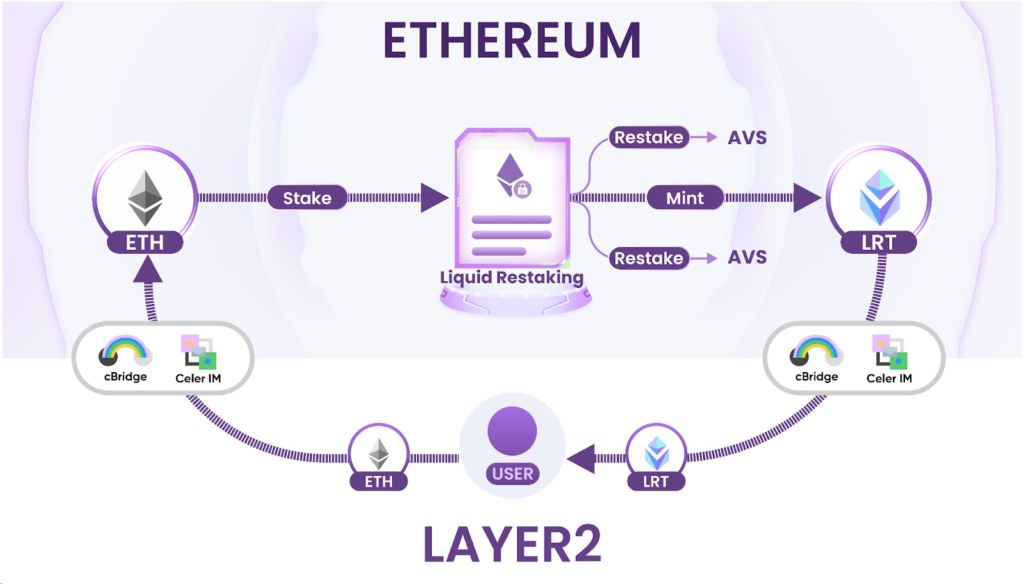
Submit the proof to a smart contract on the target chain (e.g., BNB Chain or ZetaChain) to activate the restaked security.
Keep track of your position across both chains to ensure your security contribution remains valid and unbonding periods are respected.
This architecture allows protocols on smaller chains to access the robust security of Ethereum without requiring their own validators. It effectively turns Ethereum's security into a shared resource. As noted by Brevis and Kernel, this enables the consensus of the restaking result to be securely relayed to other networks using ZK proofs.

Select a secure bridging protocol
Choosing the right bridge is the single most important decision in cross-chain restaking. A protocol failure or exploit can result in total loss of staked assets. You need an interoperability layer that prioritizes security over convenience.
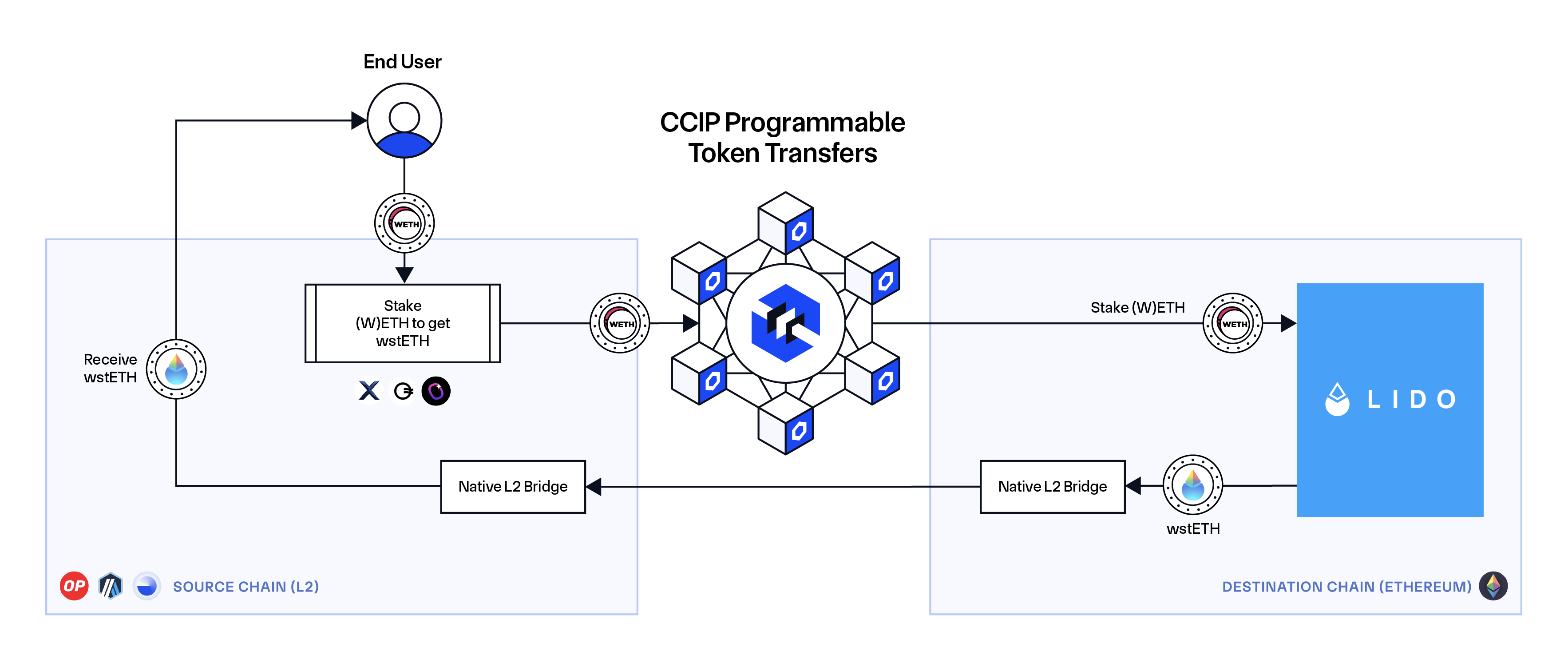
Start by evaluating the security model. Native ZK bridges offer the highest security guarantees by using zero-knowledge proofs to verify state transitions without relying on external validators. However, they often support fewer chains and may have higher latency. If speed is a priority, consider established interoperability layers like Chainlink CCIP or LayerZero. These networks use a network of off-chain relays and verifiers to move messages and assets between chains.
Compare your options based on supported chains, security guarantees, and typical fees. The table below outlines the trade-offs for three common approaches.
Avoid bridges with a history of exploits or those that rely solely on a small, centralized set of multisig signers. Always verify the contract addresses on the official project websites before connecting your wallet. For a deeper understanding of how these mechanisms interact with liquid staking, refer to the official Chainlink education hub on cross-chain liquid staking derivatives src-serp-1.
Bridge assets to the target chain
Execute Cross-Chain Restaking Safely works best as a clear sequence: define the constraint, compare the realistic options, test the tradeoff, and choose the path with the fewest hidden costs. That order keeps the advice usable instead of decorative. After each step, pause long enough to check whether the recommendation still fits the reader's actual situation. If it depends on perfect timing, unusual access, or a best-case budget, include a simpler fallback.
Deposit into a restaking contract
Execute Cross-Chain Restaking Safely works best as a clear sequence: define the constraint, compare the realistic options, test the tradeoff, and choose the path with the fewest hidden costs. That order keeps the advice usable instead of decorative. After each step, pause long enough to check whether the recommendation still fits the reader's actual situation. If it depends on perfect timing, unusual access, or a best-case budget, include a simpler fallback.
Monitor slashing risks and rewards
Cross-chain restaking introduces a unique vector for slashing: if a validator misbehaves on the destination chain, your assets are at risk. Unlike single-chain staking, you must actively monitor the health of the entire bridge and validator set. Think of your position as a chain; if one link breaks, the whole structure fails. You need a system to watch for these breaks before they cost you capital.
1. Set up multi-chain alerts
Use block explorers and monitoring tools specific to each chain involved in your restaking path. For example, if you are restaking BTC via EigenLayer on Ethereum, monitor Ethereum block explorers for validator status. If the bridge operates on a different chain like ZetaChain, set up alerts for that network’s specific events. Many omnichain implementations, such as those described by ZetaChain, extend protocols like EigenLayer across chains, meaning you must track the underlying smart contract interactions on both ends.
2. Track slashing conditions
Slashing conditions vary by protocol. On Ethereum, slashing occurs for double-signing or downtime. On other chains, it might involve failing to provide liquidity or violating bridge rules. Read the documentation of the specific restaking protocol you are using. Ensure you understand what triggers a penalty. If a validator is slashed, your restaked assets may be locked or reduced. Some protocols offer slashing insurance or bonding requirements to mitigate this risk.
3. Claim rewards regularly
Rewards from restaking are often distributed across multiple chains. You must actively claim these rewards to realize your yield. Set a schedule for claiming, whether daily, weekly, or monthly. Be mindful of gas fees on each chain; claiming on a high-fee chain might erode your profits. Use a dashboard that aggregates your positions across chains to see your total yield and claim efficiently.
- Check gas reserves: Ensure you have enough native tokens on each chain to pay for gas when claiming rewards or responding to slashing events.
- Verify validator status: Regularly check if your chosen validator is active and not at risk of being slashed.
- Review bridge health: Monitor the status of the cross-chain bridge to ensure it is not experiencing downtime or exploits.
- Set up alerts: Use tools like Discord bots, Telegram alerts, or custom scripts to notify you of any slashing events or protocol upgrades.
Common cross-chain restaking mistakes
Cross-chain restaking moves your assets across multiple networks, increasing the surface area for errors. Most failures happen because the user assumes compatibility where none exists or underestimates the friction of moving value between chains.
Ignoring token standard mismatches
Not all tokens are ERC-20 compatible, and not all restaking protocols support the same standards. If your token uses a non-standard implementation (like rebasing tokens or fee-on-transfer mechanisms), the bridge may lock the assets, or the restaking contract may reject the deposit. Always verify the token standard on the destination chain before initiating a cross-chain restake.
Overlooking bridge lock-up times
Bridges are not instant. Some use optimistic verification windows that can take 7 days or more. If you need your restaked capital for an upcoming protocol action or if you are reacting to a market event, a locked bridge balance can leave you stranded. Check the specific verification period for the bridge you are using and plan your restaking window accordingly.
Underestimating L2 gas costs
Restaking on Layer 2s often requires multiple transactions: bridging assets, depositing into the restaking contract, and potentially staking or claiming rewards. Gas fees on L2s can spike during high congestion. If you do not account for the cumulative gas cost of these steps, your net yield may be eroded or the transaction may fail due to insufficient funds.
No comments yet. Be the first to share your thoughts!