Cross-chain restaking 2026: The Yield Reality
Cross-chain restaking has moved from a niche experiment to a core yield strategy in 2026. By depositing staked assets on one blockchain and receiving rewards while participating in activities on others, you can compound returns across multiple networks. This approach allows you to leverage the same capital to secure different chains simultaneously, effectively multiplying your yield potential.
The infrastructure supporting this has matured significantly. Chainlink’s CCIP, for example, processed over $18 billion in cross-chain transfer volume in Q1 2026 alone, connecting more than 70 blockchains and integrating with Swift’s traditional finance network. This level of liquidity and security makes cross-chain restaking viable for both retail and institutional participants, reducing the friction that previously limited adoption.
However, maximizing yield requires careful selection of protocols. Not all cross-chain bridges offer the same security guarantees or fee structures. You must evaluate the underlying security model, the liquidity depth of the restaking pools, and the potential risks of bridge exploits. This guide provides concrete recommendations for the most reliable platforms, helping you manage the complexities of multi-chain yield generation with confidence.
Cross-chain restaking 2026 choices that change the plan
Cross-chain restaking offers higher yields by moving capital to networks with lower liquidity or higher demand for security services, but it introduces distinct risks that do not exist in single-chain staking. In 2026, the landscape has shifted from experimental bridges to more robust infrastructure, yet the fundamental tradeoff remains: yield comes at the cost of complexity and exposure.
The primary decision point is the trust model of the bridge or intermediary protocol. Protocols like Chainlink CCIP, which processed over $18 billion in cross-chain volume in Q1 2026, rely on verifiable proofs and decentralized oracles to secure transfers. This approach reduces the risk of centralized bridge hacks but often incurs higher fees and slower finality compared to optimistic bridges. Conversely, newer architectures like Babylon’s restaking model avoid cross-chain bridges entirely by using Bitcoin as the security layer, eliminating bridge risk but limiting the yield opportunities to the specific security services demanded by the restaking ecosystem.
Liquidity fragmentation is the second major factor. When you restake across chains, your assets are often locked in wrapped or synthetic forms. If the primary chain experiences congestion or a protocol failure, exiting your position may be difficult or costly. You must evaluate whether the yield premium justifies the potential liquidity trap.
To visualize these tradeoffs, compare the key metrics across common cross-chain restaking approaches.
Before allocating capital, verify the audit status of the specific bridge or restaking contract. Check if the protocol has a bug bounty program and review its historical security incidents. The yield difference between a secure, established protocol and a new, unaudited one is rarely worth the risk of total loss.
Choose the Right Cross-Chain Restaking Strategy
Cross-chain restaking lets you stake assets on one blockchain while earning rewards on another. The mechanism relies on messaging protocols like Chainlink CCIP to move proofs and value between networks. With over $18 billion in cross-chain transfer volume in early 2026, the infrastructure is mature, but the risk profile varies significantly by chain.
To maximize yield without exposing your principal to unnecessary bridge risk, follow this decision framework. Each step narrows the field from broad compatibility to specific, secure execution paths.
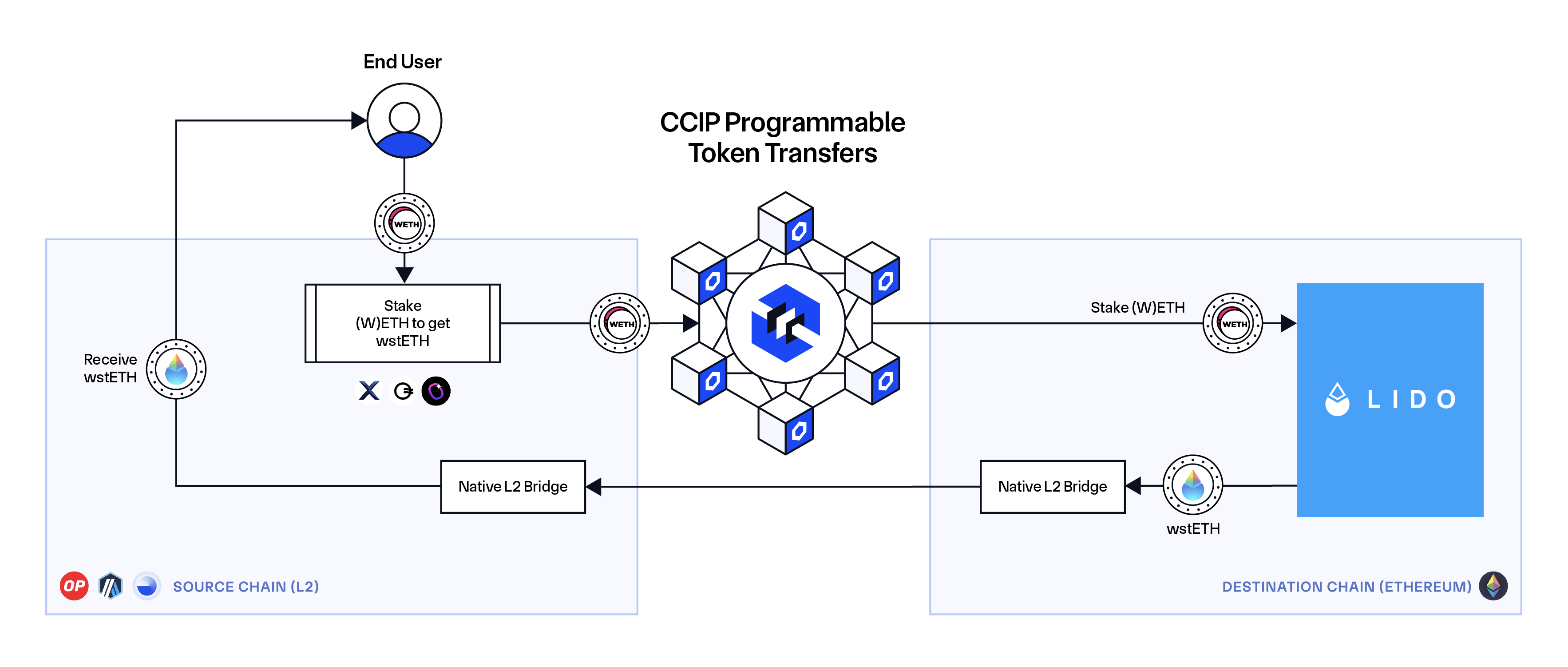
Start by identifying where your asset lives natively. Ethereum-based restaking (e.g., EigenLayer) offers the deepest security but requires bridging assets to L2s or other chains for yield optimization. Solana-based restaking is simpler but lacks the same breadth of restaking points. Know your starting point to calculate bridge fees accurately.
Not all chains support the same messaging layers. Chainlink CCIP is the current standard for high-value transfers, connecting over 70 blockchains. Verify that your target restaking protocol integrates with CCIP or another audited bridge. Avoid obscure, unaudited bridges even if they promise higher yields.
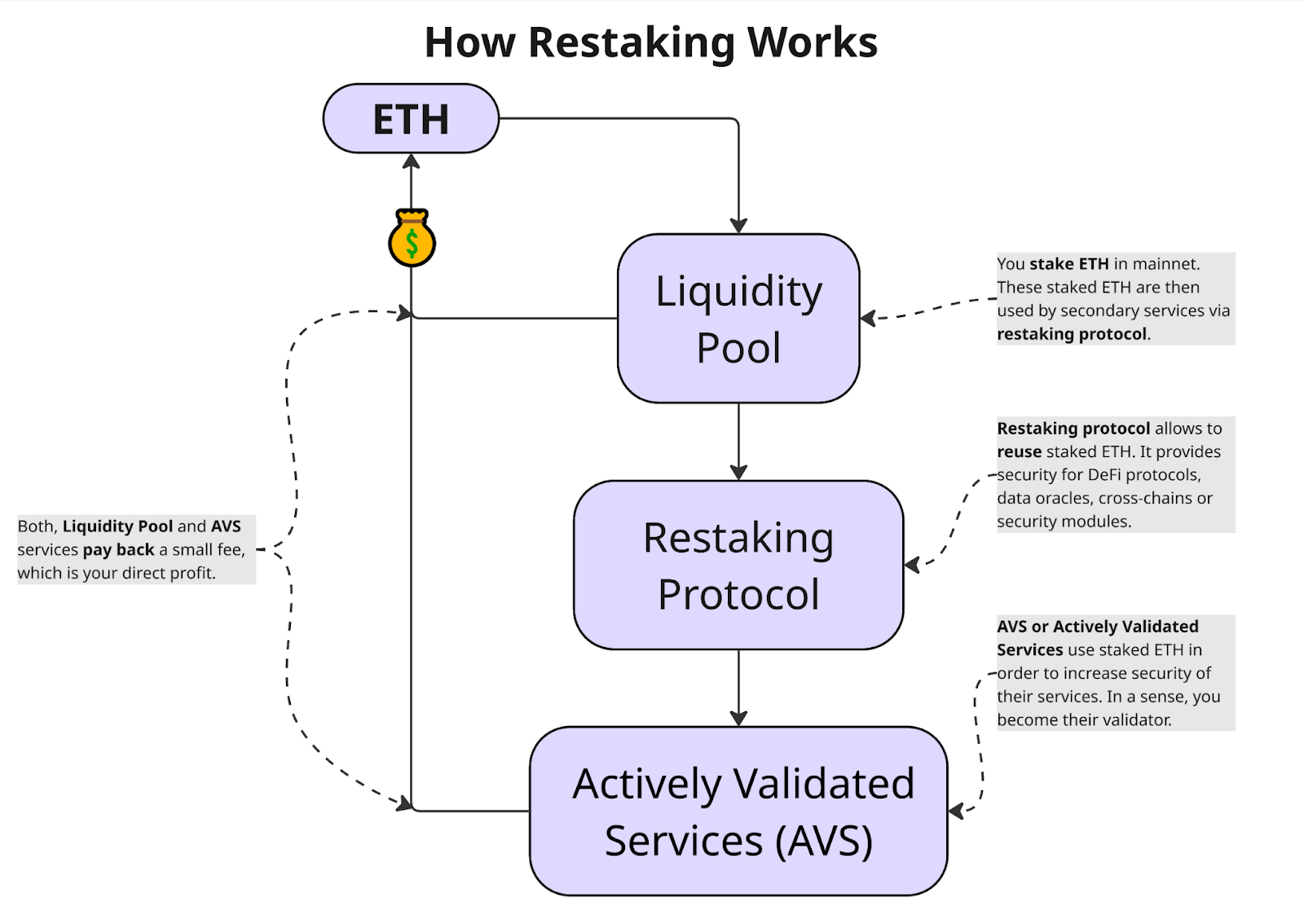
Higher yields on non-native chains often compensate for bridge risk. Calculate the net APY after accounting for bridge fees and potential slippage. If the yield premium is less than 2-3% over the native chain, the extra complexity may not be worth the exposure to bridge exploits.
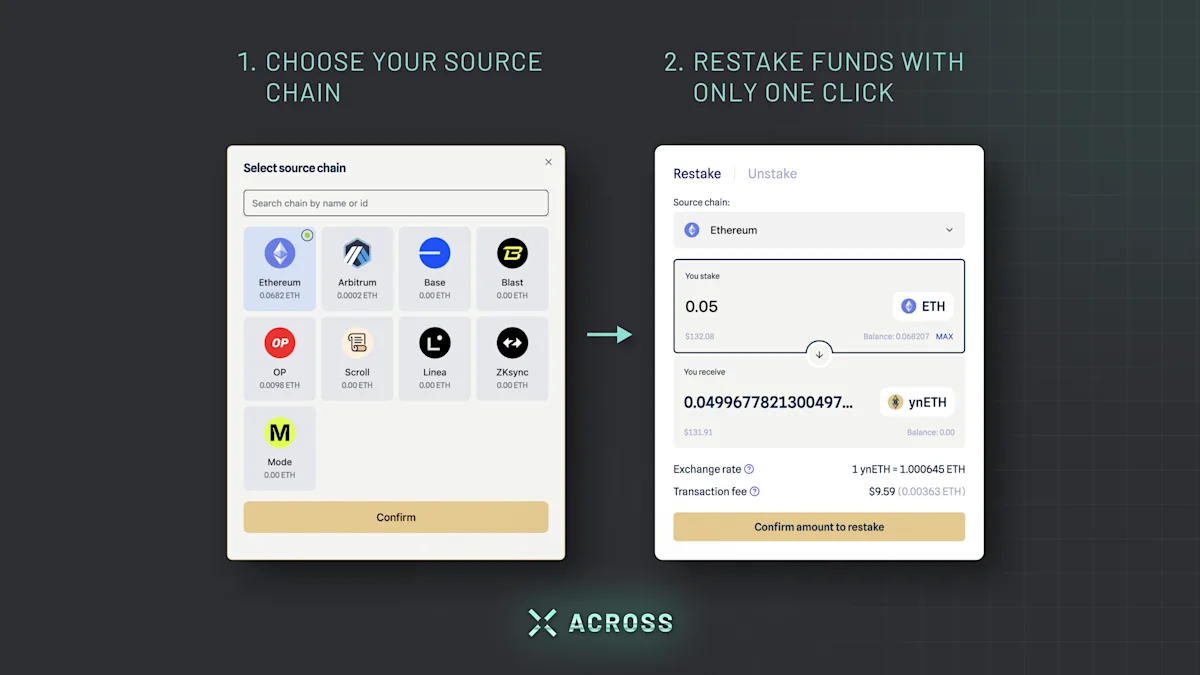
Always use the official dApp interface or verified smart contracts. Never click links from social media or third-party aggregators for the initial bridge transaction. Double-check the contract address on Etherscan or Solscan before confirming the transaction.
Cross-chain positions can become unprofitable if gas fees spike or bridge liquidity dries up. Set alerts for yield drops and bridge congestion. Rebalance periodically to ensure your strategy remains aligned with the current market conditions and your risk tolerance.
Watch Out for Weak Cross-Chain Options
Cross-chain restaking promises higher yields by moving capital across Ethereum, Solana, and L2s, but the path is littered with weak options. Many platforms advertise "yield boosting" while ignoring the hidden costs of bridging and validator slashing risks. Before committing funds, you need to separate marketing hype from actual mechanics.
First, verify the bridge security. Not all bridges are created equal. Some rely on centralized validators, creating a single point of failure. If the bridge goes down, your staked assets are locked. Look for protocols using decentralized oracle networks like Chainlink CCIP, which has processed over $18B in cross-chain volume, ensuring more reliable asset movement.
Second, check the validator requirements. Weak platforms often let you stake with minimal commitment, but this attracts bad actors. If a validator is slashed for downtime or misbehavior, your principal is at risk. Stronger options require rigorous validator selection and insurance mechanisms. Always read the terms to understand who bears the slashing risk.
Finally, compare the actual net yield after fees. High advertised APYs often exclude gas costs and bridge fees. A platform offering 15% APY might leave you with 8% after fees, while a 10% APY platform with low fees could net you more. Use a comparison table to evaluate net returns, not just gross APY. This simple check can save you from poor investment decisions.
Cross-chain restaking 2026: what to check next
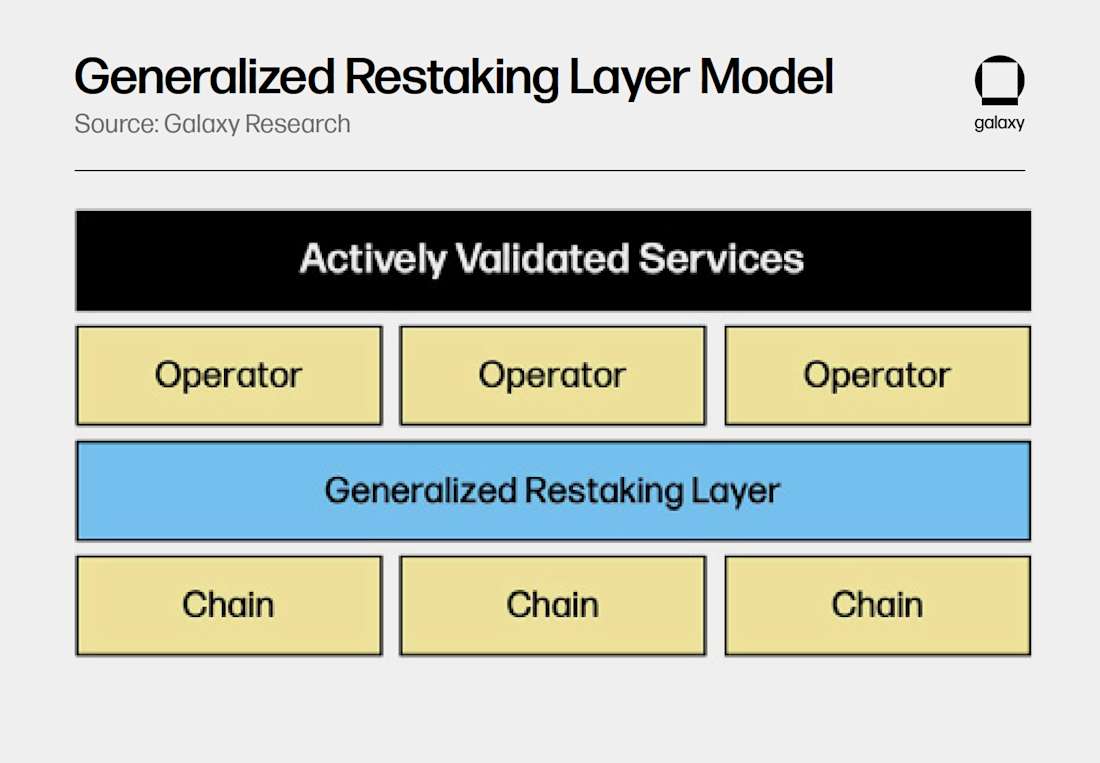
Cross-chain restaking allows you to secure multiple networks while earning yield from a single deposit. In 2026, this strategy has moved beyond simple bridging to include sophisticated chain abstraction layers. Understanding the mechanics helps you avoid the common pitfalls of liquidity fragmentation and smart contract risk.
Is cross-chain restaking safe in 2026?
Safety depends on the underlying infrastructure. Protocols like Babylon avoid cross-chain bridge exposure entirely, reducing attack surfaces significantly. However, most restaking solutions still rely on bridges or oracles like Chainlink CCIP, which processes over $18B in quarterly volume. You must verify that the protocol uses audited, battle-tested bridges rather than experimental connectors.
Can I restake on Ethereum and Solana simultaneously?
Yes, but you cannot use the same staked asset directly. You typically need to wrap or bridge your ETH to a compatible layer or use a liquidity layer that supports multi-chain validation. This process often involves a slight delay and additional gas fees. Ensure the protocol supports both Ethereum’s EVM and Solana’s SVM environments natively to avoid compatibility issues.
What are the main risks of cross-chain restaking?
The primary risk is bridge failure or oracle manipulation. If a bridge is compromised, your staked assets could be locked or stolen. Additionally, smart contract bugs in restaking layers can lead to slashing events across multiple chains. Always check the total value locked (TVL) and audit history of the restaking protocol before committing significant capital.
How do fees impact cross-chain restaking yields?
Inter-chain transfer fees can erode your APY, especially on congested networks. While CCIP and other messaging layers have lowered costs, bridging ETH to an L2 or Solana still incurs gas and bridge fees. Calculate the net yield after these costs. If the fee structure is opaque, assume a 10-20% reduction in your effective annual percentage yield (APY).
No comments yet. Be the first to share your thoughts!