Get cross-chain restaking right
Cross-chain liquid staking tokens let you deposit assets on one blockchain and use the representation elsewhere, but the bridge between chains is where most risks hide. Before you lock funds, you need to verify the infrastructure supporting the transfer. A single point of failure in the bridge can erase your yield and principal.
Start by identifying the message-passing protocol. Cross-chain restaking relies on intermediaries like CCIP to verify transactions across networks. If you are using a specific protocol, check if it uses an official bridge or a third-party aggregator. Official bridges often have lower fees and higher security audits, while aggregators might offer better rates but introduce additional smart contract risk.
Next, audit the liquidity pools. Ensure the destination chain has enough liquidity to swap your staked token back to the base asset if you need to exit quickly. Thin liquidity leads to high slippage, which eats into your restaking yield. Also, verify the validator set. Make sure the validators securing the restaked assets are reputable and have a track record of uptime. A slashed validator on one chain can halt rewards on another.
Finally, test with a small amount. Send a minimal transaction through the full cycle: deposit, bridge, restake, and withdraw. This confirms that the gas fees, bridge times, and exit mechanisms work as expected. Once you are comfortable with the process, you can scale your position with confidence.
How to set up cross-chain restaking
Cross-chain restaking lets you stake assets on one blockchain while using a liquid derivative on another. This process involves bridging tokens, approving smart contracts, and managing bridge risks. Follow these steps to execute the workflow safely.

Identify a protocol that supports both your source chain and destination chain. Not all restaking platforms support every bridge. Check the official documentation to ensure the liquid staking token (LST) you plan to deposit is compatible with the target network’s restaking contracts. Prioritize protocols with audited bridge interfaces to reduce smart contract risk.
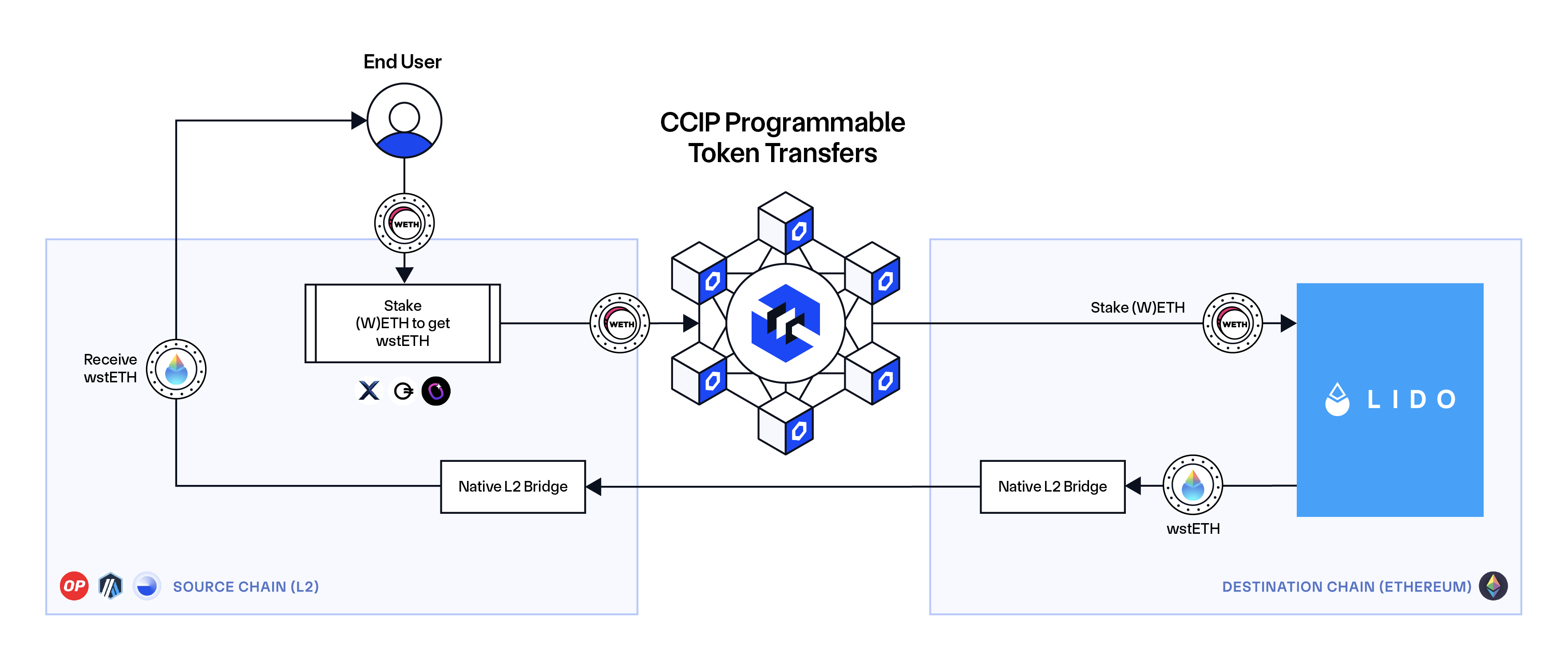
Transfer your staked assets from the source chain to the destination chain. Use official cross-chain messaging protocols like CCIP or established aggregators rather than obscure bridges. Verify the transaction on the source chain explorer before proceeding. Ensure you have enough native gas tokens on the destination chain to pay for the next steps.
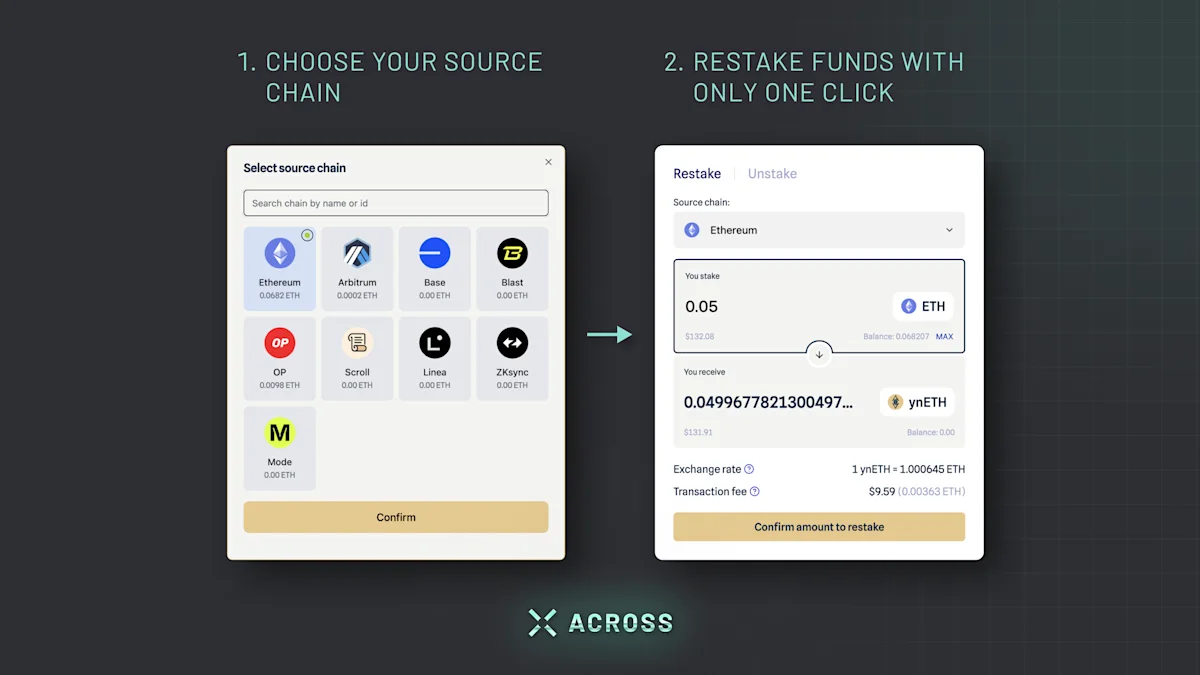
If the destination chain requires a specific token standard, you may need to wrap your LST. For example, bridging ETH from Ethereum to a Layer 2 might require converting native ETH to wETH or a bridged version. Consult the protocol’s interface to see if automatic wrapping occurs or if you must perform this step manually before depositing into the restaking vault.
Connect your wallet to the destination chain’s restaking contract. First, approve the token spending limit for the vault contract. Then, deposit your assets into the designated vault. The contract will issue restaking points or tokens representing your position. Double-check the gas fees and slippage settings to avoid failed transactions or excessive costs.
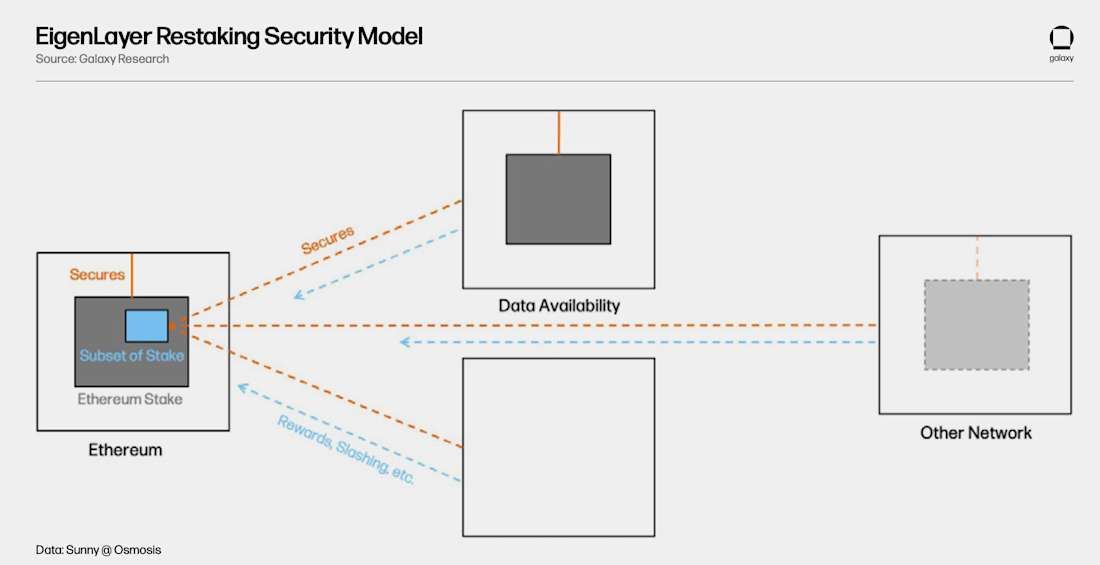
Cross-chain restaking introduces bridge risk and potential downtime. Regularly check the status of the bridge protocol and the restaking platform’s health. Set up alerts for significant price deviations or network congestion. If the bridge experiences an outage, be prepared to wait or use an alternative route if available. Keep your private keys secure and never share them with support staff.
Common Mistakes in Cross-Chain Restaking
Cross-chain restaking offers yield, but the mechanics are fragile. Most losses don’t come from market volatility; they come from operational errors and misaligned security assumptions. When you move assets across chains, you are no longer relying on a single validator set or a single protocol’s code. You are trusting a chain of bridges, relayers, and wrapped token standards. If one link in that chain fails, your capital is exposed.
Ignoring Bridge Security Models
The most dangerous mistake is assuming all bridges offer the same level of security. A bridge secured by a small set of multi-sig signers is fundamentally different from one secured by a decentralized network of relayers or a formal verification protocol. If you deposit ETH into a bridge with a weak security model, you are effectively taking on the bridge’s risk profile on top of the restaking protocol’s risk.
Always check the bridge’s security model before initiating a transaction. Prefer bridges with transparent, audited smart contracts and decentralized oversight over those relying on centralized custodians. If the bridge has a history of exploits or lacks a clear audit trail, the yield you’re chasing is likely insufficient compensation for the potential loss of principal.
Overlooking Wrapped Token Liquidity
Another frequent error is assuming that a wrapped asset on the destination chain is interchangeable with the original. Liquidity varies wildly. On some networks, the wrapped version of a popular asset may have thin order books or high slippage. If you need to exit your position quickly, you might find yourself unable to sell without significant price impact.
Verify the liquidity depth of the wrapped token on the destination DEX before committing capital. Look at the total value locked (TVL) in the relevant liquidity pools. If the pool is small, even a modest exit could result in substantial losses. This is especially critical for restaking positions, where you may need to unbond or withdraw during periods of market stress.
Neglecting Gas and Network Congestion
Cross-chain transactions require gas on both the source and destination chains. Many users forget to account for the destination chain’s gas fees, assuming they can cover them with the native token. If you don’t hold the native token of the destination chain, you’ll need to swap for it first, adding complexity and cost. Additionally, network congestion can delay transactions, leaving your assets stranded or exposed to price swings during the waiting period.
Ensure you have sufficient native tokens on both chains before initiating a cross-chain transfer. Monitor network congestion indicators and plan your transactions during off-peak hours when possible to minimize fees and delays. This simple step can prevent costly errors and ensure your restaking strategy executes as intended.
Cross-chain restaking: what to check next
Cross-chain restaking moves liquid staking assets across networks to unlock new yield opportunities, but it introduces bridge complexity. Before deploying capital, understand the mechanics, the infrastructure, and the risks involved.
No comments yet. Be the first to share your thoughts!