
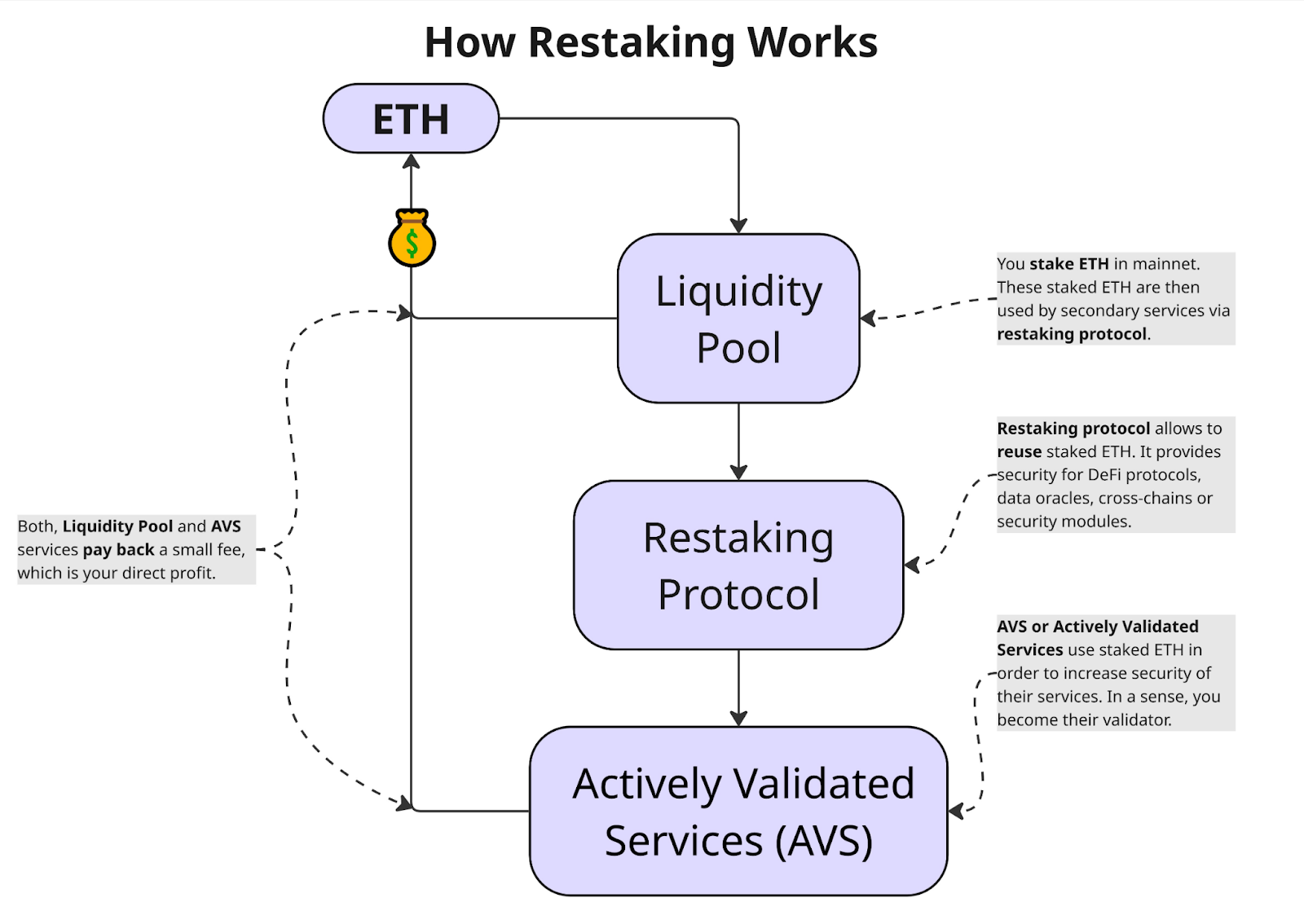
How cross-chain restaking works in 2026
Cross-chain restaking transforms isolated staking positions into liquid, interoperable security. Instead of locking capital on a single chain, users deposit staked assets or their derivatives onto a bridge or interoperability layer. This process mints a wrapped representation of the staked asset on a destination chain, allowing the original position to remain active while its economic value is deployed elsewhere.
The mechanism relies on atomic swaps or lock-and-mint protocols to ensure that the total supply of the derivative never exceeds the underlying secured collateral. When a user moves staked ETH from Ethereum to Solana, for example, the protocol locks the original ETH in a vault and issues a synthetic token on Solana. This synthetic token can then be used in lending markets or restaked into additional security services, generating yield layers that were previously inaccessible due to chain silos.
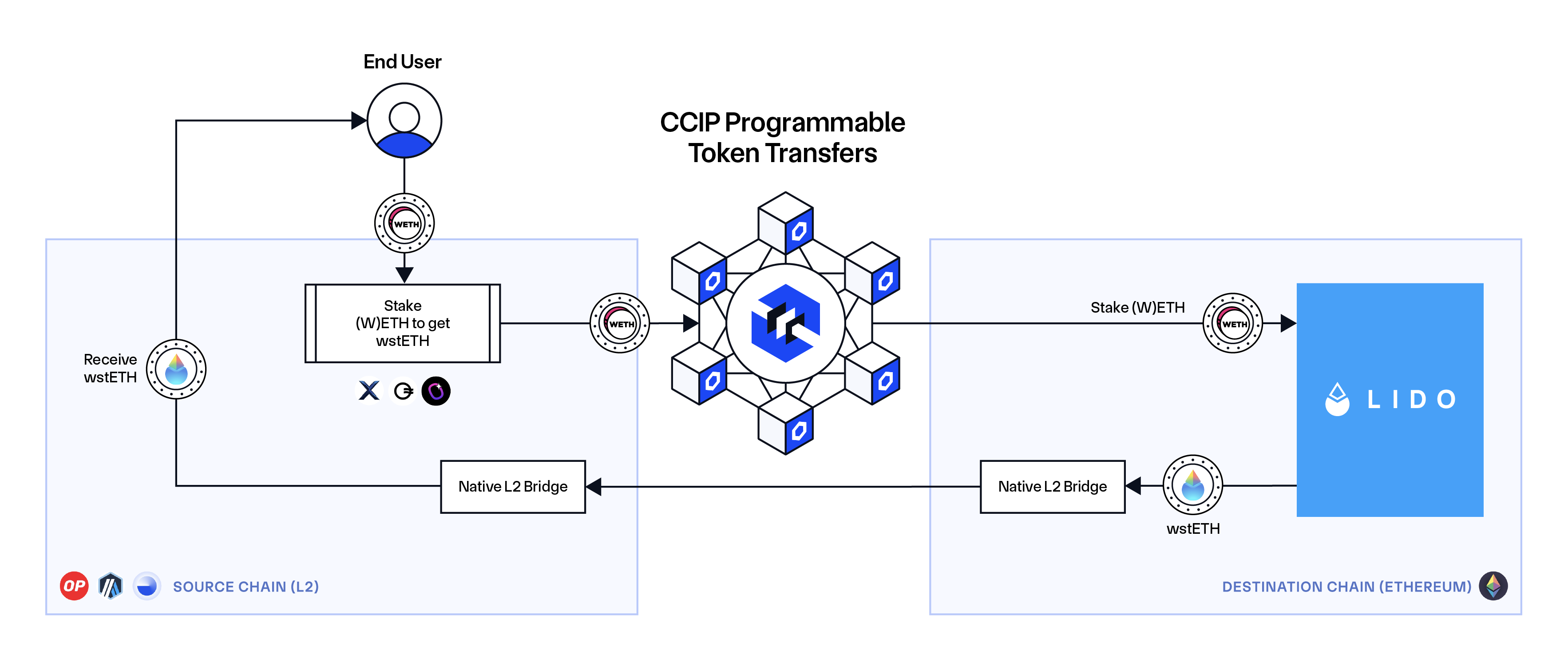
Interoperability protocols facilitate this movement by verifying the state of the source chain. Chainlink CCIP and Circle’s CCTP are common infrastructure choices, enabling secure token transfers and message passing without relying on centralized custodians. This shift from siloed staking to connected security allows capital to flow toward the highest risk-adjusted returns, provided the bridge security holds.
To understand the volatility context for these assets, consider the baseline movement of the underlying collateral.
The complexity of this strategy lies in the security assumptions. Users must trust the bridge’s ability to prevent double-spending and the destination chain’s validity. If a bridge is compromised, the synthetic derivative on the destination chain may become worthless, even if the original staked asset remains safe on the source chain. Therefore, selecting audited, battle-tested interoperability layers is as critical as selecting the underlying staking protocol.
Top interoperable staking protocols ranked
Cross-chain restaking requires interoperability layers that can securely relay staking credentials and yield across distinct consensus environments. The following protocols represent the current leaders in enabling this infrastructure, prioritized by their ability to maintain security guarantees while expanding yield opportunities.
EigenLayer (Ethereum)
EigenLayer introduced restaking on Ethereum, allowing validators to reuse their staked ETH to secure additional services known as Actively Validated Services (AVS). While primarily an Ethereum-native protocol, its cross-chain implications are significant as AVSs increasingly require multi-chain security. The protocol’s security model relies on slashing conditions enforced on the Ethereum mainnet, making it the foundational layer for much of the current restaking ecosystem.
LayerZero (Multi-Chain)
LayerZero provides the underlying omnichain interoperability protocol that enables cross-chain restaking applications to communicate. It does not hold assets but facilitates the secure transfer of messages and proofs between chains. Integrations with LayerZero allow restaking protocols to verify staking status on one chain and execute actions on another, creating a seamless user experience without relying on centralized bridges.
Solana Liquid Staking Derivatives (Solana)
On Solana, protocols like Jito and Marinade offer liquid staking derivatives (LSDs) that can be restaked or used as collateral in DeFi applications. While Solana’s architecture differs from Ethereum’s proof-of-stake model, the integration of these LSDs into cross-chain bridges allows Solana yield to participate in broader restaking strategies. The high throughput and lower fees of Solana make it an attractive source of yield for cross-chain portfolios.
Chainlink CCIP (Infrastructure)
Chainlink’s Cross-Chain Interoperability Protocol (CCIP) is emerging as a critical infrastructure layer for secure cross-chain transfers. It enables the native transfer of tokens and data between chains, reducing the reliance on wrapped assets and third-party bridges. For restaking, CCIP provides a standardized way to move staked assets or yield receipts across chains, enhancing security and reducing counterparty risk.
Yield optimization across Ethereum L2s and Solana
Maximizing returns in cross-chain restaking requires separating the yield mechanics of Ethereum’s modular ecosystem from Solana’s high-throughput architecture. The strategies differ fundamentally: Ethereum L2s rely on compounding frequency and fee accumulation, while Solana leverages speed for frequent, automated reward distributions.
Compounding rewards on Ethereum L2s
On Ethereum Layer 2s, yield optimization hinges on reducing the friction of compounding. Because L2 transaction costs are negligible, strategies that compound rewards daily or even hourly capture the full effect of exponential growth without eroding principal through gas fees. This approach transforms small, intermittent rewards into significant annual percentage yields (APY).
The primary mechanism involves restaking points or rewards back into the underlying validator set or liquidity pool. Protocols like EigenLayer or Lido on L2s allow users to re-stake their liquid staking tokens (LSTs) to earn additional yield layers. The key is to select L2s with high TVL and consistent fee revenue, ensuring the base yield remains stable while the restaking multiplier adds value. Always verify that the restaking contract has undergone independent security audits before committing capital.
Leveraging Solana’s high TPS for frequent distributions
Solana’s architecture enables a different yield profile: high frequency. With sub-second finality and low fees, Solana-based restaking protocols can distribute rewards—whether in SOL or programmatic tokens—more often than Ethereum’s block times allow. This frequent distribution allows for tighter risk management and quicker rebalancing.
Strategies on Solana often involve automated yield aggregators that harvest rewards and compound them instantly. Because the cost of executing these transactions is minimal, the compounding effect is nearly continuous. However, this speed introduces complexity in tracking reward rates across multiple programs. Users must monitor the underlying protocol’s emissions schedule, as Solana’s high throughput can accelerate token inflation if not carefully managed. Prioritize protocols with transparent, on-chain emissions data to avoid unexpected dilution of your restaked position.
Security risks in cross-chain restaking
Cross-chain restaking introduces layers of complexity that amplify existing smart contract vulnerabilities. When you restake assets across Ethereum and Solana, you are not just trusting the consensus mechanism of two networks; you are trusting the bridge mechanisms that connect them. These bridges are the weakest link in the interoperability stack, historically accounting for the vast majority of DeFi hack losses. A vulnerability in a bridge’s smart contract or its off-chain validator set can lead to total loss of funds, regardless of the security of the underlying restaking protocol.
The primary danger lies in the trust assumptions required by different bridge architectures. Centralized bridges rely on multisig wallets or federations of validators, creating a single point of failure. Decentralized bridges, while more resilient, often rely on complex cryptographic proofs that can be exploited if the underlying assumptions are flawed. For example, Chainlink CCIP provides a secure, permissionless utility for transferring tokens and messages, but it still requires rigorous auditing of the application layer that consumes those messages. Similarly, Circle’s Cross-Chain Transfer Protocol (CCTP) uses native burning and minting to teleport USDC, reducing counterparty risk, but the smart contracts involved must remain immutable and bug-free.
To mitigate these risks, prioritize protocols that have undergone extensive formal verification and have transparent security audits. The high-stakes nature of restaking means that a single exploit can drain billions in value. Therefore, the choice of bridge is as critical as the choice of restaking layer. Stick to established, officially documented pathways like Chainlink CCIP or Circle CCTP, and avoid experimental or unaudited interop solutions. The convenience of cross-chain yield is not worth the catastrophic risk of using insecure infrastructure.
No comments yet. Be the first to share your thoughts!