
Define your restaking strategy
Cross-chain restaking is not simply earning higher yields; it is the active delegation of security services across multiple networks. Before deploying capital, you must determine whether your primary goal is maximizing yield or expanding network security. This decision dictates your asset selection and the specific protocols you will interact with.
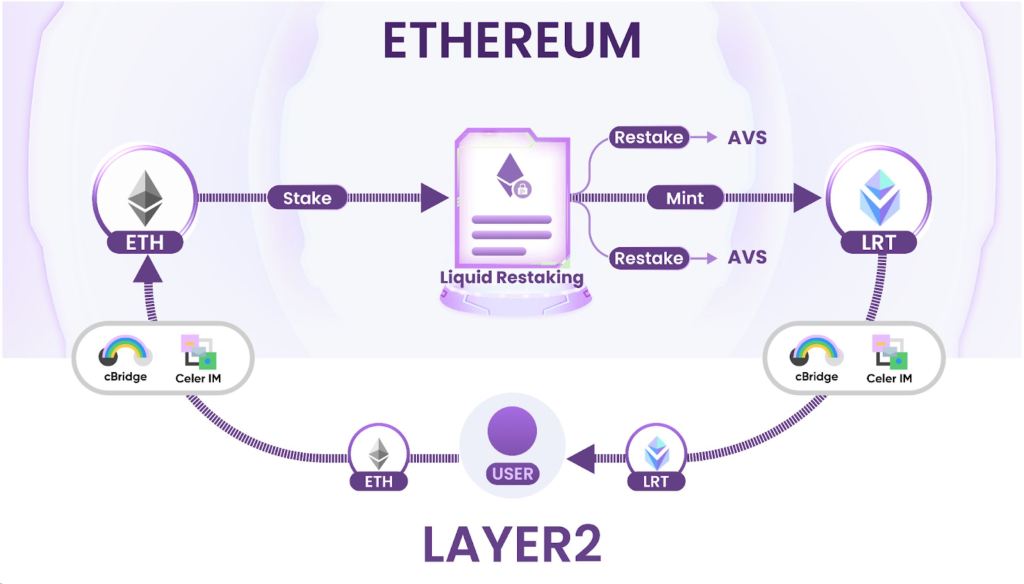
Restaking allows you to take an asset that is already staked on a blockchain, such as Ethereum, and pledge it to secure additional services. According to Chainlink, this process effectively reuses staked assets to enhance utility and liquidity across the broader ecosystem 1. By doing so, you are not just holding a position; you are actively providing cryptographic security to other chains and applications.
Your starting assets are typically Ethereum (ETH) or liquid staking tokens (LSTs) like stETH. These tokens represent your base staking position. When you restake them cross-chain, you are leveraging that existing stake to generate additional rewards from the protocols you support. Be aware that this amplifies both your potential returns and your exposure to smart contract risks.
Choose a strategy that aligns with your risk tolerance. A yield-focused strategy might prioritize protocols with higher incentive programs, while a security-focused approach might involve supporting established networks with lower but more stable rewards. Always verify the official documentation of each protocol to understand the slashing conditions and lock-up periods associated with your chosen assets.
Select a secure bridge and protocol
Cross-chain restaking relies entirely on the security of the bridge moving your staked assets. If the bridge fails, the restaking protocol on the destination chain cannot verify your stake, and your capital is at risk. You must pair a trusted interoperability layer with a restaking platform that supports your target chains.
The most common bridge models use different security assumptions. Zero-knowledge (ZK) proofs offer cryptographic certainty but can be slower and more expensive. Optimistic bridges rely on dispute periods, which delays finality but reduces costs. Threshold signature schemes offer a middle ground, balancing speed and cost through distributed validator networks.
| Bridge Protocol | Security Model | Supported Chains | Cross-Chain Restaking Support |
|---|---|---|---|
| LayerZero | Omnichain (Ultra Light Nodes) | Ethereum, BNB, Polygon, Arbitrum | High (Kernel, EigenLayer integrations) |
| Wormhole | Guardians (Multisig) | Ethereum, Solana, BNB, Avalanche | High (EigenLayer, EigenDA) |
| Chainlink CCIP | Proof of Stake (Router) | Ethereum, BNB, Polygon, Optimism | High (EigenLayer, Pendle) |
| Axelar | Proof of Stake (Gateway) | Ethereum, BNB, Cosmos, Terra | Moderate (Kernel, Stargaze) |
| Brevis | Zero-Knowledge Proofs | BNB, Ethereum, Arbitrum | High (Kernel, EigenLayer) |
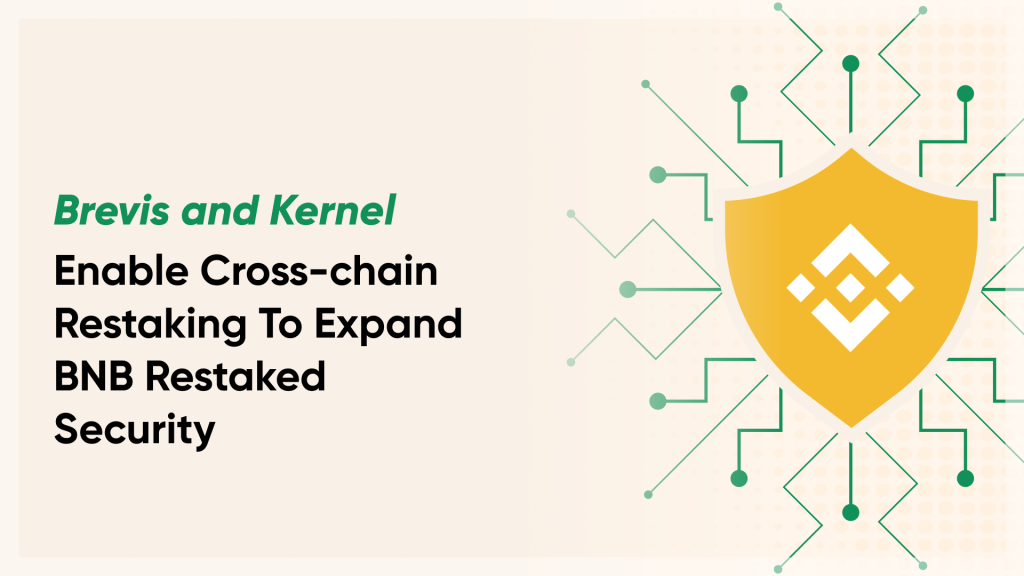
The table above shows how different bridges handle security and chain coverage. LayerZero and Wormhole dominate the market due to their extensive chain support. Chainlink CCIP is gaining traction because it leverages the existing security of the Ethereum consensus layer. Brevis uses ZK proofs to ensure that restaking results on one chain are securely relayed to another, as seen in partnerships with Kernel.
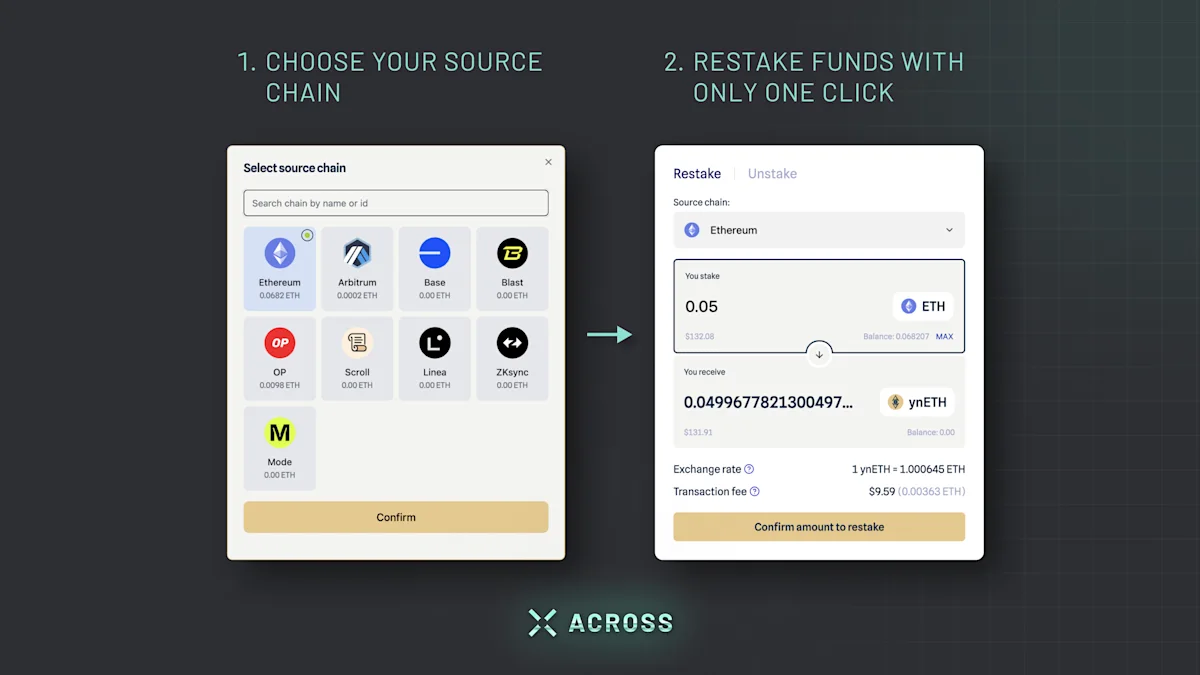
Once you choose a bridge, select a restaking platform that integrates with it. Kernel Network and EigenLayer are the two primary protocols for restaking. Kernel offers a modular approach, allowing you to restake assets across multiple chains via LayerZero or Wormhole. EigenLayer is Ethereum-native but supports cross-chain delegation through its ecosystem partners.


Execute the cross-chain deposit
This is the moment the strategy moves from theory to on-chain reality. You are transferring a liquid staking token (LST) from your source chain to the target chain and locking it into a restaking contract. This process is not a simple swap; it is a logistical transfer that requires precision. A single error in the destination address or bridge selection can result in permanent loss of funds, as cross-chain transactions are typically irreversible.
The workflow follows a strict sequence: select the bridge, initiate the transfer, and confirm the deposit. Treat the bridge not as a feature, but as a critical security layer. Your goal is to move the asset with the lowest possible risk of interception or failure.
Begin by identifying the bridge that supports your specific LST and target chain. Do not guess. Use official documentation from the restaking protocol or a trusted aggregator like LayerZero or Celer. Verify that the bridge has a high total value locked (TVL) and a clean security audit history. Avoid bridges with recent exploits or low liquidity, as these increase the risk of slippage and theft.
Connect your wallet to the bridge interface. The system will prompt you to approve the LST for spending. Review the approval amount carefully. If the bridge requires an "infinite" approval, be aware that this grants the contract permission to move your tokens at any time. For high-value deposits, consider using a contract with a time-limited allowance if the interface supports it.
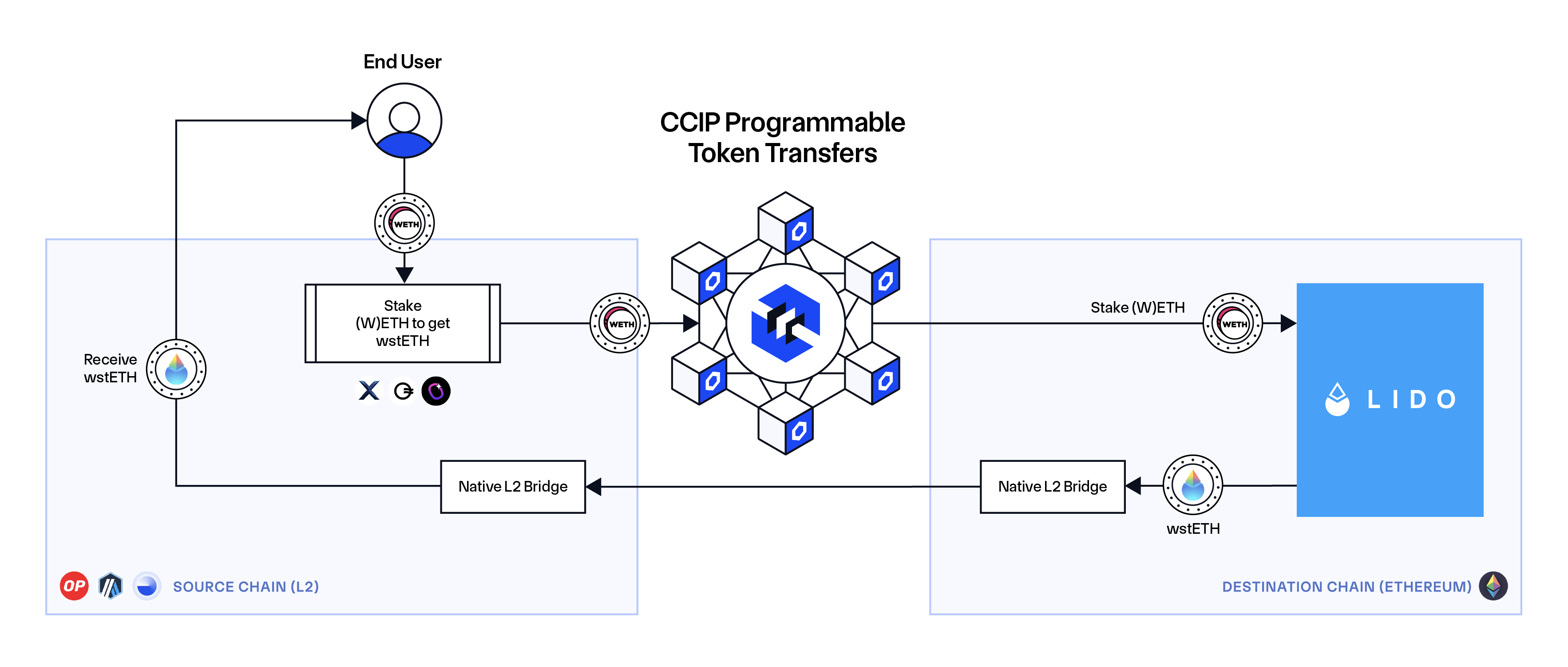
Enter the destination chain and the exact smart contract address for the restaking vault. Double-check the contract address character by character. A single typo sends your funds to a dead address. Confirm the estimated gas fees and the expected arrival time. Some bridges offer "fast" lanes for higher fees; for high-stakes restaking, the extra cost is often worth the reduced exposure window.
Do not close the tab. Cross-chain transfers can take anywhere from 30 seconds to several minutes. Watch the transaction hash on the source chain explorer. Once confirmed, switch to the target chain explorer to track the bridged asset. If the transaction stalls, check the bridge’s status page for known outages before proceeding.
Navigate to the restaking protocol’s dashboard on the target chain. Locate the specific vault for the protocol you wish to restake with. Enter the amount of bridged LST and confirm the deposit. The contract will lock your tokens and issue restaking shares or points. Verify that the balance updates correctly in your wallet before considering the task complete.
Monitor and manage slashing risks
Cross-chain restaking amplifies rewards but multiplies exposure. When you delegate security to multiple protocols across different chains, a single misconfigured validator or a bridge exploit can trigger a slashing event that drains your position. You must treat monitoring not as an afterthought, but as a continuous operational requirement.
Start by verifying the health of your validator nodes. Most restaking protocols like EigenLayer or Lido offer real-time dashboards showing uptime, signature latency, and consensus participation. Set up alerts for any drop in performance below 99% uptime, as this often precedes slashing penalties. If you are using a liquid restaking token (LRT), check the protocol’s specific risk parameters to ensure your underlying assets remain compliant with the new chain’s governance rules.
Bridge liquidity is the second critical vector. Before restaking, confirm that the bridge supporting your cross-chain transfer has sufficient depth and a clean audit history. A bridge congestion event can lock your assets, preventing you from rebalancing or exiting during a market downturn. Use official protocol documentation to verify the bridge’s security model and any known limitations.
-
Verify validator uptime and performance metrics
-
Confirm bridge liquidity and audit status
-
Review cross-chain slashing conditions for each protocol
Finally, establish a clear exit strategy. Slashing risks are often asymmetric; you might lose a portion of your stake if the validator misbehaves, but you cannot easily recover those funds. Define a threshold for when to withdraw your position—such as a specific drop in protocol TVL or a change in governance proposals—and execute it without hesitation. Regularly review the official documentation of both the source chain and the destination chain to stay updated on any changes to slashing conditions.
Common cross-chain restaking: what to check next
Cross-chain restaking introduces complexity that goes beyond standard staking. You are not just locking assets; you are bridging trust across multiple networks. Understanding the mechanics of security, fees, and asset types helps you avoid costly mistakes.
No comments yet. Be the first to share your thoughts!