
How restaking expands across chains
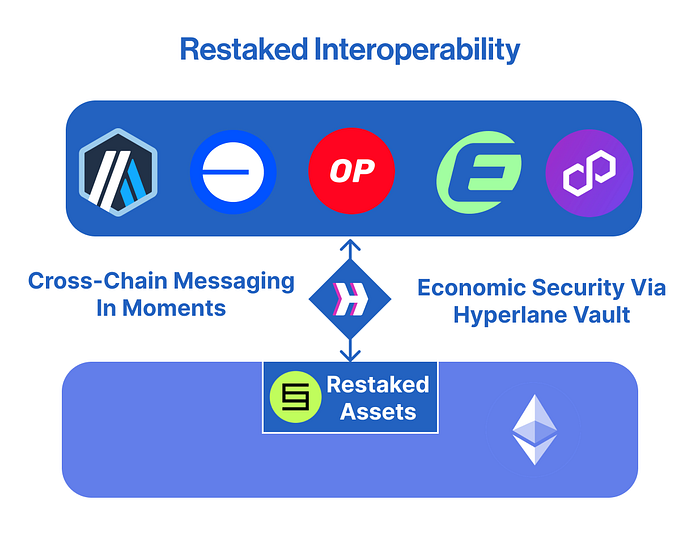
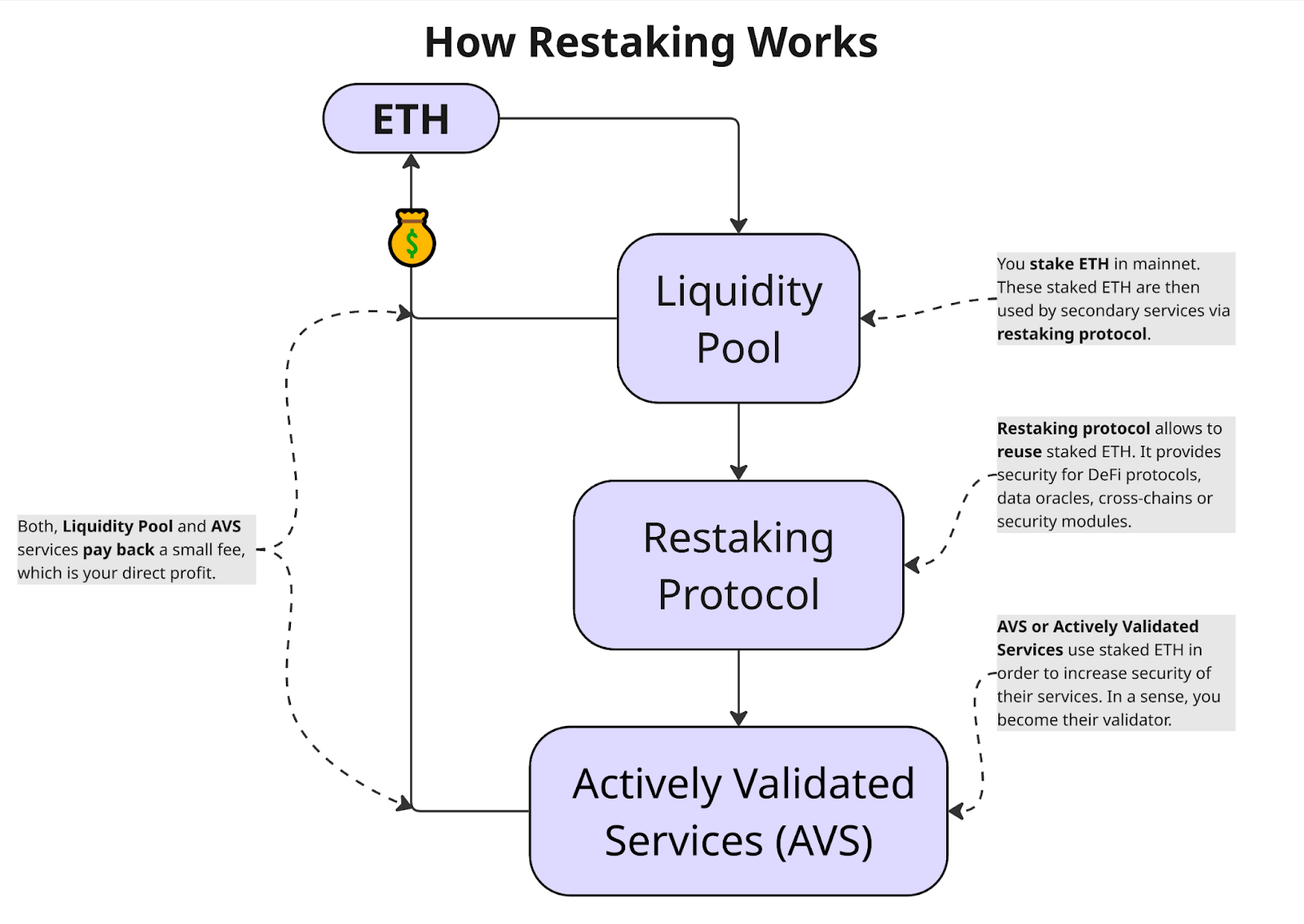
Cross-chain restaking merges Ethereum’s liquid restaking infrastructure with multi-chain interoperability. This mechanism allows validators to pledge their staked ETH to secure services on networks beyond the Ethereum mainnet. Instead of capital sitting idle on a single chain, it acts as a shared security layer that can be tapped by applications on Arbitrum, Optimism, Solana, or any other connected ecosystem.
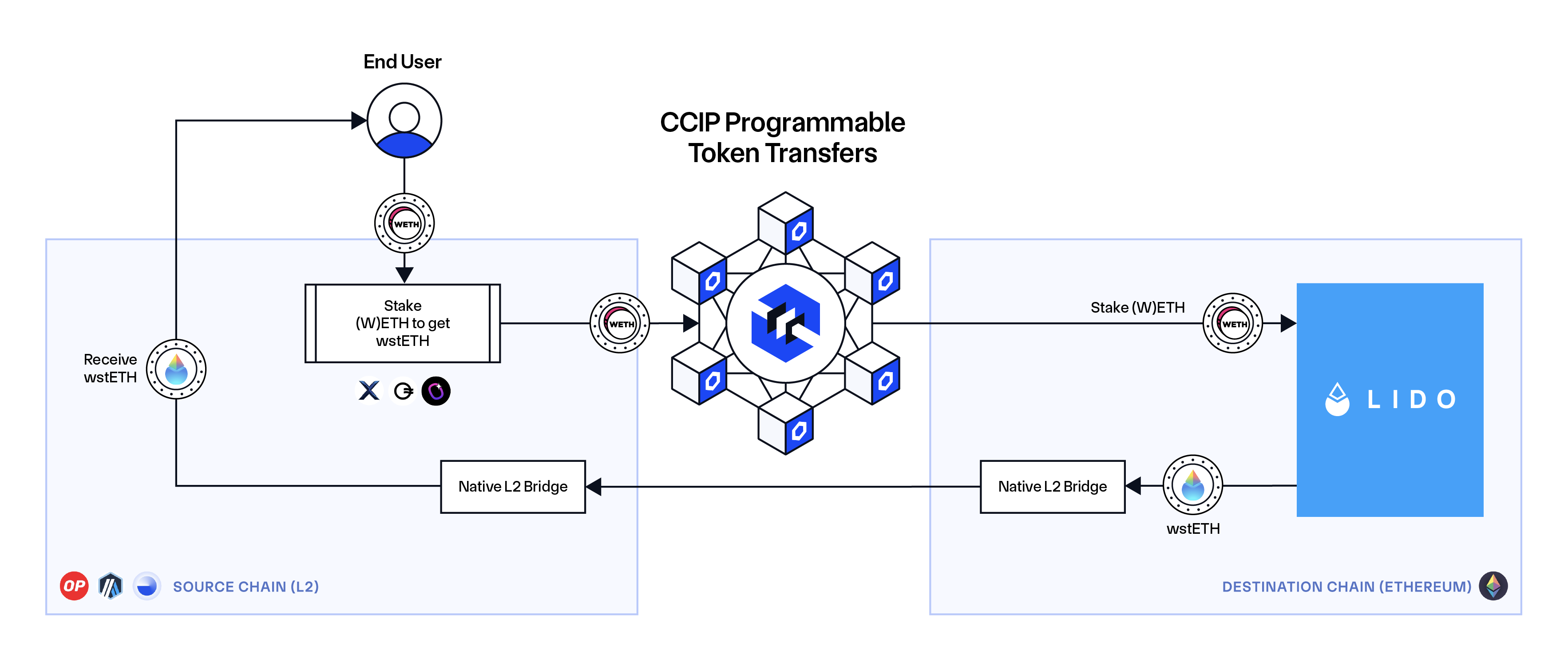
The core mechanism relies on interoperability protocols that bridge the gap between these networks. When a validator’s stake is restaked, the associated security guarantees are wrapped in a format that other chains can verify. This process effectively teleports the value of Ethereum’s consensus security to secondary layers, enabling decentralized applications to inherit institutional-grade trust without building their own validator sets.
This expansion creates a unified liquidity pool for security. Protocols like Circle’s Cross-Chain Transfer Protocol (CCTP) demonstrate the underlying infrastructure required for such movement, allowing native assets to flow between blockchains through burning and minting mechanisms. Restaking applies this same logic to validator tokens, ensuring that the economic incentives and slashing conditions remain enforceable regardless of which chain the staked capital is currently securing.
Leading protocols for cross-chain restaking
Cross-chain restaking infrastructure has shifted from experimental bridges to intent-based routing and certified messaging layers. The leading protocols enable validators to secure multiple networks simultaneously, but their technical approaches to security and yield distribution differ significantly. Understanding these distinctions is essential for capital allocation in 2026.
Chainlink CCIP dominates the certified messaging space, processing over $18 billion in cross-chain transfer volume in Q1 2026 alone. Its security model relies on the Chainlink Decentralized Oracle Networks (DONs) to verify and relay messages across 70+ blockchains. This approach prioritizes finality and fraud-proofing over raw speed, making it the preferred choice for institutional-grade restaking where capital preservation is paramount. The protocol integrates with Swift’s traditional finance network, further cementing its role as a bridge between legacy settlement and Web3 yield.
LayerZero offers a competing omnichain infrastructure that emphasizes lightweight validation. By using Ultra Light Nodes (ULNs) rather than a single centralized relay, LayerZero allows each chain to customize its security parameters. This flexibility enables faster transaction finality and lower gas costs compared to CCIP, though it requires protocols to independently manage their own security assumptions. LayerZero is frequently the underlying transport layer for DeFi restaking protocols that prioritize user experience and composability over institutional-grade attestation.
Axelar provides a hybrid approach, combining a proof-of-stake network with a decentralized validator set that routes messages across chains. Its security model is similar to LayerZero’s in that it allows for modular security, but it maintains a native token (GLMR) that stakers can restake within the Axelar ecosystem itself. This creates a closed-loop yield opportunity where restakers earn yield on the base asset while simultaneously securing the cross-chain messaging layer.
The following table compares the three primary infrastructure providers based on their technical architecture and market positioning.
| Protocol | Security Model | Primary Use Case | Ecosystem Integration |
|---|---|---|---|
| Chainlink CCIP | DON-mediated attestation | Institutional settlement | Swift, enterprise chains |
| LayerZero | Ultra Light Nodes (ULN) | High-speed DeFi | Broad DeFi composability |
| Axelar | Proof-of-Stake routing | Modular security | Native GLMR restaking |
When selecting a protocol for cross-chain restaking, the decision ultimately rests on the trade-off between security guarantees and execution speed. CCIP’s attestation model is best suited for large, institutional capital where the cost of a bridge failure is unacceptable. LayerZero and Axelar offer more flexibility for protocols that require rapid capital deployment and lower transaction costs, but they shift more of the security burden onto the individual smart contracts utilizing the transport layer. As the restaking landscape matures, we expect to see more hybrid models that combine CCIP’s security with LayerZero’s efficiency.
Where cross-chain restaking yield comes from
Cross-chain restaking does not create yield from thin air; it aggregates three distinct income streams and routes them through bridge infrastructure. The base layer consists of native consensus rewards paid by the source chain for securing its own network. The second layer adds restaking fees, where validators pay premiums to use your stake for additional security services like oracle networks or sequencer protection. The third layer, often the most volatile, includes yield from decentralized finance activities such as liquidity provision or lending markets on the destination chain.
The net return you actually receive depends heavily on the efficiency of the cross-chain routing. When you restake assets like ETH on Ethereum and receive a liquid restaking token (LRT) that is bridged to Solana or Arbitrum, that token must be deployed somewhere to generate alpha. If the destination chain offers higher borrowing rates or trading fees, the yield compounds. However, every hop introduces friction. Bridge fees, slippage during atomic swaps, and the opportunity cost of waiting for finality all eat into the gross APY.
MEV (Maximal Extractable Value) represents a significant portion of potential yield but is rarely distributed equally. On high-throughput chains, sophisticated bots capture the majority of MEV through transaction ordering. Retail restakers often rely on protocols that pool these rewards and distribute them proportionally, but the distribution mechanism varies wildly. Some protocols retain a portion of MEV to subsidize bridge costs or insurance funds, while others pass it through directly. Understanding whether a protocol shares MEV is critical when comparing advertised yields against realized returns.
Protocol fees from the destination chain add another variable. If your bridged LRT is used to secure a specific service, that service may pay fees in its native token. These fees are often volatile and subject to the token's market performance. For example, if a protocol pays fees in a governance token that is undergoing inflationary emissions, the real value of those rewards may decline even if the nominal APY appears high. This disconnect between nominal yield and real purchasing power is the primary risk in cross-chain restaking strategies.
Security risks in cross-chain bridges
Cross-chain restaking introduces a distinct attack surface that does not exist in single-chain environments. When you delegate security to a bridge, you are no longer relying on the consensus of one network but on the interoperability layer connecting two. This complexity creates three primary vectors for capital loss: bridge-specific exploits, smart contract logic errors, and validator slashing conditions that propagate across chains.
Bridge Architecture Vulnerabilities
Traditional lock-and-mint and burn-and-mint bridges require custodial keys or multi-signature wallets to manage the locked assets on the source chain. If these keys are compromised, the attacker can mint unlimited tokens on the destination chain, draining the liquidity pool. Recent high-profile breaches have demonstrated that even audited bridge contracts can fail if the off-chain signature verification logic is flawed. The trust assumption shifts from "is the code correct?" to "did the signers sign correctly?", a distinction that has proven fatal for billions in locked value.
Smart Contract and Logic Flaws
Restaking protocols often rely on complex smart contract interactions to track staked positions and distribute rewards across multiple chains. A vulnerability in the bridge’s message-passing layer can lead to reentrancy attacks or state corruption. For instance, if a bridge fails to properly synchronize the burn event on the source chain with the mint event on the destination chain, it can create a double-spend scenario. These logic errors are particularly dangerous in cross-chain restaking because they often involve asynchronous communication, where delays or failures in message delivery can leave positions in an inconsistent state.
Slashing and Validator Risks
In cross-chain restaking, slashing conditions are not isolated. If a validator on the source chain is slashed for malicious behavior, the penalty can propagate to the destination chain through the bridge’s staking contracts. This means that a single bad actor can trigger a cascade of losses across the entire restaking ecosystem. Also, if the bridge relies on a shared set of validators, a compromise of the validator set on one chain can undermine the security of the other. This interconnectedness amplifies the impact of any single point of failure, making thorough due diligence on the bridge’s security model essential.
Setting up a secure cross-chain restaking workflow
Cross-chain restaking moves capital across distinct blockchain environments, introducing bridge risk and gas complexity that can erase yield or lock funds permanently. A disciplined setup process is the only reliable defense. Before committing capital, you must verify the integrity of the bridge, confirm gas availability on both ends, and validate transaction parameters against official documentation.
Identify the specific bridge or messaging protocol (e.g., LayerZero, CCTP, Axelar) powering your restaking action. Check for recent third-party security audits and active bug bounty programs. Avoid bridges with outdated audit reports or no public security history, as these are primary vectors for cross-chain exploits.
Gas requirements differ significantly between chains. Ensure your source wallet holds sufficient native tokens for transaction fees, and verify that the destination chain has adequate liquidity for the bridge’s relay mechanism. Use fee estimators to avoid underfunding transactions that would otherwise fail silently or incur excessive retry costs.
Review all transaction parameters before signing. Cross-chain transfers often involve multiple steps; a single mismatch in token addresses or chain IDs can result in permanent loss. Set appropriate slippage tolerance if the bridge supports dynamic pricing, and double-check that the destination contract address matches the official protocol documentation.
This workflow minimizes exposure to bridge failures and misconfigurations. Always treat cross-chain transactions as high-risk operations requiring manual verification at every stage.
Cross-Chain Staking FAQs
Cross-chain staking allows users to deposit staking assets on one blockchain to earn rewards while participating in activities across others. This mechanism expands yield opportunities by unlocking capital that would otherwise remain idle on a single network.
What is a cross-chain protocol?
A cross-chain protocol enables the flow of assets between blockchains through native burning and minting. The Cross-Chain Transfer Protocol (CCTP) is a permissionless onchain utility that effectively teleports USDC from one blockchain to another without relying on wrapped versions, preserving the asset’s native status.
What is a cross-chain token transfer?
A cross-chain token transfer moves value from a source chain to a destination chain. In 2026, this is often handled by intent-based routing, where a signed declaration of a desired outcome is fulfilled by a competing solver network with atomic settlement, ensuring the transaction completes or reverts entirely.
Is USDC cross-chain?
Yes, USDC is cross-chain via Circle’s official Cross-Chain Transfer Protocol (CCTP). CCTP works by burning USDC on the source chain, having Circle’s off-chain Iris attestation service sign the burn message, and minting fresh native USDC on the destination chain. This method supports over 13 chains and ensures the transferred USDC remains native, not wrapped.
What are the best bridge crypto sites?
Leading cross-chain infrastructure includes Wormhole by Jump Crypto, LayerZero Protocol, and Axelar. Other notable options are Across, Stargate, deBridge, NEAR Intents, and Synapse Protocol. These networks provide the routing and liquidity necessary for efficient cross-chain staking and asset movement.
No comments yet. Be the first to share your thoughts!