
Define your cross-chain restaking path
Execute Cross-Chain Restaking Safely works best as a clear sequence: define the constraint, compare the realistic options, test the tradeoff, and choose the path with the fewest hidden costs. That order keeps the advice usable instead of decorative. After each step, pause long enough to check whether the recommendation still fits the reader's actual situation. If it depends on perfect timing, unusual access, or a best-case budget, include a simpler fallback.
The simplest way to use this section is to write down the real constraint first, compare each option against it, and choose the path that still works outside ideal conditions.
Choose a bridge with proven security
Cross-chain bridges are the primary vector for restaking losses. A compromised bridge can drain the liquidity backing your restaked assets. To minimize smart contract risk, evaluate the interoperability layer before initiating any transfer.
Evaluate the technical architecture
Cross-chain protocols function as messaging systems between blockchains, allowing assets to move securely across fragmented networks. Chainalysis notes that these systems rely on rigorous verification mechanisms to validate state changes on the destination chain. Look for protocols that use verifiable messaging rather than simple custodial locks.
Prioritize proven interoperability layers
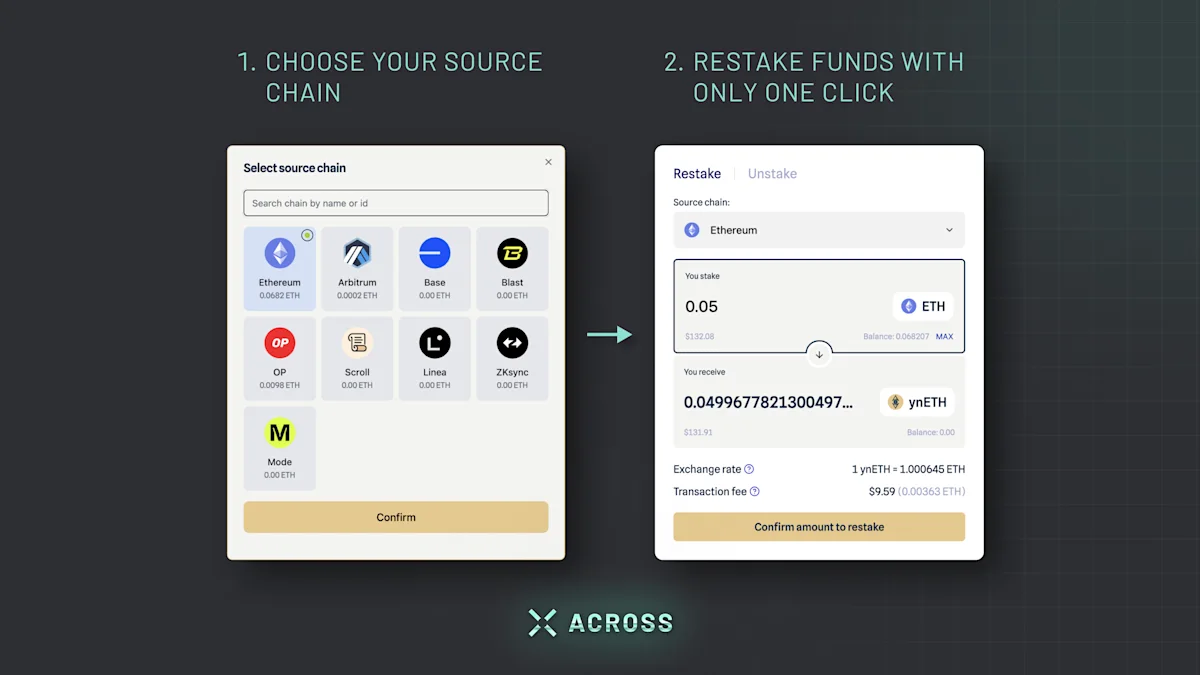
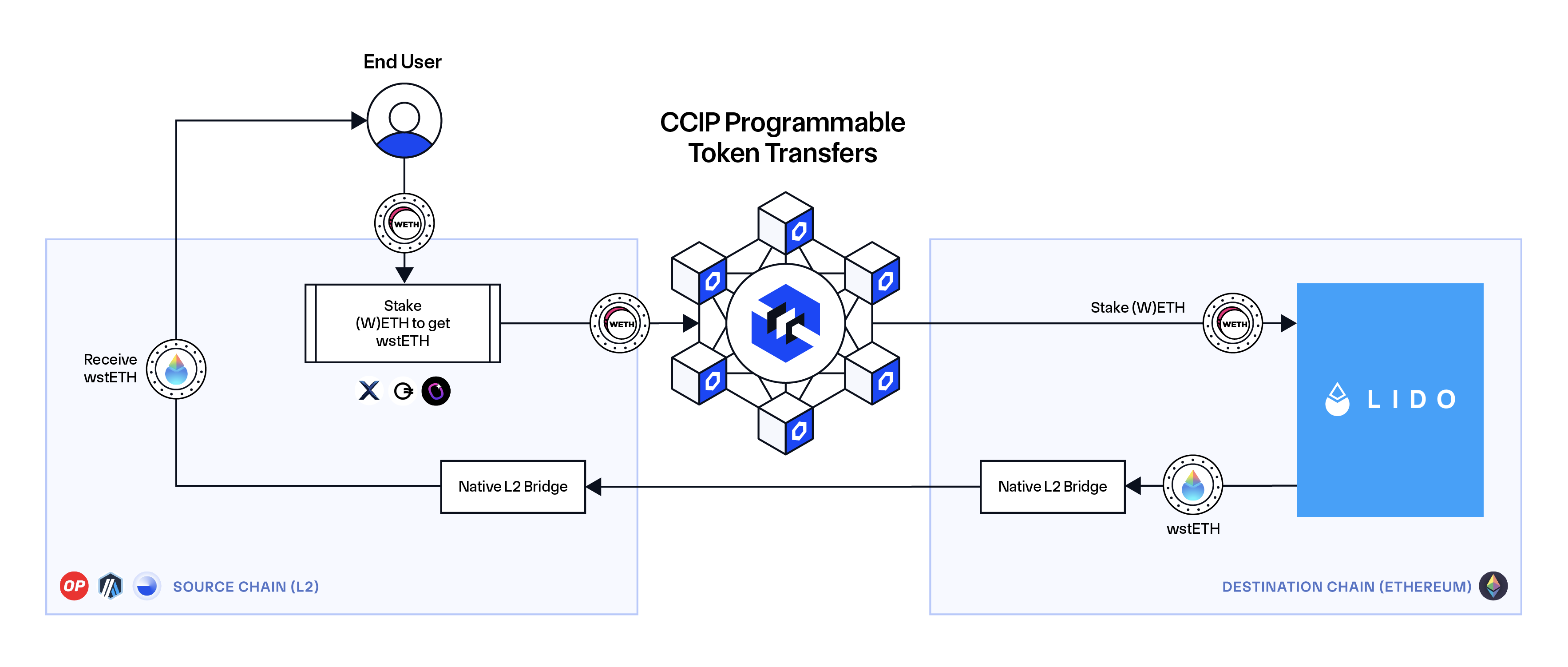
Major protocols like Across, Chainlink CCIP, and LayerZero have established track records. Across Protocol reduces friction by streamlining complex transactions into single actions, which limits the exposure window to exploits. Chainlink CCIP offers enterprise-grade security through its decentralized oracle network. LayerZero provides lightweight messaging that allows for efficient cross-chain communication.
Audit TVL and historical incidents
Do not trust a bridge based on marketing alone. Review the Total Value Locked (TVL) to gauge community confidence, but treat it as a lagging indicator. More importantly, audit the bridge’s history for past exploits. A protocol that has survived multiple security audits without a major breach is significantly safer than a newer, untested alternative.
Warning: Bridge hacks are the primary vector for restaking losses. Always audit the bridge's TVL and historical security incidents.
Deposit and delegate your staked assets
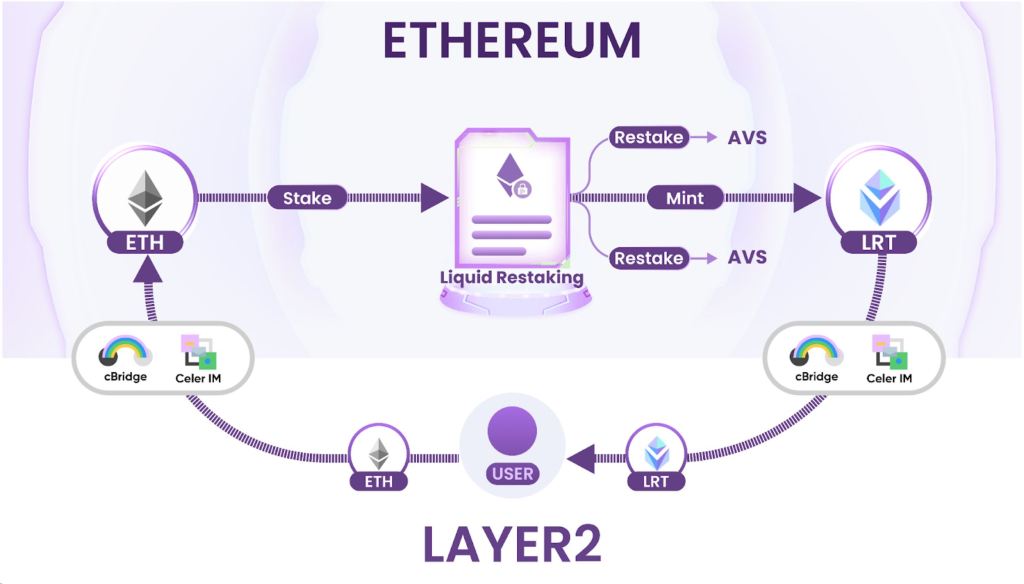
Cross-chain restaking moves capital from a liquid staking token (LST) on a source chain to a restaking protocol on a destination chain. This process unlocks yield opportunities across multiple networks, but it introduces technical complexity and bridge risk. Treat every step as a financial transaction with real consequences.
The goal is to secure your assets while delegating them to an Actively Validated Service (AVS). You are effectively lending the same capital to two systems: the original staking protocol and the new cross-chain restaking layer. If a validator misbehaves, your assets are subject to slashing on both fronts.
Before initiating any transfer, confirm that your specific LST is supported by the target cross-chain restaking protocol. Not all LSTs can be bridged or restaked across every network. Check the protocol’s official documentation for a list of compatible assets and supported chains. Using an unsupported token will result in lost funds or failed transactions.

Use a reputable cross-chain bridge or aggregator to move your LST from the source chain to the destination chain. This step involves locking or burning your assets on the source chain and minting or releasing them on the target chain. Double-check the network fees (gas) and bridge slippage. Ensure you are using the official bridge interface to avoid phishing sites.
Once your LST arrives on the destination chain, you must approve the restaking protocol’s smart contract to spend your tokens. This is a standard ERC-20 approval step. Be cautious of excessive approval amounts; consider using a limited approval if the protocol allows it. Verify the contract address against the official protocol documentation before signing.
Navigate to the deposit interface of the cross-chain restaking protocol. Enter the amount of LST you wish to restake and select the Actively Validated Service (AVS) you want to support. Confirm the transaction details, including the delegation period and expected rewards. Review the slashing conditions carefully. Once confirmed, your assets are now actively securing the AVS.
After delegation, regularly monitor your position on the protocol’s dashboard or blockchain explorer. Track your rewards, which may be distributed in native tokens or additional LSTs. Keep an eye on the health of the AVS and the overall network status. If you need to exit, follow the protocol’s withdrawal process, which may involve a waiting period.
Monitor slashing conditions and rewards
Cross-chain restaking amplifies yield but concentrates risk. Your capital secures multiple Active Validator Services (AVS) simultaneously, meaning a single misbehaving validator can trigger slashing across the entire stack. Monitoring is not passive; it requires real-time oversight of both reward accrual and penalty exposure.
Track yield across protocols
Set up dashboards for each AVS you support. Galaxy Research notes that restaking allows the stake weight of one chain to be used across any number of other chains, which means yields are fragmented and variable [Galaxy Insights]. Do not rely on a single aggregator. Check individual protocol interfaces to verify that rewards are being credited correctly and to identify any anomalous drops in APY that might signal network congestion or protocol issues.
Watch for slashing events
Slashing is the primary risk in restaking: the same capital is lent to two systems, putting it at risk in both [Blockworks]. If a validator misbehaves, the stake can be taken away. Because cross-chain activity spans multiple networks, a slashing event on one chain can impact your position on another. Use official block explorers and validator monitoring tools to track slashing conditions. Set up alerts for any validator performance degradation.
Maintain a monitoring checklist
Create a routine to review your positions daily. Ensure you are tracking:
- Validator uptime across all supported chains.
- Reward distributions from each AVS.
- Any pending slashing proposals or governance votes.
Failure to monitor these conditions can lead to significant losses. Treat your restaking positions like active trading positions, not passive savings accounts."
Common cross-chain restaking mistakes
Cross-chain restaking introduces layers of complexity that can quickly erode capital if you skip the verification steps. The following pitfalls are the most common reasons operators lose funds or suffer unexpected slashing events.
Ignoring destination gas fees
Many operators assume the gas costs on the source chain (like Ethereum) cover the entire transaction. This is incorrect. You must hold native tokens on the destination chain to pay for bridge execution and validator registration fees. If your destination wallet is empty, the transaction fails, and your funds remain locked in the bridge contract until manually claimed.
Using unvetted bridges
Bridges are the most frequent point of failure in cross-chain infrastructure. Using a bridge with a low total value locked (TVL) or no independent audit history exposes your restaked assets to smart contract exploits. Always use bridges with established track records and high security scores. A single failed bridge transaction can halt your entire restaking yield.
Failing to check slashing conditions
Restaking means your capital secures multiple services simultaneously. If you delegate to a new Actively Validated Service (AVS) without reading its specific slashing policy, you risk losing your entire stake if that service fails. Galaxy Research notes that restaking allows stake weight to be used across chains, but this also multiplies the points of failure. Always review the "slash conditions" for every AVS you support.
Final Checklist for Safe Cross-Chain Restaking
Before locking capital into a cross-chain restaking protocol, verify every security layer. This operation moves assets across multiple bridges and smart contracts, multiplying the attack surface. Treat this list as a non-negotiable pre-flight inspection.
Frequently asked questions about cross-chain restaking
What are the risks associated with restaking?
Restaking effectively lends the same capital to two different systems, exposing it to risk in both. The primary technical danger is "slashing": if a validator misbehaves on Ethereum, the same stake securing your additional services (AVS) can be confiscated. This creates a compound risk scenario where a single failure can trigger losses across multiple chains simultaneously.
What is a cross-chain protocol?
A cross-chain protocol enables interoperability between different blockchain networks, allowing them to transfer data and exchange assets. These solutions address blockchain fragmentation by ensuring assets are not confined to their native networks. In the context of restaking, these protocols facilitate the movement of staked assets to secure new services on other chains.
How does a new protocol benefit from using restaking?
New protocols (AVSs) gain immediate access to Ethereum's massive security pool without building their own validator set from scratch. This allows them to direct all resources toward building and marketing their services rather than decentralization. Stakers, in turn, benefit by trading their existing security weight for extra rewards, creating a symbiotic economic relationship.
No comments yet. Be the first to share your thoughts!