

In the multi-chain era, cross-chain liquid restaking stands out as a strategic lever for yield optimization, letting savvy investors stake assets on Ethereum while deploying liquid restaking tokens (LRTs) seamlessly on Solana or BNB Chain. With Ethereum's ETH at $2,058.30, Solana's SOL at $89.67, and BNB at $627.83 as of February 15,2026, this approach captures compounded rewards without locking capital, blending shared security models like AVSs with effortless interoperability.
Traditional staking ties your funds to one chain, but liquid restaking evolves this by issuing tokens like uniETH or ynBNB that retain utility across ecosystems. Picture restaking ETH via EigenLayer, receiving an LRT, then bridging it to Solana for DeFi plays; yields stack while liquidity flows. This isn't mere speculation; it's a calculated hedge against chain-specific downturns, amplified by protocols that distribute risk via diversified AVS delegations.
Ethereum's Cross-Chain Restaking Vanguard
Ethereum sets the benchmark for Ethereum Solana restaking innovations, where protocols like Bedrock pioneer non-custodial flows. In April 2024, Bedrock teamed with Celer Inter-chain Messaging, empowering Layer 2 users to stake ETH on mainnet and reclaim uniETH directly in their L2 wallets. No cumbersome bridges, just fluid capital motion that preserves composability.
Kernel DAO, evolved from Kelp DAO, extends this to over ten networks including BNB Chain. Convert stETH or rETH into rsETH, and you tap dual rewards: base staking plus EigenLayer AVSs. As ETH holds at $2,058.30 despite a 0.78% dip, these tools hedge volatility, letting options overlays cap downsides while chasing asymmetric upside. My strategies at crosschainrestaking. com layer calls on LRTs, turning restaking into a yield fortress.

Solana's Velocity in Liquid Restaking
Solana accelerates multi-chain restaking protocols with blistering throughput, countering illiquid staking pitfalls through projects like Picasso Network. As Solana's IBC gateway, Picasso secures cross-chain transfers with restaked SOL and LSTs, backing over 30 networks and 70 assets. SOL's 4.54% surge to $89.67 underscores this momentum; restakers here don't just earn, they fuel interoperability without the Ethereum gas tax.
Liquid restaking on Solana sidesteps domino risks in DeFi by design, offering LSTs from Jito that morph into versatile LRTs. Competition heats up, yet protocols prioritize smart contract audits across layers, mitigating multi-contract failure points. Strategically, pair Solana LRTs with Ethereum positions for portfolio balance; high-speed yields complement Ethereum's security depth.
Ethereum (ETH) Price Prediction 2027-2032
Forecasts influenced by cross-chain liquid restaking adoption trends on Ethereum, Solana, and BNB Chain (Baseline: $2,058 in 2026)
| Year | Minimum Price | Average Price | Maximum Price | YoY % Change (Avg) |
|---|---|---|---|---|
| 2027 | $1,850 | $2,750 | $4,200 | +33.6% |
| 2028 | $3,200 | $5,200 | $8,500 | +89.1% |
| 2029 | $2,900 | $6,100 | $9,800 | +17.3% |
| 2030 | $4,500 | $8,000 | $12,500 | +31.1% |
| 2031 | $5,800 | $10,500 | $16,000 | +31.3% |
| 2032 | $7,200 | $13,000 | $20,000 | +23.8% |
Price Prediction Summary
ETH is expected to experience robust growth from 2027-2032, driven by liquid restaking innovations like Bedrock and Kernel DAO, boosting DeFi TVL and yields. Bullish maxima reflect adoption surges and bull cycles (e.g., 2028), while minima account for risks like smart contract failures and regulation. Overall outlook: bullish with 6x avg growth by 2032.
Key Factors Affecting Ethereum Price
- Cross-chain restaking adoption (e.g., Bedrock on ETH, YieldNest on BNB, Picasso on Solana) enhancing liquidity and yields
- Market cycles with peaks around 2028 halving
- Regulatory clarity on DeFi staking/restaking
- Technological risks: smart contract vulnerabilities and systemic domino effects
- Competition from Solana/BNB but ETH's dominance in restaking (EigenLayer)
- Broader crypto market cap expansion and institutional inflows
Disclaimer: Cryptocurrency price predictions are speculative and based on current market analysis. Actual prices may vary significantly due to market volatility, regulatory changes, and other factors. Always do your own research before making investment decisions.
BNB Chain's YieldNest and Strategic Depth
BNB Chain elevates BNB Chain restaking yields with YieldNest's ynBNB, launched September 2024 as the chain's inaugural LRT. Stake BNB, aggregate from Kernel, Karak, and Binominal, then harvest 'Seeds' for airdrops atop native rewards. At $627.83, BNB's steady 0.14% gain signals institutional appetite for these layered returns.
LiquiFy DAO complements this, issuing liBNB bridgeable to Ethereum or Solana, unlocking DeFi everywhere. Opinion: BNB's restaking scene thrives on low fees and EVM compatibility, ideal for options strategies overlaying LRT volatility. Yet, vigilance on systemic risks remains key; diversified AVS baskets via liquid restaking tokens AVS are non-negotiable for sustainability.
Systemic vulnerabilities lurk in restaking's layered architecture, where funds cascade through contracts on Ethereum, Solana, and BNB Chain. EigenLayer-style protocols boost security via AVSs, yet experts flag multi-contract failure points and domino effects from DeFi volatility. With ETH dipping 0.78% to $2,058.30, SOL climbing 4.54% to $89.67, and BNB edging up 0.14% to $627.83, prudent restakers prioritize audited bridges and diversified delegations to shield against these pitfalls.
Strategic Benefits Outweigh the Hazards
Cross-chain liquid restaking isn't risk-free, but its edge lies in asymmetric rewards. Protocols like YieldNest's ynETH delegate to EigenLayer AVS baskets, stacking yields beyond native staking. Solana's Picasso secures IBC flows economically, while BNB's liBNB fuels multi-chain DeFi. Galaxy Research highlights restaking's Ethereum-Cosmos parallels: enhanced capital efficiency trumps costs when liquidity persists. My take? Overlay options on LRTs at crosschainrestaking. com; buy calls on ynBNB volatility for capped risk, unlimited upside as SOL tests $89.67 highs.
Comparison of Top Cross-Chain Liquid Restaking Protocols
| Protocol | LRT | Primary Chain | Est. Yield (APR) | TVL (Feb 2026) | Supported Chains | Key Risks |
|---|---|---|---|---|---|---|
| Bedrock | uniETH | Ethereum | 4.5% - 8.2% (staking + AVS) | $1.47B | Ethereum L1/L2, cross-chain via Celer IM | Smart contract failures, bridge risks, systemic vulnerabilities |
| Picasso | Restaked LSTs | Solana | 7.1% - 12.5% (SOL staking + restaking) | $728M | Solana + 30+ networks (IBC) | Cross-chain messaging risks, economic security failures, DeFi domino effects |
| YieldNest | ynBNB | BNB Chain | 5.8% - 10.3% (BNB staking + aggregators) | $395M | BNB Chain, Ethereum, Solana (via bridges/Kernel/Karak) | Aggregation dependencies, multi-layer contract risks, liquidity & slashing |
Interoperability bridges like Celer IM erase silos, letting ETH LRTs power Solana liquidity pools or BNB lending. This multi-chain restaking protocols synergy diversifies beyond single-chain slumps, with LRTs maintaining peg stability through overcollateralization. Finextra notes Solana's liquid restaking surge addresses illiquidity head-on, positioning it as DeFi's velocity engine.
Mastering Cross-Chain Restaking: A Tactical Guide
Unlock Cross-Chain Yield: Restake ETH & Bridge to Solana/BNB

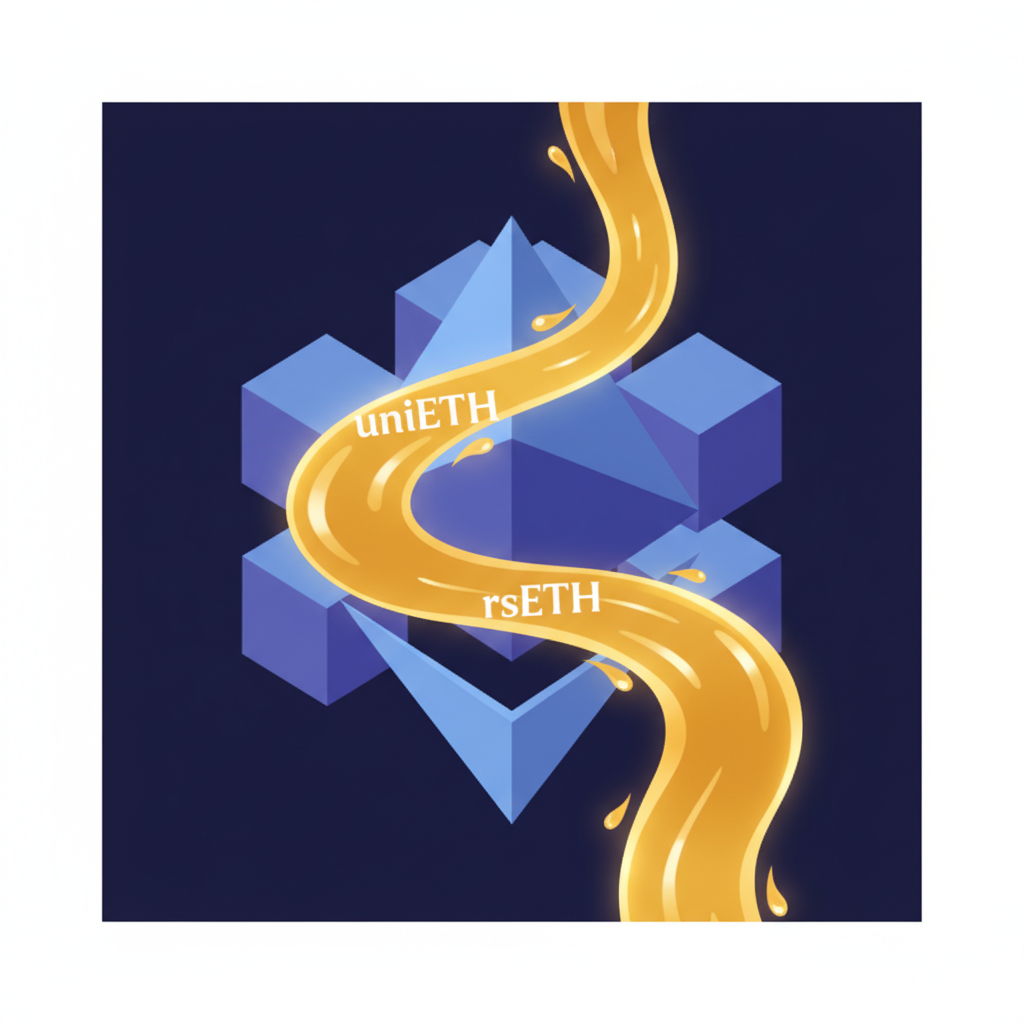

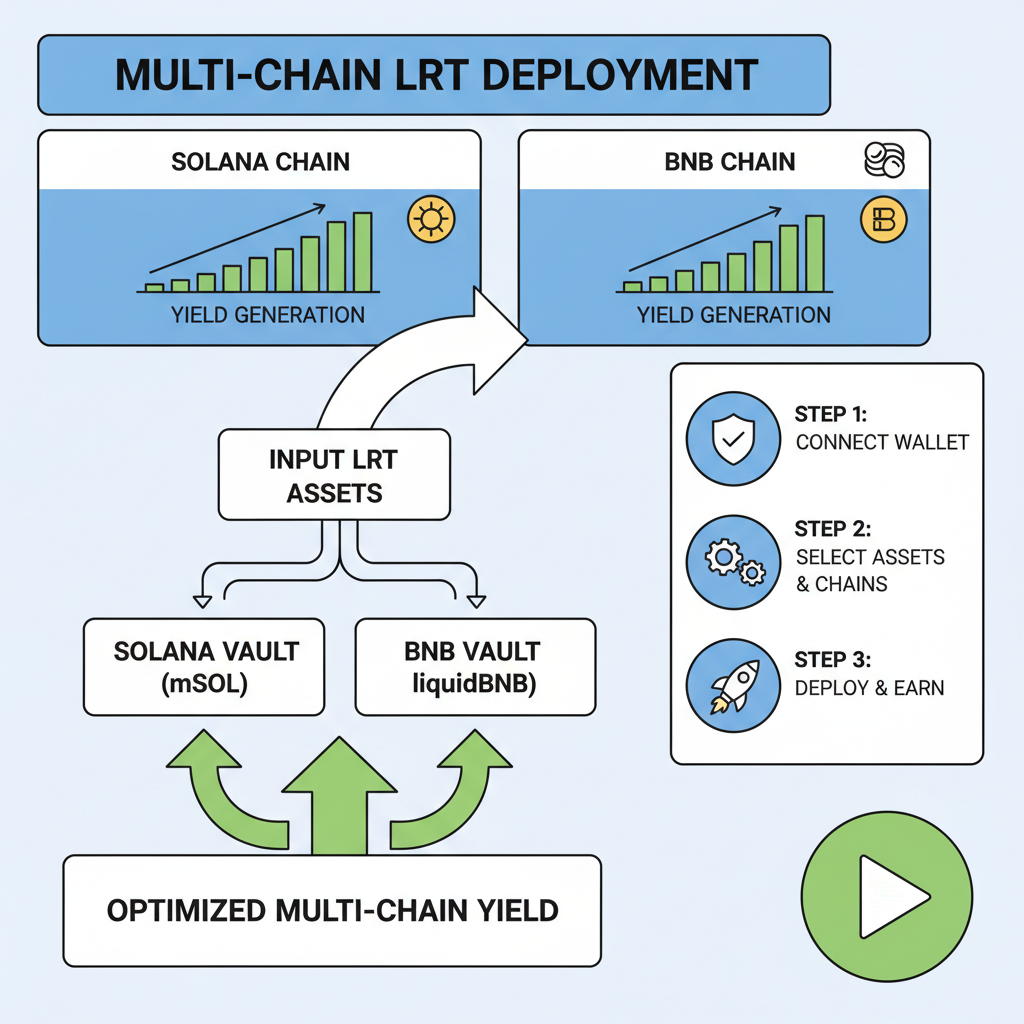

YieldNest's 'Seeds' exemplify gamified incentives, converting points to airdrops atop Kernel yields. Pair this with Solana's Jito LSTs for high-APY baskets, then hedge via Ethereum options. Competition sharpens innovation, but LlamaRisk audits underscore the need for nLRTs like ynETH that spread exposure. As BNB holds $627.83, institutional flows signal maturity.
Codezeros warns of restaking's contract daisy-chains as failure vectors, yet robust messaging protocols mitigate this. BeInCrypto echoes: EigenLayer's yields tempt, but systemic risks demand vigilance. Strategically, cap exposure at 20% per chain, rotate LRTs quarterly, and leverage liquid restaking tokens AVS for passive security accrual.
BNB Chain restaking yields shine in low-fee environments, complementing Ethereum Solana restaking depth. Picasso's 70-asset support heralds a borderless era, where restaked SOL at $89.67 secures transfers rivaling Cosmos. Kernel DAO's rsETH unifies ten chains, proving multi-chain restaking protocols scale without friction. Forward thinkers blend these into portfolios, using real-time analytics to pivot on ETH's $2,058.30 stability. Options overlays transform volatility into velocity, securing the multi-chain frontier.




No comments yet. Be the first to share your thoughts!