

Cross-chain restaking between Solana and Ethereum stands at the forefront of DeFi evolution, offering savvy investors a pathway to amplify yields without sacrificing liquidity or security. With Ethereum's ETH trading at $1,966.17 and Solana's SOL at $80.36, the moment feels ripe for strategic positioning. This guide dissects how to navigate cross chain restaking Solana setups, leveraging protocols that turn staked assets into multi-network powerhouses.
EigenLayer's Restaking Engine Powers Ethereum's Yield Frontier
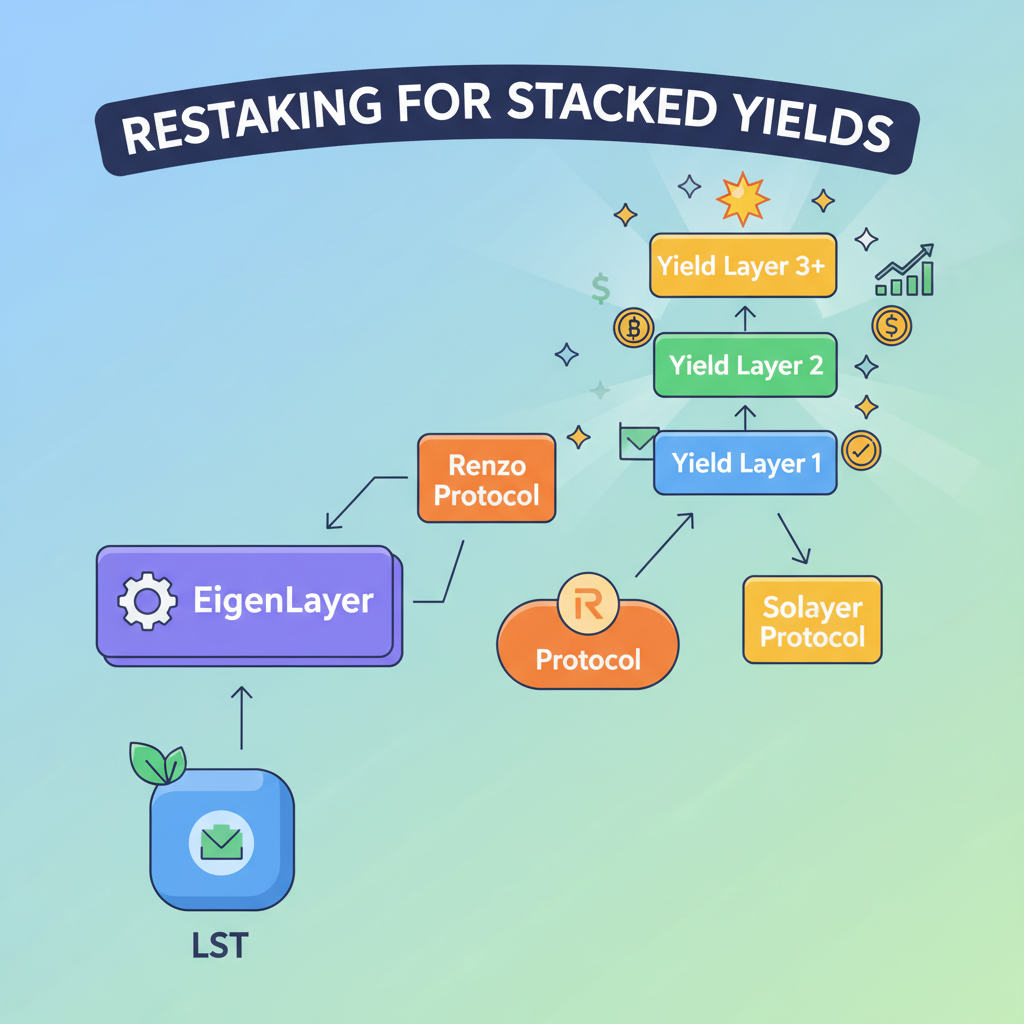
EigenLayer redefined staking on Ethereum by introducing restaking, where validators extend their secured ETH or liquid staking tokens (LSTs) to bolster Actively Validated Services (AVSs) like oracles and bridges. This isn't mere yield stacking; it's a calculated expansion of Ethereum's proof-of-stake utility, drawing in over $18 billion in TVL by late 2025. I view EigenLayer as the linchpin for ethereum solana restaking gateways, since its liquid restaking tokens (LRTs) become portable across chains.
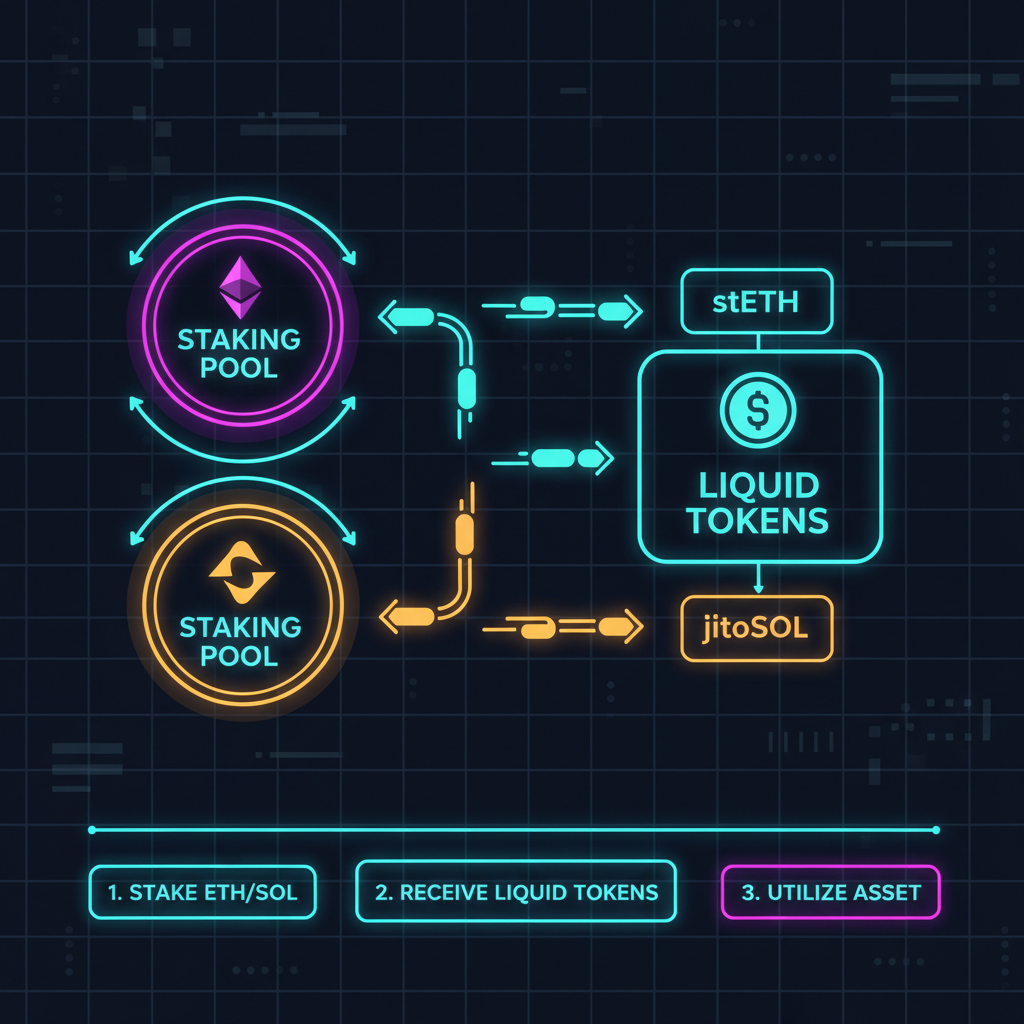
Consider the mechanics: stake ETH with providers like Lido for stETH, then restake via EigenLayer to earn dual rewards. Base staking yields hover around 3-4%, but restaking layers on AVS points and potential airdrops, pushing effective APYs toward 10-15% in bullish scenarios. The risk? Slashing events tied to AVS performance demand rigorous operator selection. My portfolio strategy favors diversified AVS exposure, mitigating single-point failures while chasing those layered returns.
Solana's Restaking Surge: Jito and Solayer Redefine Speed and MEV
Solana flips the script on restaking with its high-throughput architecture, where Jito dominates liquid staking at 50% market share via jitoSOL. This token bundles standard staking rewards with Maximal Extractable Value (MEV) shares, a boon in Solana's auction-heavy block production. Marinade trails at 16% with mSOL, but Jito's edge lies in MEV integration, delivering risk-adjusted yields that often outpace Ethereum's in volatile markets.
Enter Solayer, Solana's endogenous restaking innovator. By supporting AVSs natively on Layer 1, it issues liquid receipts for restaked SOL and LSTs, amassing $112 million in deposits and 304,000 users by 2025. Solayer's appeal? Frictionless composability within Solana DeFi, where LRTs fuel lending and DEX liquidity. For multi chain restaking yields, Solana's sub-second finality trumps Ethereum's latency, making it ideal for time-sensitive strategies. Yet, centralization risks in validator sets warrant caution; I allocate no more than 20% here without hedges.
Renzo Protocol Bridges Worlds for Seamless Cross-Chain Restaking
Renzo Protocol emerges as the strategic nexus for liquid restaking tokens cross chain, abstracting complexities with ezETH on Ethereum and ezSOL on Solana. Users deposit LSTs, mint unified LRTs, and deploy via the "Multi-Chain Money Matrix" strategy, splitting exposure for compounded rewards. This setup captures EigenLayer AVSs alongside Jito MEV, all while maintaining liquidity for DeFi plays.
Ethereum (ETH) Price Prediction 2027-2032
Forecasts factoring cross-chain restaking TVL growth, EigenLayer adoption, and multi-chain yield maximization with Solana
| Year | Minimum Price | Average Price | Maximum Price |
|---|---|---|---|
| 2027 | $2,500 | $3,500 | $5,000 |
| 2028 | $3,000 | $5,000 | $8,000 |
| 2029 | $4,000 | $7,500 | $12,000 |
| 2030 | $5,000 | $10,000 | $18,000 |
| 2031 | $6,500 | $14,000 | $25,000 |
| 2032 | $8,000 | $18,000 | $32,000 |
Price Prediction Summary
Ethereum is positioned for strong long-term appreciation due to the restaking revolution, with EigenLayer TVL growth, cross-chain bridges like Wormhole, and protocols like Renzo enabling higher yields across Ethereum and Solana ecosystems. Average prices are projected to grow at ~40% CAGR from $3,500 in 2027 to $18,000 in 2032, with minimums reflecting bearish regulatory or cycle risks and maximums capturing bullish adoption and tech upgrades.
Key Factors Affecting Ethereum Price
- EigenLayer restaking TVL expansion from $18B+ in 2025, securing AVSs and boosting ETH utility
- JitoSOL and Solayer on Solana enhancing cross-chain strategies, driving ecosystem liquidity
- Renzo Protocol's multi-chain LRTs (ezETH, ezSOL) simplifying yield maximization
- Wormhole interoperability reducing friction for ETH-SOL restaking
- DeFi yield layering and capital efficiency improvements amid market cycles
- Ethereum scaling via L2s and regulatory clarity potential
- Competition dynamics and Bitcoin halving correlations influencing volatility
Disclaimer: Cryptocurrency price predictions are speculative and based on current market analysis. Actual prices may vary significantly due to market volatility, regulatory changes, and other factors. Always do your own research before making investment decisions.
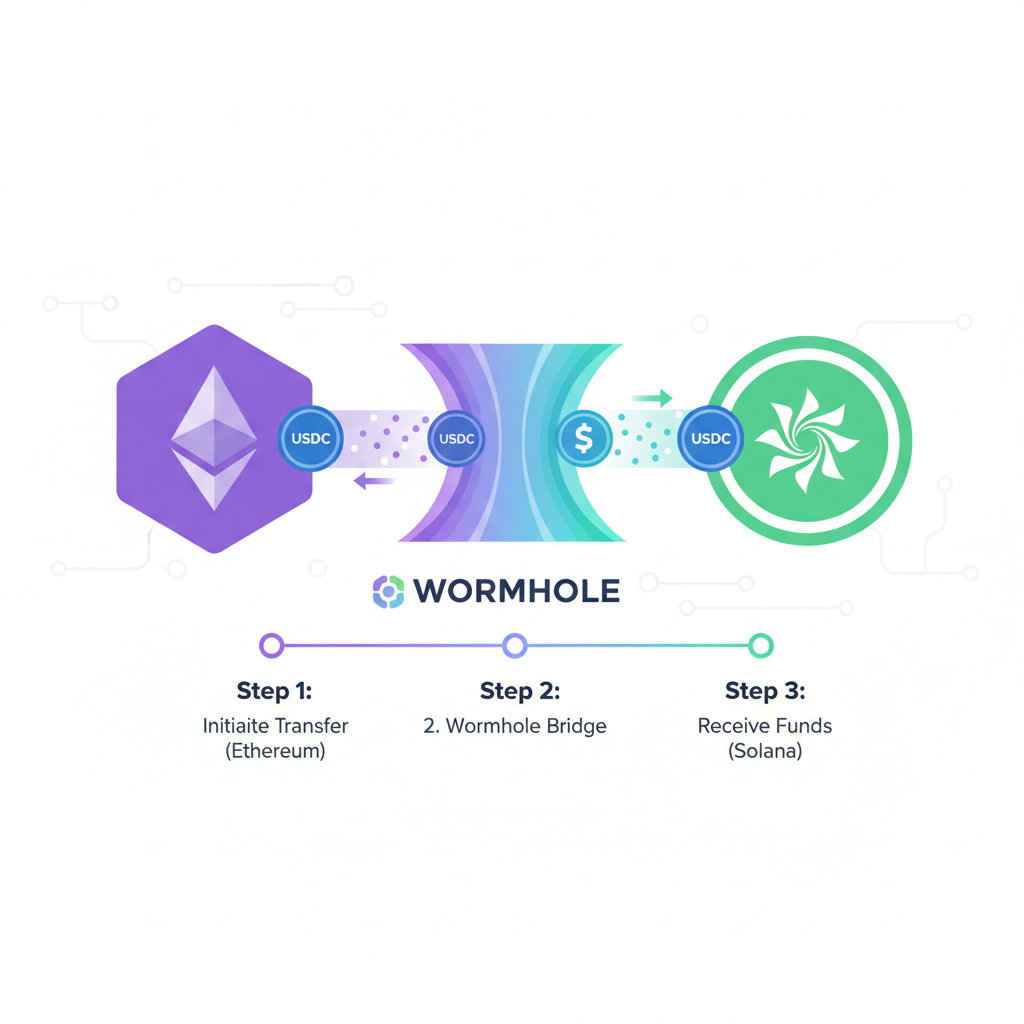
Wormhole supercharges this by enabling seamless asset bridges, shuttling USDC or wrapped ETH from Ethereum to Solana for hybrid positions. Picture staking ETH on EigenLayer, bridging proceeds to Jito for MEV boost, then looping back via Renzo. Yields compound, but bridge risks like exploits loom; Wormhole's guardian network has proven resilient, yet I stress insured wrappers. Diversification across these layers balances Ethereum's maturity with Solana's velocity, targeting 12-20% annualized returns in a multi-chain paradigm.
Protocol financing booms signal more entrants, from BSC's AVS experiments to Bitcoin integrations, but focus narrows to Solana-Ethereum for now. Liquid restaking's tokenization unlocks unprecedented capital efficiency, transforming idle stakes into ecosystem guardians.
Yet this efficiency demands precision. Slashing risks amplify in restaking, where AVS failures or validator misbehavior can penalize principal. Ethereum's EigenLayer imposes nuanced penalties, calibrated by operator stake size, while Solana's Jito MEV model introduces auction volatility. Bridges like Wormhole add smart contract vectors, though their multi-sig guardians have weathered $400 million in cumulative volume unscathed. My approach? Layer defenses with insured LSTs and position sizing capped at 5% per protocol.
Strategic Risks and Mitigations in Cross-Chain Restaking (Ethereum-Solana)
| **Risk 🚨** | **Impact ⚠️** | **Mitigation 🛡️** |
|---|---|---|
| ETH correlation dip below **$1,966.17** 🚨 | Market pressure | Hybrid vigilance: monitor TVL like EigenLayer **$18B** & Solayer **$112M** |
| Solana outage ghosts despite 2025 upgrades 🚨 | Liquidity issues | Diversify LSTs - **Lido stETH + Rocket Pool rETH** on ETH, **JitoSOL + Marinade mSOL** on Solana, **Renzo ezSOL** for rebalancing |
| Cross-chain congestion cascades to bridged LRTs 🚨 | Impermanent loss in LRT pools | Cap positions at 5% per protocol, insured LSTs, concentrated post-airdrop |
| **Protocol Comparison 📊** | **EigenLayer** (TVL **$18B**, APY 10-15% 📈), **Jito** (50% market, MEV yields 💰), **Solayer** (**$112M**, native AVS 🔗), **Renzo** (multi-chain ezETH/ezSOL ⚡) |
Real-world yields fluctuate, but current setups deliver. EigenLayer AVS points accrue atop 3.5% base staking, JitoSOL tips 8-12% with MEV, Solayer layers 5-10% on LSTs. Cross-chain via Renzo compounds to 12-18%, net of fees, assuming SOL holds $80.36 and ETH $1,966.17 stability.

Hands-On Execution: Building Your Multi-Chain Restaking Portfolio
Execution separates insight from returns. Start conservative: 60% Ethereum for security, 40% Solana for velocity. This tilt captures Ethereum's depth while riding Solana's throughput edge, optimizing multi chain restaking yields.
Master Cross-Chain Restaking: Maximize Solana & Ethereum Yields
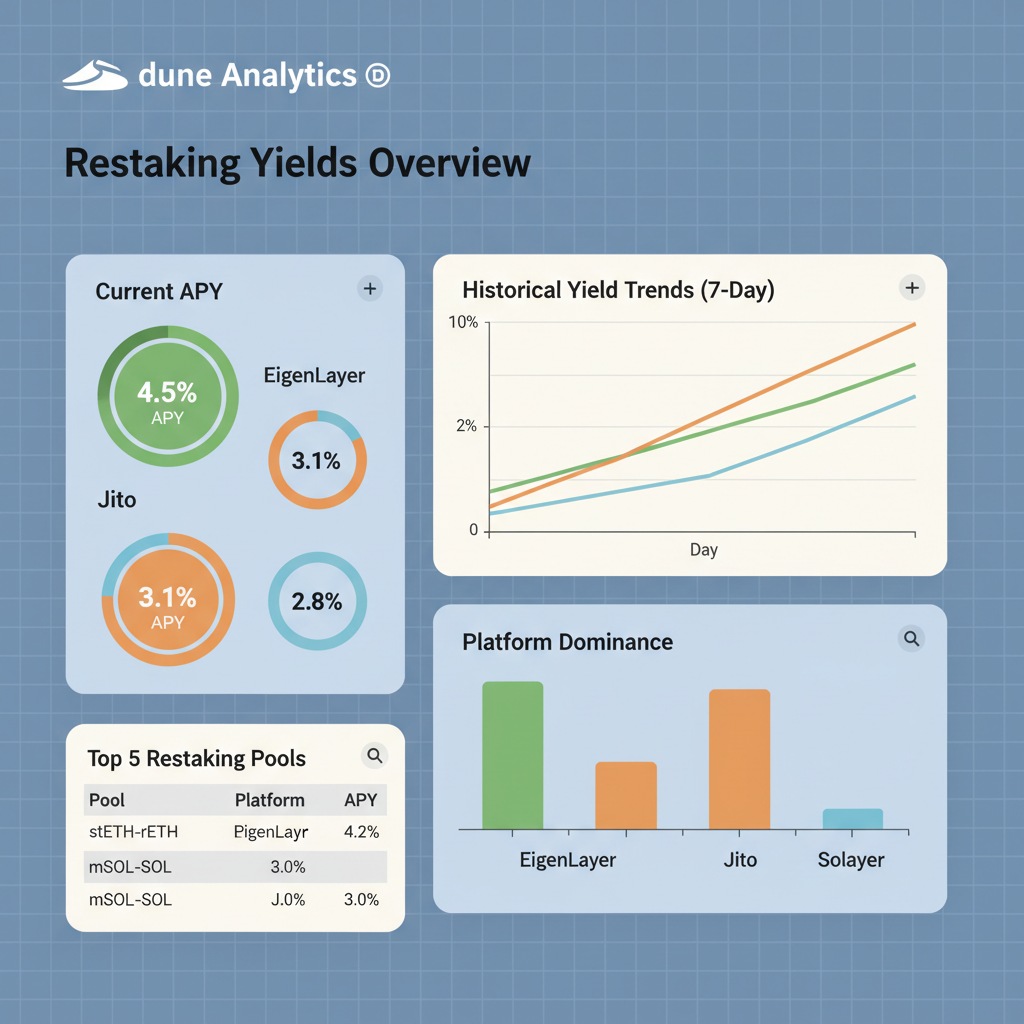
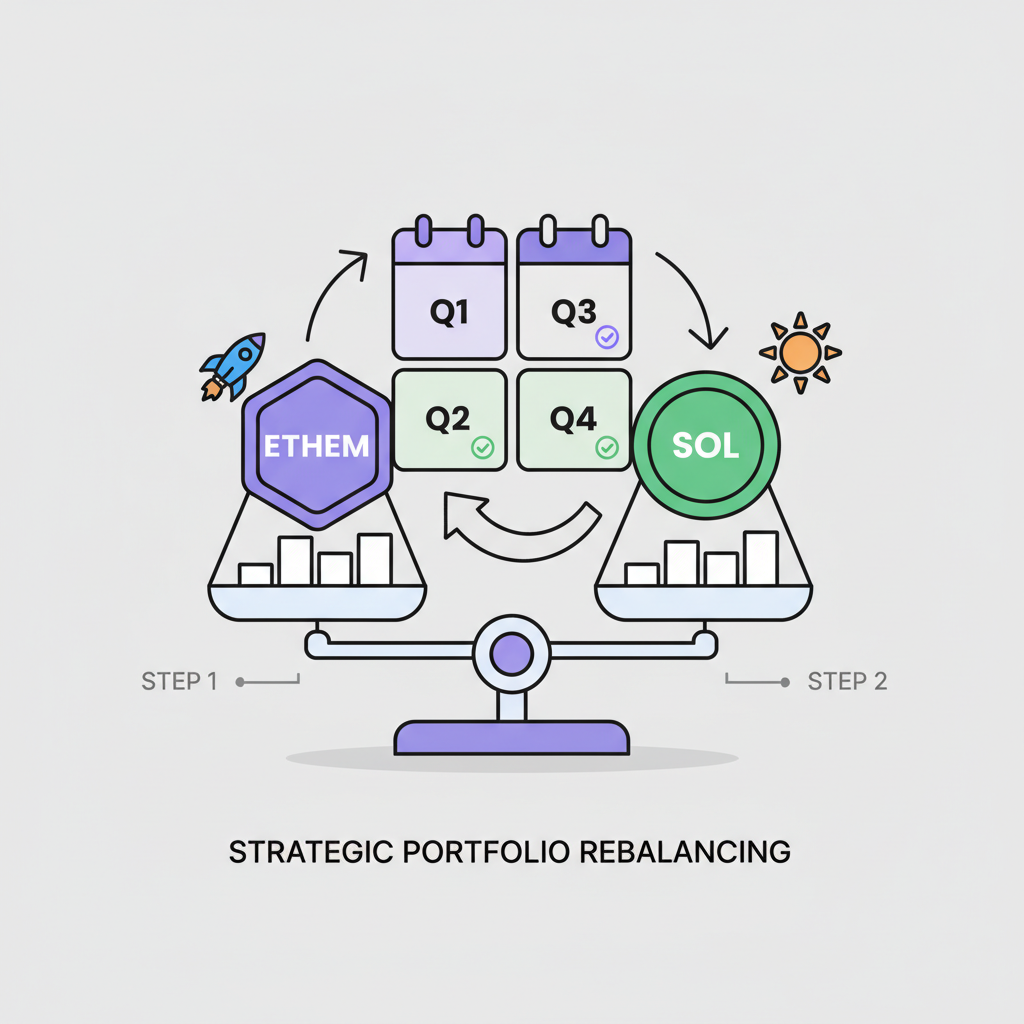
Post-setup, analytics rule. Track APY waterfalls, base staking, restaking premiums, MEV tips, via platforms like DeFiLlama. If SOL climbs from $80.36 on restaking hype, rotate gains to ETH at $1,966.17 dips. Renzo's dashboard unifies views, flagging overexposure. Institutions layer futures for delta-neutral plays, but retail thrives on spot LRT farming.
2026 horizons gleam with protocol convergence. BSC experiments port AVS models, Bitcoin LSTs eye restaking, yet Solana-Ethereum dyad dominates liquidity. Jito's MEV evolution and EigenLayer's AVS marketplace will dictate alpha. Position now: stake, restake, bridge, repeat. Capital efficiency peaks here, turning $10,000 across chains into $1,500 annual yields at conservative estimates. The multi-chain era rewards the orchestrated, not the scattered.




No comments yet. Be the first to share your thoughts!